
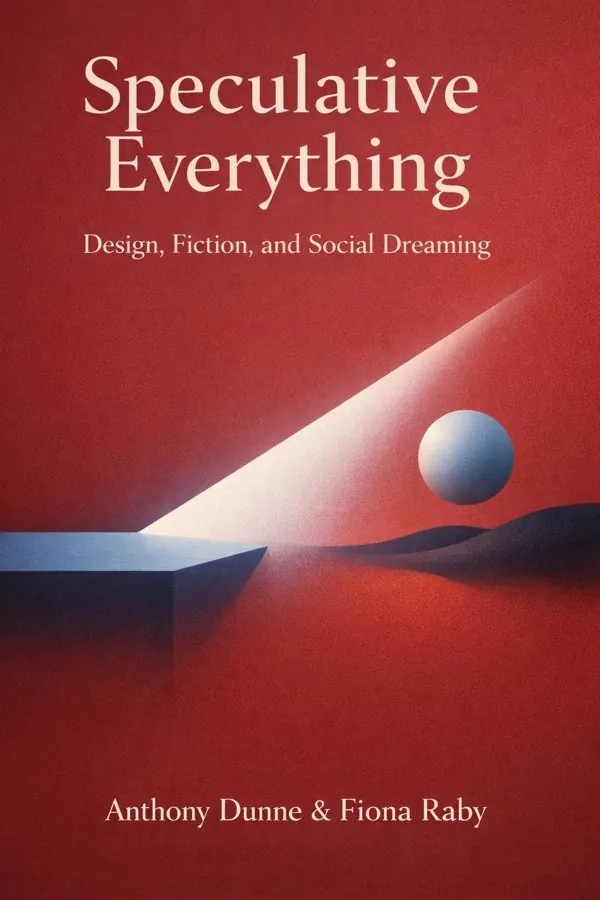
Speculative Everything: Design, Fiction, and Social Dreaming: Summary & Key Insights
 10 min12 chaptersAudio available
What Is Speculative Everything: Design, Fiction, and Social Dreaming About?
Speculative Everything: Design, Fiction, and Social Dreaming by Anthony Dunne, Fiona Raby is a design book spanning 12 pages. This book explores the concept of speculative design, a practice that uses design as a medium to imagine alternative futures and challenge the status quo. Anthony Dunne and Fiona Raby present a framework for thinking about design beyond commercial and functional constraints, encouraging designers to engage with social, political, and ethical questions through imaginative and critical projects.
This FizzRead summary covers all 12 key chapters of Speculative Everything: Design, Fiction, and Social Dreaming in approximately 10 minutes, distilling the most important ideas, arguments, and takeaways from Anthony Dunne, Fiona Raby's work. Also available as an audio summary and Key Quotes Podcast.
Speculative Everything: Design, Fiction, and Social Dreaming
This book explores the concept of speculative design, a practice that uses design as a medium to imagine alternative futures and challenge the status quo. Anthony Dunne and Fiona Raby present a framework for thinking about design beyond commercial and functional constraints, encouraging designers to engage with social, political, and ethical questions through imaginative and critical projects.
Who Should Read Speculative Everything: Design, Fiction, and Social Dreaming?
This book is perfect for anyone interested in design and looking to gain actionable insights in a short read. Whether you're a student, professional, or lifelong learner, the key ideas from Speculative Everything: Design, Fiction, and Social Dreaming by Anthony Dunne, Fiona Raby will help you think differently.
- ✓Readers who enjoy design and want practical takeaways
- ✓Professionals looking to apply new ideas to their work and life
- ✓Anyone who wants the core insights of Speculative Everything: Design, Fiction, and Social Dreaming in just 10 minutes
Want the full summary?
Get instant access to this book summary and 100K+ more with Fizz Moment.
Get Free SummaryAvailable on App Store • Free to download
Key Chapters
Design as a discipline has always been entwined with the machinery of production. The industrial revolution established design as the visual and functional language of mass manufacture, a practice devoted to improving lives through efficiency and aesthetics. But as the decades unfolded, this alignment between design and commerce began to constrict. The purpose of design became synonymous with problem solving—a goal-oriented process optimized for consumer satisfaction and brand differentiation. By the late 20th century, design was overwhelmingly focused on the short-term needs of markets, rather than the long-term questions of human meaning or societal change.
During our time exploring design education and practice, Fiona and I observed a growing shift—a quiet but powerful rebellion against this confinement. It began with what we call *critical design*, a tendency to use designed objects not as solutions but as critiques. These designs ask uncomfortable questions: What if domestic technologies made us anxious instead of efficient? What if progress led to alienation rather than comfort? Critical design projects often look like products, but they behave more like mirrors—they reflect the tensions in our technological dreams.
This historical movement from industrial to critical design maps the widening of the designer’s role. No longer simply an enabler of consumption, the designer can now be a cultural commentator. Through prototypes and artifacts, design can shed its utilitarian armor and enter the public sphere as a discursive medium—a way to visualize and debate ideas about how we live. This shift is vital because our challenges today are not just technical but ethical and philosophical. Designing for sustainability, digital privacy, or bioengineering demands imagination that operates beyond commercial feasibility; it requires speculative thought capable of illuminating what lies outside the now.
Our term *speculative design* embraces critical design but extends it further. Where critical design engages with current issues, speculative design stands at the threshold of the possible—it uses design to ask questions about futures that do not yet exist. It is not predictive, not sciencefictional in the entertainment sense, but deeply interrogative. By fabricating objects, systems, or scenarios that might never be realized, we open a space where the collective imagination can operate freely, without being constrained by market realism.
Design fiction is one of our favored methods for cultivating this imagination. It blends narrative and object-making to construct parallel worlds, each consistent enough to provoke genuine reflection. The power of fiction lies in its plausibility—it can make you momentarily believe, allowing your ethical and emotional instincts to respond. In this temporary suspension of disbelief, you discover how you feel about possible futures: those governed by artificial intelligence, genetic manipulation, posthuman economies. Fiction becomes a diagnostic tool; it reveals the boundaries of acceptability.
Through speculative design, designers assume a new role—not as prophets, but as provocateurs. Our aim is not to predict, but to create conditions for dialogue. The speculative artifact need not function; its truth lies in its ability to frame debate. In our practice, we’ve found that stories paired with objects can stimulate richer public conversations than traditional forecasts or research papers. People engage viscerally with tangible propositions—they imagine living with them. That empathy, that discomfort, that wonder: these are the real outputs of speculative design.
+ 10 more chapters — available in the FizzRead app
All Chapters in Speculative Everything: Design, Fiction, and Social Dreaming
About the Authors
Anthony Dunne and Fiona Raby are designers and educators known for their pioneering work in speculative and critical design. They have taught at the Royal College of Art and have collaborated on numerous projects that explore the intersection of design, technology, and society.
Get This Summary in Your Preferred Format
Read or listen to the Speculative Everything: Design, Fiction, and Social Dreaming summary by Anthony Dunne, Fiona Raby anytime, anywhere. FizzRead offers multiple formats so you can learn on your terms — all free.
Available formats: App · Audio · PDF · EPUB — All included free with FizzRead
Download Speculative Everything: Design, Fiction, and Social Dreaming PDF and EPUB Summary
Key Quotes from Speculative Everything: Design, Fiction, and Social Dreaming
“Design as a discipline has always been entwined with the machinery of production.”
“Our term *speculative design* embraces critical design but extends it further.”
Frequently Asked Questions about Speculative Everything: Design, Fiction, and Social Dreaming
Speculative Everything: Design, Fiction, and Social Dreaming by Anthony Dunne, Fiona Raby is a design book that explores key ideas across 12 chapters. This book explores the concept of speculative design, a practice that uses design as a medium to imagine alternative futures and challenge the status quo. Anthony Dunne and Fiona Raby present a framework for thinking about design beyond commercial and functional constraints, encouraging designers to engage with social, political, and ethical questions through imaginative and critical projects.
You Might Also Like

The Design of Everyday Things
Don Norman
10 min
The Better Angels of Our Nature
Steven Pinker
10 min
A Designer's Art
Paul Rand
10 min
Architects' Sketchbooks
Various Editors
10 min
Architectural Graphic Standards
The American Institute of Architects
10 min
Design Is Storytelling
Ellen Lupton
10 minBrowse by Category
Ready to read Speculative Everything: Design, Fiction, and Social Dreaming?
Get the full summary and 100K+ more books with Fizz Moment.