
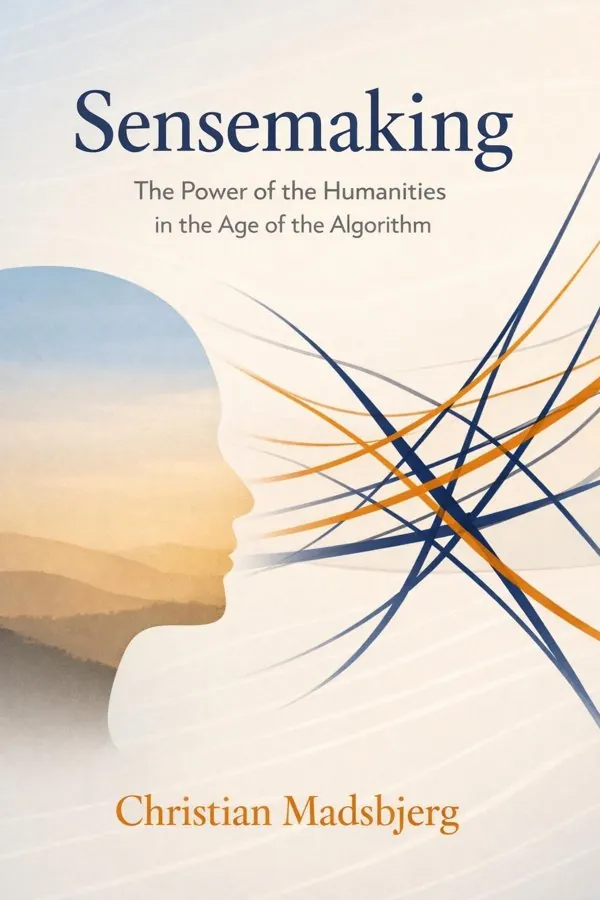
Sensemaking: The Power of the Humanities in the Age of the Algorithm: Summary & Key Insights
 10 min11 chaptersAudio available
What Is Sensemaking: The Power of the Humanities in the Age of the Algorithm About?
Sensemaking: The Power of the Humanities in the Age of the Algorithm by Christian Madsbjerg is a strategy book spanning 11 pages. In 'Sensemaking', Christian Madsbjerg argues that in an age dominated by data and algorithms, the ability to interpret human behavior through the humanities is more vital than ever. Drawing on philosophy, anthropology, and history, he demonstrates how understanding context, culture, and meaning can lead to better business decisions and deeper insights into human life.
This FizzRead summary covers all 11 key chapters of Sensemaking: The Power of the Humanities in the Age of the Algorithm in approximately 10 minutes, distilling the most important ideas, arguments, and takeaways from Christian Madsbjerg's work. Also available as an audio summary and Key Quotes Podcast.
Sensemaking: The Power of the Humanities in the Age of the Algorithm
In 'Sensemaking', Christian Madsbjerg argues that in an age dominated by data and algorithms, the ability to interpret human behavior through the humanities is more vital than ever. Drawing on philosophy, anthropology, and history, he demonstrates how understanding context, culture, and meaning can lead to better business decisions and deeper insights into human life.
Who Should Read Sensemaking: The Power of the Humanities in the Age of the Algorithm?
This book is perfect for anyone interested in strategy and looking to gain actionable insights in a short read. Whether you're a student, professional, or lifelong learner, the key ideas from Sensemaking: The Power of the Humanities in the Age of the Algorithm by Christian Madsbjerg will help you think differently.
- ✓Readers who enjoy strategy and want practical takeaways
- ✓Professionals looking to apply new ideas to their work and life
- ✓Anyone who wants the core insights of Sensemaking: The Power of the Humanities in the Age of the Algorithm in just 10 minutes
Want the full summary?
Get instant access to this book summary and 100K+ more with Fizz Moment.
Get Free SummaryAvailable on App Store • Free to download
Key Chapters
We now live in what I call the age of the algorithm. It is an era where decisions are increasingly delegated to data-driven systems—from hiring and investment to health care and policing. Algorithms promise objectivity, efficiency, and precision. Yet there’s a subtle danger hidden beneath this promise: when we rely on machines to tell us what the numbers mean, we risk losing the capacity to interpret what those numbers represent in human terms.
At ReD Associates, I saw this first-hand. Corporations spend millions to collect behavioral data, but in the end, few can tell you what those patterns *actually* reveal about people’s lives. An algorithm might tell you that people buy more of a product in winter, but it can’t tell you *why*. Maybe the product evokes a sense of comfort, maybe it taps into cultural symbolism of warmth—these meanings live in human experience, not data sets.
The age of the algorithm has given birth to a new mythology—one that treats data as pure truth. But truth has never been that simple. Data is always mediated by interpretation. How we choose to collect, categorize, and analyze it reflects the values and assumptions of those who design the systems. To think algorithmically is to risk mistaking representation for reality. Sensemaking restores the equilibrium—it reminds us that behind every data point is a living person within a specific cultural context.
The central limitation of data-driven thinking lies not in its methodology but in its scope. Numbers can measure patterns, but not interpret them. They can describe human actions, but not the meanings that motivate them. The problem isn’t that quantitative analysis is useless—it’s that we’ve begun to mistake it for a complete worldview.
Companies today can predict what you’ll buy before you know you’ll buy it. Yet prediction is not understanding. Understanding requires immersion, attention, and dialogue. It requires us to ask, what does this choice signify in a person’s life? In our work with clients, we found that business decision-makers often fixate on metrics of efficiency or engagement while ignoring cultural signals—for instance, how social identity, tradition, and emotion drive consumer behavior in ways that defy numerical logic.
Real insight demands that we respect the depth of lived experience. And here’s where humanistic thinking transforms companies. When executives learn to interpret people as cultural beings—not consumers—they begin to see opportunities hidden in plain sight. Data without interpretation leads to imitation; interpretation leads to innovation.
+ 9 more chapters — available in the FizzRead app
All Chapters in Sensemaking: The Power of the Humanities in the Age of the Algorithm
About the Author
Christian Madsbjerg is a Danish author and co-founder of the consulting firm ReD Associates. He is known for his work on applying human sciences to business strategy and innovation. His writing explores how cultural understanding and qualitative thinking can complement data-driven approaches.
Get This Summary in Your Preferred Format
Read or listen to the Sensemaking: The Power of the Humanities in the Age of the Algorithm summary by Christian Madsbjerg anytime, anywhere. FizzRead offers multiple formats so you can learn on your terms — all free.
Available formats: App · Audio · PDF · EPUB — All included free with FizzRead
Download Sensemaking: The Power of the Humanities in the Age of the Algorithm PDF and EPUB Summary
Key Quotes from Sensemaking: The Power of the Humanities in the Age of the Algorithm
“We now live in what I call the age of the algorithm.”
“The central limitation of data-driven thinking lies not in its methodology but in its scope.”
Frequently Asked Questions about Sensemaking: The Power of the Humanities in the Age of the Algorithm
Sensemaking: The Power of the Humanities in the Age of the Algorithm by Christian Madsbjerg is a strategy book that explores key ideas across 11 chapters. In 'Sensemaking', Christian Madsbjerg argues that in an age dominated by data and algorithms, the ability to interpret human behavior through the humanities is more vital than ever. Drawing on philosophy, anthropology, and history, he demonstrates how understanding context, culture, and meaning can lead to better business decisions and deeper insights into human life.
You Might Also Like
Mastery
Robert Greene
10 min
Cut Costs Not Corners: A Practical Guide to Staying Competitive and Improving Profits
Colin Barrow
10 min
Good Strategy/Bad Strategy: The Difference and Why It Matters
Richard P. Rumelt
10 min
On Grand Strategy
John Lewis Gaddis
10 min
The Six Disciplines of Digital Transformation
George Westerman
10 min
7 Powers: The Foundations of Business Strategy
Hamilton Helmer
10 minBrowse by Category
Ready to read Sensemaking: The Power of the Humanities in the Age of the Algorithm?
Get the full summary and 100K+ more books with Fizz Moment.