
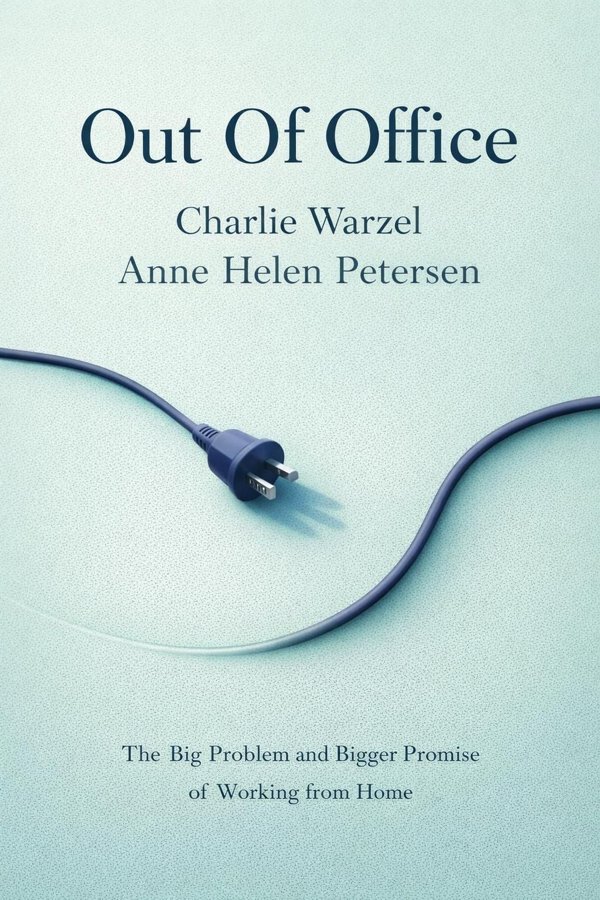
Out Of Office: The Big Problem and Bigger Promise of Working from Home: Summary & Key Insights
by Charlie Warzel, Anne Helen Petersen
 10 min10 chaptersAudio available
What Is Out Of Office: The Big Problem and Bigger Promise of Working from Home About?
Out Of Office: The Big Problem and Bigger Promise of Working from Home by Charlie Warzel, Anne Helen Petersen is a organization book spanning 10 pages. Out of Office es un análisis cultural y práctico sobre cómo el trabajo remoto está transformando la vida laboral moderna. Los autores exploran cómo la pandemia aceleró un cambio hacia el trabajo desde casa y cómo este fenómeno puede ser una oportunidad para rediseñar la relación entre trabajo, tiempo y bienestar. El libro combina investigación, entrevistas y reflexión social para proponer un futuro laboral más humano y sostenible.
This FizzRead summary covers all 10 key chapters of Out Of Office: The Big Problem and Bigger Promise of Working from Home in approximately 10 minutes, distilling the most important ideas, arguments, and takeaways from Charlie Warzel, Anne Helen Petersen's work. Also available as an audio summary and Key Quotes Podcast.
Out Of Office: The Big Problem and Bigger Promise of Working from Home
Out of Office es un análisis cultural y práctico sobre cómo el trabajo remoto está transformando la vida laboral moderna. Los autores exploran cómo la pandemia aceleró un cambio hacia el trabajo desde casa y cómo este fenómeno puede ser una oportunidad para rediseñar la relación entre trabajo, tiempo y bienestar. El libro combina investigación, entrevistas y reflexión social para proponer un futuro laboral más humano y sostenible.
Who Should Read Out Of Office: The Big Problem and Bigger Promise of Working from Home?
This book is perfect for anyone interested in organization and looking to gain actionable insights in a short read. Whether you're a student, professional, or lifelong learner, the key ideas from Out Of Office: The Big Problem and Bigger Promise of Working from Home by Charlie Warzel, Anne Helen Petersen will help you think differently.
- ✓Readers who enjoy organization and want practical takeaways
- ✓Professionals looking to apply new ideas to their work and life
- ✓Anyone who wants the core insights of Out Of Office: The Big Problem and Bigger Promise of Working from Home in just 10 minutes
Want the full summary?
Get instant access to this book summary and 100K+ more with Fizz Moment.
Get Free SummaryAvailable on App Store • Free to download
Key Chapters
To understand why remote work feels so radical, we have to remember how the office became the symbolic heart of modern labor. Throughout the 20th century, the corporate office was built not merely as a physical space but as a cultural ideal. The rise of managerial professionalism, the open-plan revolution, the cult of the nine-to-five—all these were ways to visualize discipline and control. Statistically, by the 1950s and ’60s, being 'in the office' signaled participation in a stable economy. Work was both identity and security. But what we inherited is more complicated: organizations became places where trust was measured by face time. Bosses equated surveillance with productivity, and employees learned that seeing and being seen was the path to advancement. The office became a proving ground, not just a workspace.
That mythology held even as technology made physical proximity less necessary. By the early 2000s, BlackBerry and then smartphones tethered employees to digital offices twenty-four hours a day. When the pandemic shattered the ritual of commuting, people suddenly glimpsed what had always been artificial: the office as the default center of gravity. Yet as we argue, dismantling that structure is not just a logistical experiment—it forces a cultural shift, demanding we rethink what we value in collaboration, mentorship, and belonging. The office may have been built to organize labor, but it also organized meaning. To create something new, we needed to unlearn the idea that meaning only thrives under managerial oversight.
One theme we return to repeatedly is how deeply modern society confuses productivity with purpose. For decades, companies have rewarded visibility—those who arrive early, stay late, and flood inboxes most vigorously. Remote work disrupted this illusion. Suddenly, there were no check-ins at cubicles or spontaneous hallway accolades. Performance had to be measured by outcomes, not optics. Yet rather than reimagine these metrics in humane terms, many employers doubled down, surveilling workers through keystroke monitoring or virtual presence indicators.
In our research and interviews, we saw this time and again: people feeling the need to prove they were 'doing enough' to justify working from home. The result was burnout without the buffer of commute breaks or social decompression. The point we make is simple but radical—the idea of productivity has long been weaponized to sustain overwork. We challenge readers to see productivity not as a measure of speed or hours logged, but as alignment between effort and impact. In remote settings, success can no longer rely on constant motion; it must be grounded in trust and clarity. True productivity flourishes when individuals have autonomy, when communication is transparent, and when managers stop treating the worker’s presence as the product itself.
+ 8 more chapters — available in the FizzRead app
All Chapters in Out Of Office: The Big Problem and Bigger Promise of Working from Home
About the Authors
Charlie Warzel es periodista y escritor estadounidense, conocido por su trabajo en The New York Times y The Atlantic sobre tecnología y cultura laboral. Anne Helen Petersen es periodista y autora, reconocida por sus análisis sobre cultura, género y trabajo en medios como BuzzFeed News y Substack.
Get This Summary in Your Preferred Format
Read or listen to the Out Of Office: The Big Problem and Bigger Promise of Working from Home summary by Charlie Warzel, Anne Helen Petersen anytime, anywhere. FizzRead offers multiple formats so you can learn on your terms — all free.
Available formats: App · Audio · PDF · EPUB — All included free with FizzRead
Download Out Of Office: The Big Problem and Bigger Promise of Working from Home PDF and EPUB Summary
Key Quotes from Out Of Office: The Big Problem and Bigger Promise of Working from Home
“To understand why remote work feels so radical, we have to remember how the office became the symbolic heart of modern labor.”
“One theme we return to repeatedly is how deeply modern society confuses productivity with purpose.”
Frequently Asked Questions about Out Of Office: The Big Problem and Bigger Promise of Working from Home
Out Of Office: The Big Problem and Bigger Promise of Working from Home by Charlie Warzel, Anne Helen Petersen is a organization book that explores key ideas across 10 chapters. Out of Office es un análisis cultural y práctico sobre cómo el trabajo remoto está transformando la vida laboral moderna. Los autores exploran cómo la pandemia aceleró un cambio hacia el trabajo desde casa y cómo este fenómeno puede ser una oportunidad para rediseñar la relación entre trabajo, tiempo y bienestar. El libro combina investigación, entrevistas y reflexión social para proponer un futuro laboral más humano y sostenible.
You Might Also Like

A Guide to the Project Management Body of Knowledge (PMBOK® Guide)
Project Management Institute
10 min
Organizational Behavior
Stephen P. Robbins
10 min
Accelerate: The Science of Lean Software and DevOps – Building and Scaling High Performing Technology Organizations
Nicole Forsgren, Jez Humble, Gene Kim
10 min
Awakening Compassion at Work: The Quiet Power That Elevates People and Organizations
Monica C. Worline, Jane E. Dutton
10 min
Building an Inclusive Organization: Leveraging the Power of a Diverse Workforce
Stephen Frost
10 min
Collaborative Intelligence: Thinking with People Who Think Differently
Dawna Markova, Angie McArthur
10 minBrowse by Category
Ready to read Out Of Office: The Big Problem and Bigger Promise of Working from Home?
Get the full summary and 100K+ more books with Fizz Moment.