
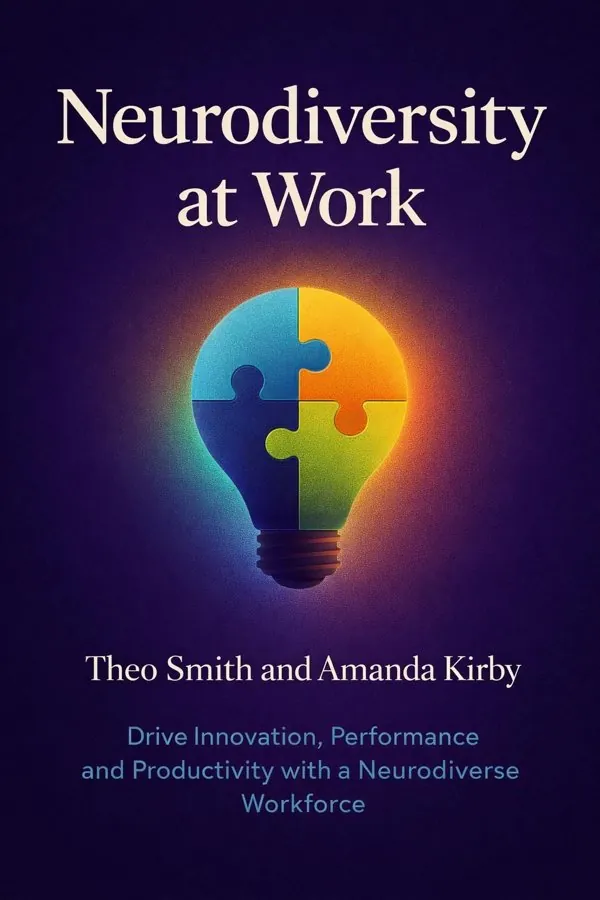
Neurodiversity at Work: Drive Innovation, Performance and Productivity with a Neurodiverse Workforce: Summary & Key Insights
 10 min5 chaptersAudio available
What Is Neurodiversity at Work: Drive Innovation, Performance and Productivity with a Neurodiverse Workforce About?
Neurodiversity at Work: Drive Innovation, Performance and Productivity with a Neurodiverse Workforce by Theo Smith and Amanda Kirby is a organization book spanning 5 pages. This book explores how embracing neurodiversity in the workplace can lead to greater innovation, productivity, and employee engagement. It provides practical strategies for organizations to create inclusive environments that support individuals with different cognitive profiles, such as autism, ADHD, dyslexia, and dyspraxia. The authors combine research insights with real-world examples to show how neurodiverse talent can be a competitive advantage.
This FizzRead summary covers all 5 key chapters of Neurodiversity at Work: Drive Innovation, Performance and Productivity with a Neurodiverse Workforce in approximately 10 minutes, distilling the most important ideas, arguments, and takeaways from Theo Smith and Amanda Kirby's work. Also available as an audio summary and Key Quotes Podcast.
Neurodiversity at Work: Drive Innovation, Performance and Productivity with a Neurodiverse Workforce
This book explores how embracing neurodiversity in the workplace can lead to greater innovation, productivity, and employee engagement. It provides practical strategies for organizations to create inclusive environments that support individuals with different cognitive profiles, such as autism, ADHD, dyslexia, and dyspraxia. The authors combine research insights with real-world examples to show how neurodiverse talent can be a competitive advantage.
Who Should Read Neurodiversity at Work: Drive Innovation, Performance and Productivity with a Neurodiverse Workforce?
This book is perfect for anyone interested in organization and looking to gain actionable insights in a short read. Whether you're a student, professional, or lifelong learner, the key ideas from Neurodiversity at Work: Drive Innovation, Performance and Productivity with a Neurodiverse Workforce by Theo Smith and Amanda Kirby will help you think differently.
- ✓Readers who enjoy organization and want practical takeaways
- ✓Professionals looking to apply new ideas to their work and life
- ✓Anyone who wants the core insights of Neurodiversity at Work: Drive Innovation, Performance and Productivity with a Neurodiverse Workforce in just 10 minutes
Want the full summary?
Get instant access to this book summary and 100K+ more with Fizz Moment.
Get Free SummaryAvailable on App Store • Free to download
Key Chapters
To begin transforming workplaces, we must first truly understand what neurodiversity is and what it isn’t. The term, originally rooted in the autism rights movement, reflects the idea that neurological differences are part of the natural variation of humanity, not pathologies to be cured. Just as biodiversity ensures the resilience of ecosystems, neurodiversity strengthens the social and organizational ecosystem. When we recognize this, we shift from asking how to ‘fix’ individuals to how to adapt our systems to include everyone.
Autism, ADHD, dyslexia, dyspraxia, Tourette’s, and other neurodivergent conditions are not singular experiences but spectrums—with wide-ranging strengths and challenges. For example, someone with dyslexia might struggle with written accuracy but excel in spatial reasoning and entrepreneurship. A person with ADHD might find sustained focus difficult but demonstrate extraordinary drive and innovation under pressure. A team member on the autism spectrum might prefer predictable routines and be a meticulous, detail-oriented thinker who safeguards quality and consistency. These are not deficits—they are different configurations of human potential.
Yet, society and organizations have long misunderstood these differences. Schools often reward conformity over curiosity. Workplaces are designed for sensory norms that overwhelm some and under-stimulate others. Job descriptions, performance metrics, and recruitment rituals—panel interviews, buzzy networking, timed tests—often exclude brilliant minds before they even have a chance to contribute.
Understanding neurodiversity means acknowledging these mismatches between people’s strengths and workplace expectations. It means designing processes that measure what truly matters, not how well someone presents under fluorescent lights or small talk pressure. When we focus on what individuals can contribute rather than what they lack, inclusion becomes natural, and talent flourishes.
To build a neuroinclusive culture, we must confront the myths that keep organizations stuck. One of the most persistent myths is that neurodivergent individuals are less capable or more challenging to manage. The truth is that many so-called ‘challenges’ emerge only because environments are not designed with difference in mind. Picture an open-plan office with harsh lighting, constant noise, and social interruptions—an everyday sensory overload for an autistic employee. Shift the environment toward quieter zones, adjustable lighting, and clear communication norms, and suddenly, performance soars.
Another misconception is that reasonable adjustments are costly or complicated. In reality, most accommodations cost little or nothing. Clear communication, flexible schedules, or permission to use assistive technology often make a profound difference. The greatest barrier is not financial—it’s attitudinal. Once leaders begin to see flexibility as a standard practice rather than a special request, inclusion ceases to be an exception. It becomes the DNA of the culture.
We also challenge the assumption that neurodivergent employees cannot handle customer-facing or creative roles. On the contrary, countless examples—from design studios that rely on dyslexic visual thinkers to tech firms employing autistic coders who detect system vulnerabilities others miss—illustrate how difference drives performance. When we stop pigeonholing talent and start exploring cognitive diversity as an asset, we unlock untapped capability across industries.
+ 3 more chapters — available in the FizzRead app
All Chapters in Neurodiversity at Work: Drive Innovation, Performance and Productivity with a Neurodiverse Workforce
About the Authors
Theo Smith is a recruitment and talent acquisition specialist focused on diversity and inclusion. Amanda Kirby is a medical doctor and professor specializing in neurodiversity and developmental disorders. Together, they advocate for systemic change in how organizations understand and support neurodiverse employees.
Get This Summary in Your Preferred Format
Read or listen to the Neurodiversity at Work: Drive Innovation, Performance and Productivity with a Neurodiverse Workforce summary by Theo Smith and Amanda Kirby anytime, anywhere. FizzRead offers multiple formats so you can learn on your terms — all free.
Available formats: App · Audio · PDF · EPUB — All included free with FizzRead
Download Neurodiversity at Work: Drive Innovation, Performance and Productivity with a Neurodiverse Workforce PDF and EPUB Summary
Key Quotes from Neurodiversity at Work: Drive Innovation, Performance and Productivity with a Neurodiverse Workforce
“To begin transforming workplaces, we must first truly understand what neurodiversity is and what it isn’t.”
“To build a neuroinclusive culture, we must confront the myths that keep organizations stuck.”
Frequently Asked Questions about Neurodiversity at Work: Drive Innovation, Performance and Productivity with a Neurodiverse Workforce
Neurodiversity at Work: Drive Innovation, Performance and Productivity with a Neurodiverse Workforce by Theo Smith and Amanda Kirby is a organization book that explores key ideas across 5 chapters. This book explores how embracing neurodiversity in the workplace can lead to greater innovation, productivity, and employee engagement. It provides practical strategies for organizations to create inclusive environments that support individuals with different cognitive profiles, such as autism, ADHD, dyslexia, and dyspraxia. The authors combine research insights with real-world examples to show how neurodiverse talent can be a competitive advantage.
You Might Also Like

A Guide to the Project Management Body of Knowledge (PMBOK® Guide)
Project Management Institute
10 min
Organizational Behavior
Stephen P. Robbins
10 min
Accelerate: The Science of Lean Software and DevOps – Building and Scaling High Performing Technology Organizations
Nicole Forsgren, Jez Humble, Gene Kim
10 min
Awakening Compassion at Work: The Quiet Power That Elevates People and Organizations
Monica C. Worline, Jane E. Dutton
10 min
Building an Inclusive Organization: Leveraging the Power of a Diverse Workforce
Stephen Frost
10 min
Collaborative Intelligence: Thinking with People Who Think Differently
Dawna Markova, Angie McArthur
10 minBrowse by Category
Ready to read Neurodiversity at Work: Drive Innovation, Performance and Productivity with a Neurodiverse Workforce?
Get the full summary and 100K+ more books with Fizz Moment.