
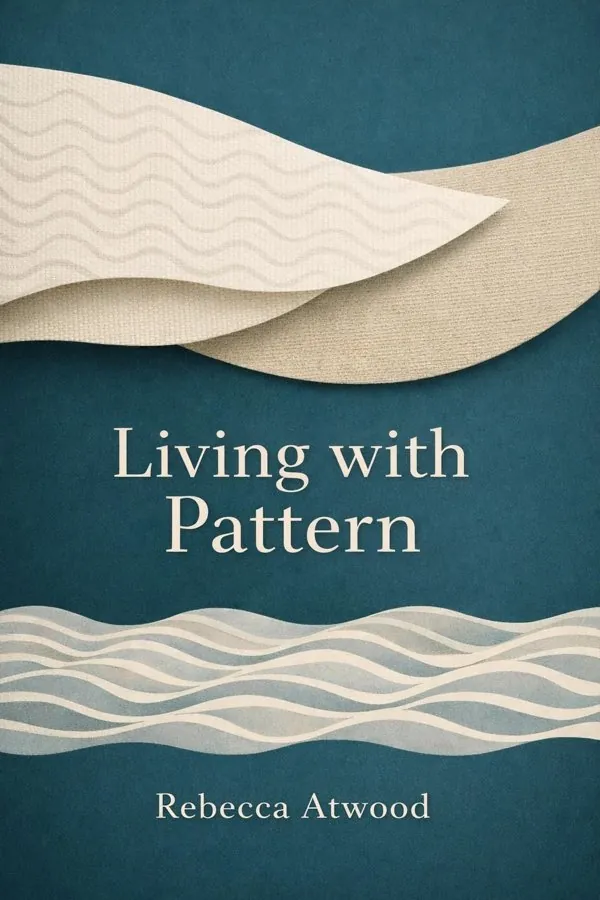
Living with Pattern: Color, Texture, and Print at Home: Summary & Key Insights
 10 min10 chaptersAudio available
Key Takeaways from Living with Pattern: Color, Texture, and Print at Home
A room rarely feels memorable because of furniture alone; it feels memorable because of the visual rhythm that surrounds us.
We often think we respond first to objects, but in interiors we usually respond first to color.
A beautifully colored room can still feel flat if every surface reflects light the same way.
The same pattern can feel timid, elegant, playful, or overwhelming depending on its scale.
Many people assume layered interiors are created by fearless instinct alone, but Atwood shows that successful layering is really about relationships.
What Is Living with Pattern: Color, Texture, and Print at Home About?
Living with Pattern: Color, Texture, and Print at Home by Rebecca Atwood is a design book spanning 11 pages. Pattern is often treated as the finishing touch in a room, something added after the “important” design decisions are made. Rebecca Atwood argues the opposite: pattern is one of the most powerful tools we have for shaping how a home feels, functions, and reflects who we are. In Living with Pattern: Color, Texture, and Print at Home, she shows that stripes, florals, geometrics, woven surfaces, and painted motifs are not merely decorative details. They create rhythm, warmth, movement, memory, and emotional tone. Drawing on her experience as a textile designer, artist, and founder of her own home goods studio, Atwood combines visual sensitivity with practical guidance. She explains how color influences mood, how texture adds depth, how scale changes perception, and how patterns can be layered without creating chaos. Just as importantly, she encourages readers to trust their instincts and build interiors that tell personal stories rather than imitate trends. The book matters because it makes design feel approachable. Instead of asking readers to become experts in formal decorating, Atwood teaches them to notice, experiment, and create homes that feel deeply lived in, expressive, and comforting.
This FizzRead summary covers all 10 key chapters of Living with Pattern: Color, Texture, and Print at Home in approximately 10 minutes, distilling the most important ideas, arguments, and takeaways from Rebecca Atwood's work. Also available as an audio summary and Key Quotes Podcast.
Living with Pattern: Color, Texture, and Print at Home
Pattern is often treated as the finishing touch in a room, something added after the “important” design decisions are made. Rebecca Atwood argues the opposite: pattern is one of the most powerful tools we have for shaping how a home feels, functions, and reflects who we are. In Living with Pattern: Color, Texture, and Print at Home, she shows that stripes, florals, geometrics, woven surfaces, and painted motifs are not merely decorative details. They create rhythm, warmth, movement, memory, and emotional tone.
Drawing on her experience as a textile designer, artist, and founder of her own home goods studio, Atwood combines visual sensitivity with practical guidance. She explains how color influences mood, how texture adds depth, how scale changes perception, and how patterns can be layered without creating chaos. Just as importantly, she encourages readers to trust their instincts and build interiors that tell personal stories rather than imitate trends. The book matters because it makes design feel approachable. Instead of asking readers to become experts in formal decorating, Atwood teaches them to notice, experiment, and create homes that feel deeply lived in, expressive, and comforting.
Who Should Read Living with Pattern: Color, Texture, and Print at Home?
This book is perfect for anyone interested in design and looking to gain actionable insights in a short read. Whether you're a student, professional, or lifelong learner, the key ideas from Living with Pattern: Color, Texture, and Print at Home by Rebecca Atwood will help you think differently.
- ✓Readers who enjoy design and want practical takeaways
- ✓Professionals looking to apply new ideas to their work and life
- ✓Anyone who wants the core insights of Living with Pattern: Color, Texture, and Print at Home in just 10 minutes
Want the full summary?
Get instant access to this book summary and 100K+ more with Fizz Moment.
Get Free SummaryAvailable on App Store • Free to download
Key Chapters
A room rarely feels memorable because of furniture alone; it feels memorable because of the visual rhythm that surrounds us. Atwood’s central insight is that pattern is not a superficial layer applied to a finished interior. It is a language of repetition, variation, and movement that influences how we experience space emotionally. A tiny dotted sheet can make a bedroom feel calm and intimate, while a bold botanical wallpaper can make a dining room feel alive and dramatic. Pattern affects atmosphere long before we consciously identify what we are seeing.
Atwood broadens the definition of pattern beyond obvious prints. She reminds readers that pattern exists in the grain of wood, the weave of linen, the arrangement of books on a shelf, the lines in tile, and even the irregularity of handmade ceramics. This wider view is liberating because it helps people see that pattern is already present in their homes. The task is not to start from nothing, but to become more aware of what is there and how it interacts.
She also highlights the emotional resonance of repeated forms. Patterns can suggest order, energy, softness, nostalgia, or playfulness. A room filled with strict grids may feel disciplined and clean, while one layered with painterly florals and textured fabrics can feel relaxed and expressive. The meaning of pattern is therefore not fixed; it depends on context, color, scale, and the person living with it.
A practical way to apply this idea is to walk through your home and identify existing patterns you may have overlooked: basket weaves, floorboards, window mullions, rug motifs, stacked dishes, or folded textiles. Once you see pattern everywhere, you can design with more intention. Actionable takeaway: before buying anything new, list the patterns already in a room and decide whether you want to reinforce their mood or introduce contrast.
We often think we respond first to objects, but in interiors we usually respond first to color. Atwood treats color as the emotional backbone of pattern because it shapes mood immediately and quietly. A room of dusty blues and grays can feel contemplative and airy, while one built around ochre, rust, and deep green may feel grounded, warm, and enveloping. Pattern may add complexity, but color is what establishes the first emotional note.
Atwood avoids rigid rules about “good” and “bad” palettes. Instead, she encourages readers to notice their own responses to color and the ways different hues behave in different lights. Morning sun can make pale pink glow; artificial evening light can flatten subtle neutrals; north-facing rooms may cool down a palette unexpectedly. This means that selecting color is not just an abstract decision from a swatch card. It is a lived choice that must be tested in the environment where it will exist.
She also emphasizes that harmony does not require perfect matching. A successful room often combines related tones, surprising accents, and moments of contrast. For example, a quiet neutral sofa can come alive with pillows in indigo, clay, and faded rose. A mostly blue room can be sharpened by a small amount of mustard or black. The point is not to eliminate tension but to create balanced relationships.
One useful application is to begin with a “feeling palette” rather than a trend palette. Ask whether you want a room to feel serene, cheerful, cocooning, or invigorating. Then gather paint chips, fabric scraps, photographs, and objects that express that feeling. Actionable takeaway: choose three dominant colors for a room—a base, a supporting tone, and a small accent—and test them together in natural and artificial light before committing.
A beautifully colored room can still feel flat if every surface reflects light the same way. Atwood shows that texture is what gives interiors depth, intimacy, and tactile richness. Even when a space uses minimal pattern in the obvious printed sense, texture can act like pattern through repetition of fibers, nubs, ridges, softness, and sheen. It is often the difference between a room that looks styled and one that feels inhabitable.
Texture matters because we experience home with more than our eyes. Linen wrinkles in a relaxed way; velvet absorbs light and adds weight; wool offers coziness; glazed ceramic introduces smoothness and shine; raw wood contributes warmth and natural irregularity. These material differences create visual contrast and sensory invitation. They also help connect formal design choices to daily life. A textured throw over a plain sofa can soften a strict room. A woven shade can make a polished kitchen feel more grounded. A chunky rug can absorb sound and make a large space feel calmer.
Atwood’s approach is especially helpful for people who fear bold prints. She demonstrates that pattern-rich interiors do not always require dramatic motifs. A tonal room can feel layered and interesting through combinations such as washed linen bedding, a tufted headboard, a ribbed ceramic lamp, and a handwoven basket. Texture becomes a quieter route to complexity.
To apply this idea, evaluate a room by touch as much as by sight. Notice whether all surfaces are hard, smooth, or similar in finish. If so, add contrast: matte with glossy, soft with structured, woven with painted. Actionable takeaway: in any room, include at least three distinct textures—such as wood, fabric, and ceramic—to create warmth and visual dimension even when the color palette is restrained.
The same pattern can feel timid, elegant, playful, or overwhelming depending on its scale. Atwood explains that one of the most common mistakes in decorating is choosing prints based only on whether we “like” them in isolation, without considering how large or small they appear in relation to the room, furniture, and other patterns nearby. Scale is not a technical afterthought; it is one of the main factors that determines whether a space feels balanced.
Small-scale prints tend to read as texture from a distance. They can soften a room, add intricacy, and work well on surfaces used closely, such as bedding, pillows, or upholstered chairs. Large-scale prints are more declarative. They command attention, create movement, and can visually expand or energize a room when used thoughtfully. Medium-scale patterns often serve as bridges between the two.
Atwood encourages mixing scales because rooms become more dynamic when not everything speaks at the same visual volume. For example, a sofa in a subtle stripe can pair well with large floral curtains and a rug that reads almost solid from afar but reveals detail up close. The variation gives the eye places to rest and places to explore. Without that variation, a room can feel either monotonous or chaotic.
Scale also depends on context. A bold wallpaper in a powder room may feel delightful because the small space can carry a concentrated gesture. The same pattern in a large open living room might require balancing solids or quieter surfaces.
A practical approach is to lay sample fabrics or images side by side and classify them as small, medium, or large scale before combining them. Make sure each grouping contains enough contrast. Actionable takeaway: when mixing prints in one room, aim to include at least two different scales so the patterns complement rather than compete with one another.
Many people assume layered interiors are created by fearless instinct alone, but Atwood shows that successful layering is really about relationships. Patterns do not need to match; they need to connect. That connection can come through repeated colors, similar line quality, shared mood, or complementary scale. Once readers understand this, mixing becomes far less intimidating.
Atwood’s method is intuitive but disciplined. She often begins with one anchor element—a rug, fabric, wallpaper, or artwork—and then builds outward. If the anchor has organic movement, she may pair it with a stripe or geometric to create balance. If it is highly colorful, she may pull one or two quieter tones from it for surrounding textiles. The result is not randomness, but conversation among elements.
Restraint matters as much as richness. Layering does not mean every surface needs a strong pattern. Solids, negative space, and quieter textures give the eye rest and allow standout moments to shine. A bed may combine printed pillows, striped sheets, and a textured quilt, but the wall color and headboard can remain calm. A living room may feature a patterned rug and drapery, while upholstery stays relatively understated. This is how complexity remains livable.
Atwood also invites experimentation. Patterns that seem incompatible on paper may work beautifully once placed together because color temperature, material, or mood creates unexpected harmony. Swapping pillow covers, draping fabrics over chairs, and pinning sample swatches to the wall are low-risk ways to test combinations.
Actionable takeaway: start layering with one dominant pattern, one supporting pattern, and one quiet textural element linked by at least one shared color. If the room feels busy, remove one item before adding anything else.
The most compelling interiors are not the ones that look professionally perfected; they are the ones that reveal a life. Atwood repeatedly returns to the idea that home design should be personal, not performative. Pattern, color, and objects become meaningful when they connect to memory, identity, travel, family, heritage, or daily rituals. A home should not simply display taste. It should communicate presence.
This perspective shifts decorating away from trend-chasing. Instead of asking, “What is in style right now?” Atwood suggests asking, “What do I want to remember, feel, and live with?” A hand-block-printed tablecloth inherited from a relative may matter more than a fashionable but generic replacement. Children’s art, found textiles, flea market ceramics, and books can all contribute pattern and character when integrated thoughtfully. These personal layers create emotional durability, making a room feel authentic rather than staged.
Atwood does not romanticize clutter or sentimentality. Personal expression still benefits from editing. The goal is to choose pieces that contribute to the mood and story of a space, not to display everything at once. A few cherished objects grouped intentionally can have more impact than many scattered mementos. Personal style also evolves, so homes should remain flexible enough to absorb new experiences.
One practical exercise is to gather five objects or images that feel deeply “you”—a scarf, a painting, a postcard, a bowl, a photograph—and identify the colors, patterns, and textures they share. Those common threads can guide an interior more honestly than any showroom display.
Actionable takeaway: build at least one room around meaningful objects you already own, using their colors and textures as the starting point for future choices.
A beautiful room can still feel disconnected from the rest of the home if each space follows a completely different visual logic. Atwood emphasizes that designing with pattern is not only about individual rooms; it is also about creating flow across a home. Flow does not require every room to match, but it does require a sense of continuity. People should feel they are moving through chapters of the same story rather than entering unrelated scenes.
This continuity often comes from repeated colors, related materials, or recurring motifs. A soft blue that appears in an entry rug might return in a bedroom quilt. Natural wood tones in the living room may echo in dining chairs. A preference for hand-drawn patterns can show up across wallpaper, textiles, and art even when the prints themselves differ. These repeated elements create familiarity and cohesion.
Atwood balances continuity with variation. If every room uses the exact same palette and pattern density, the home can feel static. Instead, she encourages shifting emphasis according to function and mood. A bedroom may be softer and more muted, a dining room deeper and more dramatic, a kitchen brighter and cleaner. The thread between them is not sameness, but recognizable sensibility.
Transition spaces deserve attention too. Hallways, stairwells, and entries can mediate between stronger rooms through color, texture, or simple pattern. They help the eye reset while preserving connection.
A useful strategy is to create a whole-home board rather than isolated room boards. Place materials, paint colors, and fabric samples from multiple spaces together to see whether they speak to one another. Actionable takeaway: choose two or three repeating elements—such as a color family, wood tone, or pattern style—to carry through your home while allowing each room its own mood.
People often frame design as a choice between minimalism and maximalism, but Atwood suggests the most livable homes usually contain both calm and complexity. Rich pattern can be exhilarating, but without moments of stillness it can become tiring. Simplicity can be restful, but without texture or variation it can feel sterile. The art lies in balancing visual activity with breathing room.
Atwood teaches readers to think in terms of distribution rather than ideology. A room does not have to be entirely bold or entirely subdued. Instead, ask where intensity belongs and where softness is needed. A patterned wallpaper might provide drama on the walls, while upholstery remains quiet. Or a neutral room might come alive through a concentrated cluster of patterned pillows and artwork. This balancing act allows personality to emerge without overwhelming daily life.
She also notes that complexity can be concentrated in different ways depending on temperament. Some people enjoy a bedroom full of layered textiles and print because it feels cocooning. Others need a simpler bedroom but welcome more pattern in communal spaces like kitchens or dining rooms. The right balance depends on how a room is used and how stimulation affects the people in it.
Editing becomes essential. If everything insists on attention, nothing feels special. Reducing one competing element—removing a busy throw, simplifying window treatments, or choosing a quieter rug—can make the remaining patterns stronger.
To test balance, take a photo of your room in black and white. This helps reveal contrast, density, and where the eye is being pulled. Actionable takeaway: in each room, identify one main area for visual richness and one area intentionally kept calm so the space feels layered yet restful.
A home is not a static composition; it changes with weather, routines, family needs, and emotional seasons. Atwood’s perspective is especially refreshing because she does not present interior design as a one-time act of perfection. She sees it as an ongoing conversation between people and place. Pattern and color can support that flexibility, helping homes feel responsive rather than fixed.
Some changes are literal and seasonal. Lighter linens, airy prints, and brighter colors may feel right in summer, while heavier throws, deeper hues, and richer textures can make a home feel protective in winter. These shifts do not require full redesigns. They can happen through pillow covers, bedding, table linens, flowers, lampshades, or small decorative objects. Because textiles are relatively easy to change, they are ideal tools for updating mood.
Other shifts are emotional or practical. A new baby, a move, remote work, grief, celebration, or simply changing taste may alter what we need from our spaces. Atwood encourages readers to allow their homes to evolve with them. This mindset reduces the pressure to “finish” a room permanently and invites more confident experimentation.
She also demonstrates that even small updates can transform experience. Replacing heavy curtains with lighter patterned ones can brighten a room and change how daylight moves through it. Introducing a quilt from a memorable trip can bring both color and emotional resonance.
Actionable takeaway: choose a few flexible design elements—such as pillow covers, throws, tabletop textiles, or art rotation—that you can swap seasonally or during life transitions to keep your home aligned with how you want to feel.
Design becomes most powerful when it moves beyond special occasions and enters ordinary life. Atwood argues that pattern should not be reserved for showpiece rooms or formal entertaining. It belongs in the everyday rituals that shape how home is actually experienced: making the bed, drinking coffee, setting the table, reading on the sofa, bathing children, or welcoming guests at the door. When pattern is integrated into these moments, design becomes a source of daily pleasure rather than visual performance.
This approach makes the book especially practical. Atwood points to accessible applications such as printed napkins, patterned shower curtains, striped towels, upholstered benches, hand-painted mugs, and layered bedding. These are not monumental renovations, but they can meaningfully alter the tone of a home. A cheerful kitchen towel, a favorite floral robe hanging on a hook, or a patterned lampshade beside a reading chair can create intimacy and delight in spaces often overlooked.
She also underscores durability and use. Beautiful textiles should not be treated as untouchable. Homes feel warmer when the things we love are part of daily routines, even if they wrinkle, soften, and age over time. This attitude resists the museum-like impulse to preserve beauty by avoiding it.
For readers intimidated by interior design, this is liberating. You do not need a large budget or complete makeover to live with pattern. Start with items that interact with your habits and senses every day. The cumulative effect is substantial because repeated exposure shapes mood more than occasional decoration does.
Actionable takeaway: pick one daily ritual—sleeping, dining, bathing, or reading—and add a patterned or textured element that makes that routine feel more intentional, comforting, and personal.
All Chapters in Living with Pattern: Color, Texture, and Print at Home
About the Author
Rebecca Atwood is a Brooklyn-based textile designer, artist, and author celebrated for her hand-painted patterns and modern, deeply personal approach to interiors. A graduate of the Rhode Island School of Design, she built her career at the intersection of fine art, fabric design, and home styling before founding Rebecca Atwood Designs. Her studio became known for creating thoughtful textiles, wallpapers, and home goods that bring softness, color, and artistry into everyday life. Atwood’s work is distinguished by its balance of beauty and practicality: she treats the home as a place for real living, not just display. Through her books and design practice, she has become a trusted voice for readers who want to use pattern, texture, and color in ways that feel intuitive, livable, and emotionally resonant.
Get This Summary in Your Preferred Format
Read or listen to the Living with Pattern: Color, Texture, and Print at Home summary by Rebecca Atwood anytime, anywhere. FizzRead offers multiple formats so you can learn on your terms — all free.
Available formats: App · Audio · PDF · EPUB — All included free with FizzRead
Download Living with Pattern: Color, Texture, and Print at Home PDF and EPUB Summary
Key Quotes from Living with Pattern: Color, Texture, and Print at Home
“A room rarely feels memorable because of furniture alone; it feels memorable because of the visual rhythm that surrounds us.”
“We often think we respond first to objects, but in interiors we usually respond first to color.”
“A beautifully colored room can still feel flat if every surface reflects light the same way.”
“The same pattern can feel timid, elegant, playful, or overwhelming depending on its scale.”
“Many people assume layered interiors are created by fearless instinct alone, but Atwood shows that successful layering is really about relationships.”
Frequently Asked Questions about Living with Pattern: Color, Texture, and Print at Home
Living with Pattern: Color, Texture, and Print at Home by Rebecca Atwood is a design book that explores key ideas across 10 chapters. Pattern is often treated as the finishing touch in a room, something added after the “important” design decisions are made. Rebecca Atwood argues the opposite: pattern is one of the most powerful tools we have for shaping how a home feels, functions, and reflects who we are. In Living with Pattern: Color, Texture, and Print at Home, she shows that stripes, florals, geometrics, woven surfaces, and painted motifs are not merely decorative details. They create rhythm, warmth, movement, memory, and emotional tone. Drawing on her experience as a textile designer, artist, and founder of her own home goods studio, Atwood combines visual sensitivity with practical guidance. She explains how color influences mood, how texture adds depth, how scale changes perception, and how patterns can be layered without creating chaos. Just as importantly, she encourages readers to trust their instincts and build interiors that tell personal stories rather than imitate trends. The book matters because it makes design feel approachable. Instead of asking readers to become experts in formal decorating, Atwood teaches them to notice, experiment, and create homes that feel deeply lived in, expressive, and comforting.
You Might Also Like
The Design of Everyday Things
Don Norman
10 min
The Better Angels of Our Nature
Steven Pinker
10 min
A Designer's Art
Paul Rand
10 min
Architects' Sketchbooks
Various Editors
10 min
Architectural Graphic Standards
The American Institute of Architects
10 min
Design Is Storytelling
Ellen Lupton
10 minBrowse by Category
Ready to read Living with Pattern: Color, Texture, and Print at Home?
Get the full summary and 100K+ more books with Fizz Moment.