
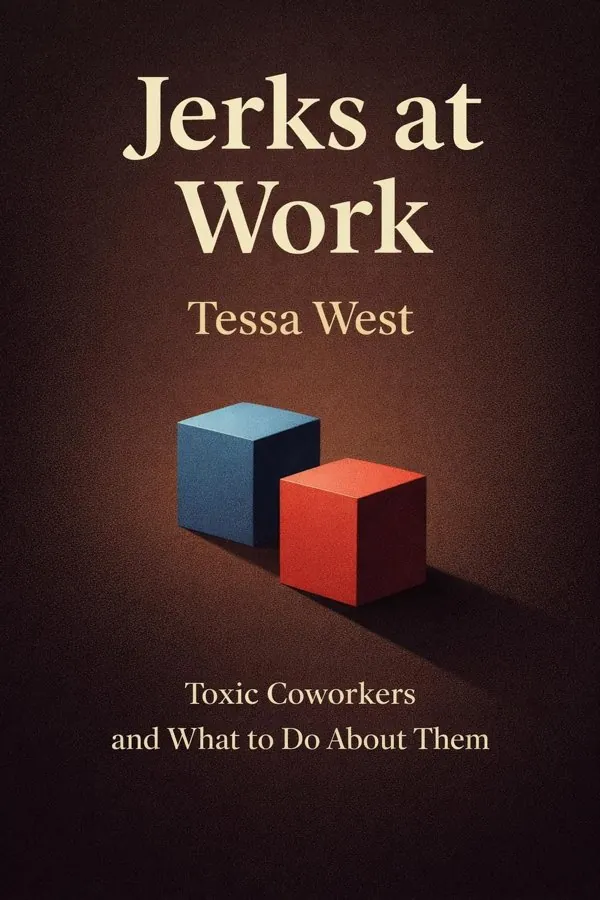
Jerks at Work: Toxic Coworkers and What to Do About Them: Summary & Key Insights
by Tessa West
 10 min12 chaptersAudio available
What Is Jerks at Work: Toxic Coworkers and What to Do About Them About?
Jerks at Work: Toxic Coworkers and What to Do About Them by Tessa West is a organization book spanning 12 pages. A practical guide to dealing with difficult colleagues, 'Jerks at Work' by social psychologist Tessa West explores the science of workplace behavior and offers evidence-based strategies for managing toxic dynamics. Drawing on research in psychology and organizational behavior, West identifies common types of problematic coworkers and provides actionable advice for maintaining professionalism, reducing stress, and improving collaboration.
This FizzRead summary covers all 12 key chapters of Jerks at Work: Toxic Coworkers and What to Do About Them in approximately 10 minutes, distilling the most important ideas, arguments, and takeaways from Tessa West's work. Also available as an audio summary and Key Quotes Podcast.
Jerks at Work: Toxic Coworkers and What to Do About Them
A practical guide to dealing with difficult colleagues, 'Jerks at Work' by social psychologist Tessa West explores the science of workplace behavior and offers evidence-based strategies for managing toxic dynamics. Drawing on research in psychology and organizational behavior, West identifies common types of problematic coworkers and provides actionable advice for maintaining professionalism, reducing stress, and improving collaboration.
Who Should Read Jerks at Work: Toxic Coworkers and What to Do About Them?
This book is perfect for anyone interested in organization and looking to gain actionable insights in a short read. Whether you're a student, professional, or lifelong learner, the key ideas from Jerks at Work: Toxic Coworkers and What to Do About Them by Tessa West will help you think differently.
- ✓Readers who enjoy organization and want practical takeaways
- ✓Professionals looking to apply new ideas to their work and life
- ✓Anyone who wants the core insights of Jerks at Work: Toxic Coworkers and What to Do About Them in just 10 minutes
Want the full summary?
Get instant access to this book summary and 100K+ more with Fizz Moment.
Get Free SummaryAvailable on App Store • Free to download
Key Chapters
In my research, I’ve found that jerks don’t simply appear out of nowhere—they’re products of social dynamics that reward dominance, manipulation, and insecurity disguised as competence. A jerk thrives at work because the modern workplace is an ideal stage for power imbalance. We often confuse confidence with authority and likability with credibility, which allows certain personalities—particularly narcissistic or Machiavellian types—to exploit gray zones of accountability.
Understanding the psychology of jerks means grasping how social hierarchies trigger antisocial behavior. When people feel threatened or undervalued, they may compensate through micromanagement, gossip, or control tactics. In many offices, fear of irrelevance breeds toxicity: leaders hoard information to maintain influence, while peers under pressure steal credit to project success. The emotional underpinning is usually the same—anxiety about reputation, status, and belonging.
As a social psychologist, I dissect these behaviors not just to label them but to predict how they ripple outward. Toxic actions set off a chain reaction: they erode trust, distort perceptions, and change how teams function under stress. Research shows that one negative individual can drag down group morale by up to 40%, yet teams rarely address the root issue until it's too late. The goal, then, is not to moralize but to strategize—to create social conditions that make jerks visible and accountable. Recognizing patterns is the first step toward designing systems where empathy, transparency, and shared credit rule the day.
Micromanagers often begin with good intentions—they care about quality, deadlines, and outcomes. But something happens between intention and execution: fear takes over. The micromanager’s world is one where control equals safety. They hover, question, and redo what others have completed because they cannot trust that letting go won’t result in chaos. Working under such scrutiny is suffocating. It tells employees, implicitly, that their judgment is unreliable.
To manage a micromanager, the solution isn’t rebellion—it’s calibrated trust-building. I encourage employees to shift from vague competence to measurable reliability. The more visibly and consistently you deliver, the less oxygen the micromanager has to justify their oversight. Over time, transparency reduces suspicion. Encourage structured updates and define boundaries early. Say, “I’ll send you progress notes every Thursday, but I’ll finish the rest independently.” This doesn’t just reclaim autonomy—it signals professionalism.
From the micromanager’s perspective, delegation feels like risk. So part of the work is reframing that risk as shared accountability rather than loss of power. When they see that your success enhances theirs, their anxiety lessens. The long-term goal is not to change who they are, but to create conditions that make micromanagement inefficient. When trust becomes demonstrable and systematic, oversight naturally relaxes.
+ 10 more chapters — available in the FizzRead app
All Chapters in Jerks at Work: Toxic Coworkers and What to Do About Them
About the Author
Tessa West is an associate professor of psychology at New York University, specializing in social and workplace dynamics. Her research focuses on interpersonal perception, communication, and conflict resolution. She is also a contributor to major media outlets, where she writes about workplace behavior and relationships.
Get This Summary in Your Preferred Format
Read or listen to the Jerks at Work: Toxic Coworkers and What to Do About Them summary by Tessa West anytime, anywhere. FizzRead offers multiple formats so you can learn on your terms — all free.
Available formats: App · Audio · PDF · EPUB — All included free with FizzRead
Download Jerks at Work: Toxic Coworkers and What to Do About Them PDF and EPUB Summary
Key Quotes from Jerks at Work: Toxic Coworkers and What to Do About Them
“In my research, I’ve found that jerks don’t simply appear out of nowhere—they’re products of social dynamics that reward dominance, manipulation, and insecurity disguised as competence.”
“Micromanagers often begin with good intentions—they care about quality, deadlines, and outcomes.”
Frequently Asked Questions about Jerks at Work: Toxic Coworkers and What to Do About Them
Jerks at Work: Toxic Coworkers and What to Do About Them by Tessa West is a organization book that explores key ideas across 12 chapters. A practical guide to dealing with difficult colleagues, 'Jerks at Work' by social psychologist Tessa West explores the science of workplace behavior and offers evidence-based strategies for managing toxic dynamics. Drawing on research in psychology and organizational behavior, West identifies common types of problematic coworkers and provides actionable advice for maintaining professionalism, reducing stress, and improving collaboration.
You Might Also Like

A Guide to the Project Management Body of Knowledge (PMBOK® Guide)
Project Management Institute
10 min
Organizational Behavior
Stephen P. Robbins
10 min
Accelerate: The Science of Lean Software and DevOps – Building and Scaling High Performing Technology Organizations
Nicole Forsgren, Jez Humble, Gene Kim
10 min
Awakening Compassion at Work: The Quiet Power That Elevates People and Organizations
Monica C. Worline, Jane E. Dutton
10 min
Building an Inclusive Organization: Leveraging the Power of a Diverse Workforce
Stephen Frost
10 min
Collaborative Intelligence: Thinking with People Who Think Differently
Dawna Markova, Angie McArthur
10 minBrowse by Category
Ready to read Jerks at Work: Toxic Coworkers and What to Do About Them?
Get the full summary and 100K+ more books with Fizz Moment.