
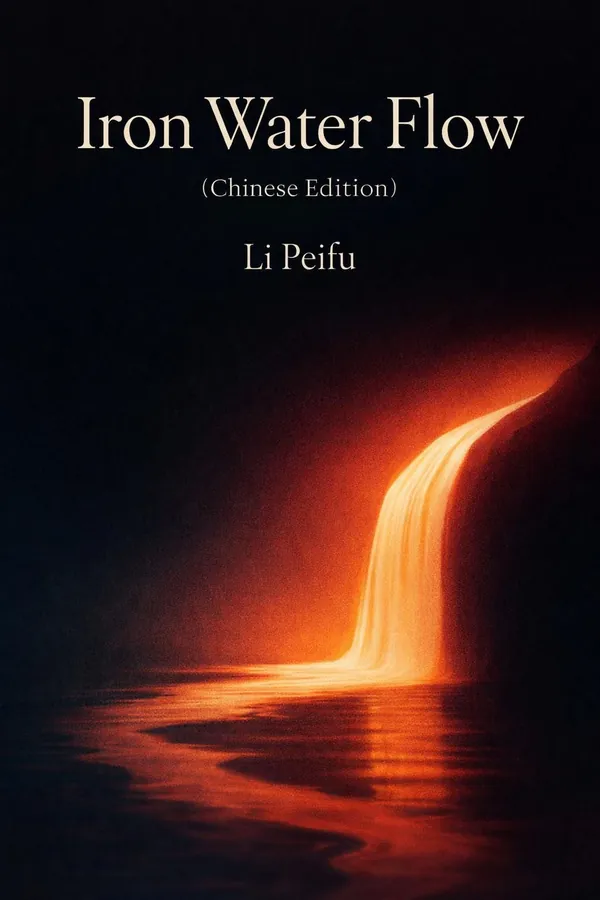
Iron Water Flow (Chinese Edition): Summary & Key Insights
by Li Peifu
 10 min3 chaptersAudio available
What Is Iron Water Flow (Chinese Edition) About?
Iron Water Flow (Chinese Edition) by Li Peifu is a classics book spanning 3 pages. Iron Water Flow is a novel by Chinese author Li Peifu that portrays the transformation of rural and urban life in central China during a period of social change. Written in a realist style, it depicts the struggles and destinies of ordinary people caught in the tide of the times, with plain yet powerful language and deep emotional resonance, reflecting the author’s insight into social reality and human compassion.
This FizzRead summary covers all 3 key chapters of Iron Water Flow (Chinese Edition) in approximately 10 minutes, distilling the most important ideas, arguments, and takeaways from Li Peifu's work. Also available as an audio summary and Key Quotes Podcast.
Iron Water Flow (Chinese Edition)
Iron Water Flow is a novel by Chinese author Li Peifu that portrays the transformation of rural and urban life in central China during a period of social change. Written in a realist style, it depicts the struggles and destinies of ordinary people caught in the tide of the times, with plain yet powerful language and deep emotional resonance, reflecting the author’s insight into social reality and human compassion.
Who Should Read Iron Water Flow (Chinese Edition)?
This book is perfect for anyone interested in classics and looking to gain actionable insights in a short read. Whether you're a student, professional, or lifelong learner, the key ideas from Iron Water Flow (Chinese Edition) by Li Peifu will help you think differently.
- ✓Readers who enjoy classics and want practical takeaways
- ✓Professionals looking to apply new ideas to their work and life
- ✓Anyone who wants the core insights of Iron Water Flow (Chinese Edition) in just 10 minutes
Want the full summary?
Get instant access to this book summary and 100K+ more with Fizz Moment.
Get Free SummaryAvailable on App Store • Free to download
Key Chapters
The first movement of *Iron Water Flow* unfolds along the banks of an unnamed river, a space that represents both continuity and rupture. I wanted the landscape itself to speak — the soil carrying the memory of ancestors, the water carrying the dreams of descendants. Here, the old agrarian world breathes its last breaths as factories and construction sites begin to sprout like iron flowers. The transformation is not sudden; it seeps quietly into the rhythm of life. The elders cling to rituals and land boundaries, but the younger generation feels an inexpressible pull toward the city’s light.
I drew from personal observation of Henan villages during China’s post-reform decades. The world that raised me was steadily dissolving. Through characters like the village patriarch and his sons, I explored the psychological fracture that comes from watching one’s identity erode while progress marches forward. The patriarch sees machines and roads as signs of destruction, while his sons regard them as gateways to freedom. Yet neither side emerges victorious — modernization extracts something irreplaceable from both. That contradiction forms the essence of the 'flow'—a molten stream burning through tradition before hardening into new order.
In writing these scenes, I often imagined the ironwater pouring through the mold: glowing, alive, and merciless. The people in my novel live inside that metaphor. They are heated by ambition, melted by circumstance, and reshaped by the weight of history. Their small loves and heartbreaks are not trivia; they are the spiritual consequence of national transformation. For you, the reader, I hope these moments serve as a mirror — to consider your own flow, the points where the past softens and the future hardens around it.
As the narrative deepens, the focus shifts to the individuals who bear the cost of progress — the workers, the dreamers, the displaced. I approached their destinies with a realism grounded in compassion. Their struggles are not symbols; they are lived experiences drawn from the faces I have seen in factories and rural towns. In *Iron Water Flow*, progress is double-edged: it grants opportunity but demands sacrifice. Each act of construction destroys a familiar corner, each new invention undermines an old certainty.
The novel’s emotional core lies in the labor scenes. I wrote them not as spectacles of production, but as intimate studies of human resilience. A man forging metal under intense heat, a woman selling her land to send her child to school, a migrant worker sleeping beside construction debris — these are the unsung poems of modernization. Their choices embody the question that runs through the book: what does progress give us, and what does it take away?
Love in this world cannot remain untouched. Relationships crack under the pressure of economic pursuit and relocation. Yet even amid exhaustion and betrayal, tenderness survives — the small gestures that preserve dignity, the quiet moments when hope flickers. That is where human beauty resides, resilient in spite of the iron around it. I wanted to remind readers that in chasing prosperity, we risk losing the ability to see each other, to feel with one another. By following these intertwined lives, you might sense how history is lived not only in grand events, but in the trembling of a hand, the silence of a farewell.
+ 1 more chapters — available in the FizzRead app
All Chapters in Iron Water Flow (Chinese Edition)
About the Author
Li Peifu, born in 1953 in Runan County, Henan Province, is a contemporary Chinese novelist. His works often focus on the culture and life of central China. His representative works include Life Album, The City’s Lights, and The Gate of the Sheep. He has received numerous literary honors, including the Lu Xun Literature Prize and nominations for the Mao Dun Literature Prize.
Get This Summary in Your Preferred Format
Read or listen to the Iron Water Flow (Chinese Edition) summary by Li Peifu anytime, anywhere. FizzRead offers multiple formats so you can learn on your terms — all free.
Available formats: App · Audio · PDF · EPUB — All included free with FizzRead
Download Iron Water Flow (Chinese Edition) PDF and EPUB Summary
Key Quotes from Iron Water Flow (Chinese Edition)
“The first movement of *Iron Water Flow* unfolds along the banks of an unnamed river, a space that represents both continuity and rupture.”
“As the narrative deepens, the focus shifts to the individuals who bear the cost of progress — the workers, the dreamers, the displaced.”
Frequently Asked Questions about Iron Water Flow (Chinese Edition)
Iron Water Flow (Chinese Edition) by Li Peifu is a classics book that explores key ideas across 3 chapters. Iron Water Flow is a novel by Chinese author Li Peifu that portrays the transformation of rural and urban life in central China during a period of social change. Written in a realist style, it depicts the struggles and destinies of ordinary people caught in the tide of the times, with plain yet powerful language and deep emotional resonance, reflecting the author’s insight into social reality and human compassion.
You Might Also Like




Browse by Category
Ready to read Iron Water Flow (Chinese Edition)?
Get the full summary and 100K+ more books with Fizz Moment.