
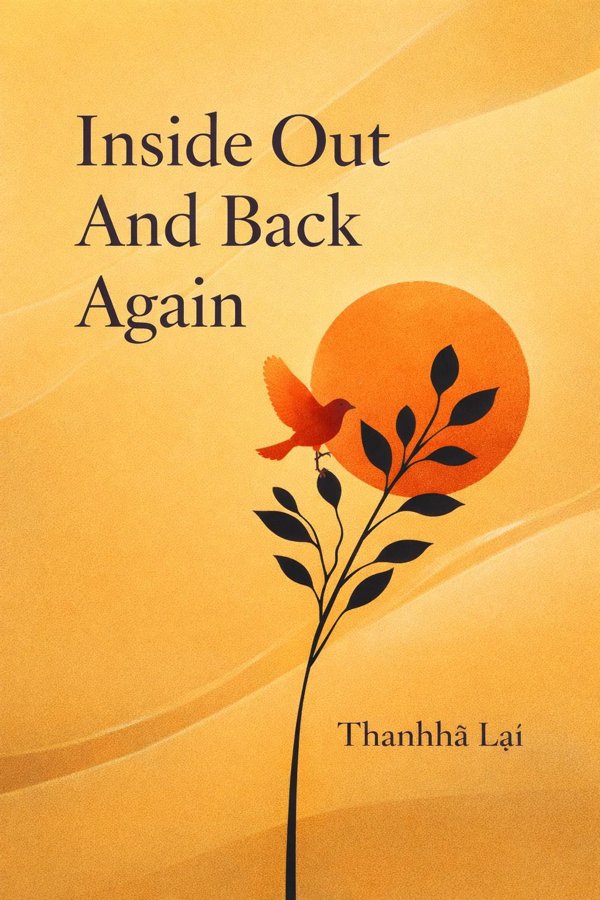
Inside Out And Back Again: Summary & Key Insights
by Thanhhà Lại
 10 min5 chaptersAudio available
What Is Inside Out And Back Again About?
Inside Out And Back Again by Thanhhà Lại is a classics book spanning 5 pages. Inside Out and Back Again là tiểu thuyết đầu tay của Thanhhà Lại, được viết bằng thơ tự do dành cho lứa tuổi thiếu niên. Câu chuyện kể về Hà, một cô bé người Việt Nam phải rời quê hương sau khi Sài Gòn sụp đổ năm 1975 và bắt đầu cuộc sống mới ở Alabama, Hoa Kỳ. Qua những bài thơ ngắn gọn, tác phẩm khắc họa hành trình tìm kiếm bản sắc, nỗi nhớ quê hương và sự thích nghi với văn hóa mới.
This FizzRead summary covers all 5 key chapters of Inside Out And Back Again in approximately 10 minutes, distilling the most important ideas, arguments, and takeaways from Thanhhà Lại's work. Also available as an audio summary and Key Quotes Podcast.
Inside Out And Back Again
Inside Out and Back Again là tiểu thuyết đầu tay của Thanhhà Lại, được viết bằng thơ tự do dành cho lứa tuổi thiếu niên. Câu chuyện kể về Hà, một cô bé người Việt Nam phải rời quê hương sau khi Sài Gòn sụp đổ năm 1975 và bắt đầu cuộc sống mới ở Alabama, Hoa Kỳ. Qua những bài thơ ngắn gọn, tác phẩm khắc họa hành trình tìm kiếm bản sắc, nỗi nhớ quê hương và sự thích nghi với văn hóa mới.
Who Should Read Inside Out And Back Again?
This book is perfect for anyone interested in classics and looking to gain actionable insights in a short read. Whether you're a student, professional, or lifelong learner, the key ideas from Inside Out And Back Again by Thanhhà Lại will help you think differently.
- ✓Readers who enjoy classics and want practical takeaways
- ✓Professionals looking to apply new ideas to their work and life
- ✓Anyone who wants the core insights of Inside Out And Back Again in just 10 minutes
Want the full summary?
Get instant access to this book summary and 100K+ more with Fizz Moment.
Get Free SummaryAvailable on App Store • Free to download
Key Chapters
Before the world unraveled, Hà’s life in Saigon pulsed with ordinary rhythm — papaya trees she tended in the yard, the playful arguments with her brothers, the quiet strength of her mother who kept faith alive despite the long absence of her husband. Every day in Saigon was marked by small acts of defiance: a meal shared despite rations, laughter echoing through alleyways, a girl’s insistence on celebrating her tenth birthday while bombs echoed in the distance.
Yet, as the war drew to its end, fear crept into these moments. The city transformed — food grew scarce, whispers of Northern victory filled markets, and the uncertain fate of missing fathers hung like humidity in the air. I wrote those early scenes to preserve something fragile: the dignity of living fully while surrounded by loss. Hà’s father had been gone for nine years, his photograph the only trace of him at family altar prayers. His absence was heavy, shaping every silence in the home.
When Saigon fell, Hà’s childhood did too. The city she knew suddenly ceased to exist; joy became an act of mourning. I wanted readers to understand displacement not as a single tragic act but as a series of wrenching choices, each carving away a piece of what feels permanent. Leaving was not an adventure — it was an evacuation of memory.
The day Hà’s family fled was the day history turned personal. I imagined their flight not with cinematic drama but with the trembling ordinariness of fear — the quick packing of rice and photographs, the uncertainty of which direction safety lay. South Vietnam’s collapse was described not through politics, but through the child’s confusion at seeing her mother burn documents, trade valuables for passage, and silently cry while pretending to pray.
The family’s journey by boat across the ocean mirrored the chaos of many Vietnamese refugees of that era: cramped spaces, sickness, hunger, saltwater that seared skin and memory alike. The seas became a metaphor for disorientation — the loss of bearings, the vastness of exile beginning to unfold. Each poem breathed with the rhythm of waves, capturing the alternating hope and despair that accompany flight. Hà learned quickly that survival is a series of surrenders, and yet, each surrender carried its own seed of defiance.
In those moments, I wanted readers to glimpse the transformation already beginning. When everything familiar disappears, what remains is the instinct to endure. The journey across the ocean was not just geographical; it marked the turning inside out of identity — the dismantling of language, childhood, homeland, all waiting to be rebuilt on distant shores.
+ 3 more chapters — available in the FizzRead app
All Chapters in Inside Out And Back Again
About the Author
Thanhhà Lại sinh tại Việt Nam và di cư sang Hoa Kỳ năm 1975. Bà là nhà văn chuyên viết cho thiếu nhi, nổi tiếng với phong cách thơ tự do giàu cảm xúc. Tác phẩm đầu tay 'Inside Out and Back Again' giúp bà giành Giải thưởng Sách Quốc gia Hoa Kỳ và được vinh danh với Huy chương Danh dự Newbery.
Get This Summary in Your Preferred Format
Read or listen to the Inside Out And Back Again summary by Thanhhà Lại anytime, anywhere. FizzRead offers multiple formats so you can learn on your terms — all free.
Available formats: App · Audio · PDF · EPUB — All included free with FizzRead
Download Inside Out And Back Again PDF and EPUB Summary
Key Quotes from Inside Out And Back Again
“The day Hà’s family fled was the day history turned personal.”
Frequently Asked Questions about Inside Out And Back Again
Inside Out And Back Again by Thanhhà Lại is a classics book that explores key ideas across 5 chapters. Inside Out and Back Again là tiểu thuyết đầu tay của Thanhhà Lại, được viết bằng thơ tự do dành cho lứa tuổi thiếu niên. Câu chuyện kể về Hà, một cô bé người Việt Nam phải rời quê hương sau khi Sài Gòn sụp đổ năm 1975 và bắt đầu cuộc sống mới ở Alabama, Hoa Kỳ. Qua những bài thơ ngắn gọn, tác phẩm khắc họa hành trình tìm kiếm bản sắc, nỗi nhớ quê hương và sự thích nghi với văn hóa mới.
You Might Also Like






Browse by Category
Ready to read Inside Out And Back Again?
Get the full summary and 100K+ more books with Fizz Moment.