
If You Give a Mouse a Cookie: Summary & Key Insights
 10 min9 chaptersAudio available
Key Takeaways from If You Give a Mouse a Cookie
A single generous act can create a chain of consequences far larger than we expect.
What seems like endless asking often follows a clear inner logic.
One fulfilled need often reveals three more hiding behind it.
Ordinary moments become memorable when curiosity is allowed to lead.
Responsibility often enters a story disguised as play.
What Is If You Give a Mouse a Cookie About?
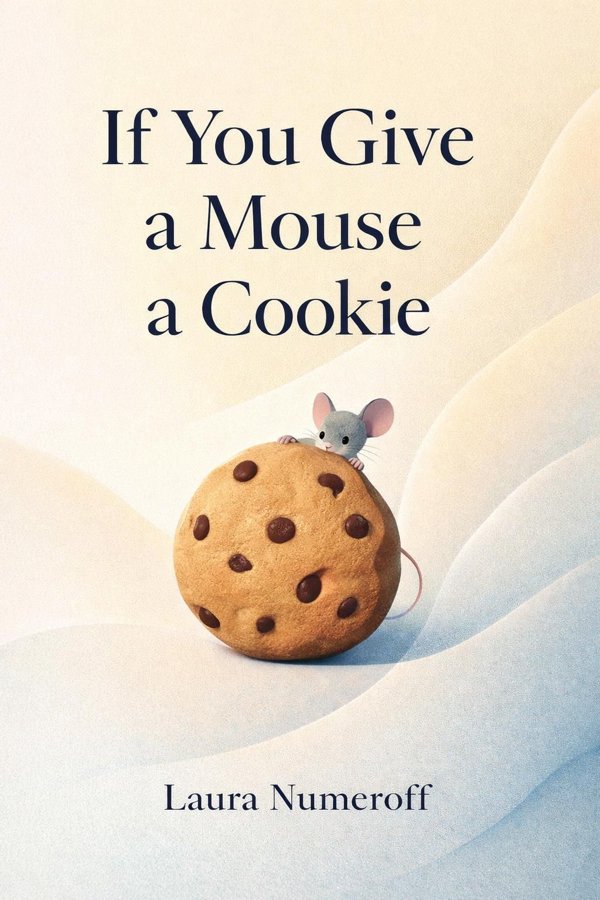
If You Give a Mouse a Cookie by Laura Numeroff is a classics book spanning 8 pages. What looks like a tiny favor can quietly reshape an entire day. That is the delightful premise behind If You Give a Mouse a Cookie, Laura Numeroff’s classic picture book about a boy who offers a cookie to a mouse, only to discover that one simple gesture leads to an escalating series of requests. A glass of milk leads to a straw, a mirror leads to a haircut, and before long the household is caught in a funny, fast-moving cycle of cause and effect. On the surface, it is a playful story for young readers. Beneath that surface, it is a brilliant lesson in sequencing, anticipation, hospitality, and the unpredictable logic of childhood curiosity. Numeroff’s rhythmic storytelling, paired with Felicia Bond’s expressive illustrations, makes the book instantly memorable and ideal for read-aloud sharing. Its lasting appeal comes from how accurately it captures the way children think: one idea sparks another, and every small moment opens into something bigger. Beloved by families, teachers, and librarians, this modern classic remains a joyful introduction to narrative structure, humor, and imagination.
This FizzRead summary covers all 9 key chapters of If You Give a Mouse a Cookie in approximately 10 minutes, distilling the most important ideas, arguments, and takeaways from Laura Numeroff's work. Also available as an audio summary and Key Quotes Podcast.
If You Give a Mouse a Cookie
What looks like a tiny favor can quietly reshape an entire day. That is the delightful premise behind If You Give a Mouse a Cookie, Laura Numeroff’s classic picture book about a boy who offers a cookie to a mouse, only to discover that one simple gesture leads to an escalating series of requests. A glass of milk leads to a straw, a mirror leads to a haircut, and before long the household is caught in a funny, fast-moving cycle of cause and effect. On the surface, it is a playful story for young readers. Beneath that surface, it is a brilliant lesson in sequencing, anticipation, hospitality, and the unpredictable logic of childhood curiosity. Numeroff’s rhythmic storytelling, paired with Felicia Bond’s expressive illustrations, makes the book instantly memorable and ideal for read-aloud sharing. Its lasting appeal comes from how accurately it captures the way children think: one idea sparks another, and every small moment opens into something bigger. Beloved by families, teachers, and librarians, this modern classic remains a joyful introduction to narrative structure, humor, and imagination.
Who Should Read If You Give a Mouse a Cookie?
This book is perfect for anyone interested in classics and looking to gain actionable insights in a short read. Whether you're a student, professional, or lifelong learner, the key ideas from If You Give a Mouse a Cookie by Laura Numeroff will help you think differently.
- ✓Readers who enjoy classics and want practical takeaways
- ✓Professionals looking to apply new ideas to their work and life
- ✓Anyone who wants the core insights of If You Give a Mouse a Cookie in just 10 minutes
Want the full summary?
Get instant access to this book summary and 100K+ more with Fizz Moment.
Get Free SummaryAvailable on App Store • Free to download
Key Chapters
A single generous act can create a chain of consequences far larger than we expect. If You Give a Mouse a Cookie begins with a boy offering a cookie to a visiting mouse, and that tiny moment becomes the spark for the entire story. Laura Numeroff uses this simple opening to show how everyday kindness is rarely self-contained. One action leads to another, especially when curiosity, need, and imagination enter the picture.
The beauty of this opening is that it feels so familiar. Anyone who has spent time with children knows that a small favor often expands. You hand over one toy, and suddenly another is needed to complete the game. You pour one drink, and now a special cup, a napkin, and a place mat all seem essential. The story captures this experience with humor rather than frustration, helping readers see the world through a childlike lens where every object naturally suggests the next desire.
This first moment also establishes the emotional tone of the book. The boy is not mean, suspicious, or reluctant. He is open-hearted. That generosity matters because it frames the rest of the story not as a burden, but as an adventure born from kindness. In classrooms and homes, this scene can prompt discussions about hospitality, boundaries, and the ripple effects of our choices.
A practical way to use this idea with children is to ask them to predict what might happen after a simple action: “If you give a friend a marker, what might they ask for next?” This builds sequencing skills and empathy at the same time.
Actionable takeaway: Notice how one small act sets larger events in motion, and use that awareness to teach both kindness and thoughtful anticipation.
What seems like endless asking often follows a clear inner logic. After the mouse eats the cookie, he asks for a glass of milk. That request is not random or unreasonable. Cookies make people thirsty, and the mouse is simply following the natural next step. Numeroff’s genius lies in turning this ordinary sequence into a playful pattern that children instantly understand.
This part of the book introduces one of its most valuable lessons: cause and effect. Young readers are learning that events connect, and this story makes that principle visible in a funny, concrete way. The cookie causes thirst. Thirst leads to milk. Milk suggests a straw. The mouse’s requests may feel endless, but they are not chaotic. They are linked by recognizable needs and associations.
This idea is especially useful for parents and educators because it mirrors how children think. Adults often interpret repeated requests as distractions, but children frequently experience them as connected steps in a single unfolding experience. A child who asks for paint may soon need paper, water, a smock, and a place to dry the artwork. The requests do not come from ingratitude. They come from momentum.
One practical application is to help children map sequences in daily life. During snack time, bedtime, or getting ready for school, adults can ask, “What usually comes next?” This strengthens planning skills and helps children understand routines. It also encourages adults to anticipate needs before frustration builds.
By portraying the mouse’s logic so clearly, the book validates curiosity while also making the pattern amusing. Readers laugh because they recognize the truth in it.
Actionable takeaway: When a new request appears, look for the connection behind it and use that moment to teach sequencing instead of simply saying no.
One fulfilled need often reveals three more hiding behind it. After receiving milk, the mouse wants a straw and then a napkin. This sequence is funny because it feels so familiar: meeting one need does not end the process, it uncovers the next layer. Numeroff turns that everyday truth into a charming pattern that young readers can anticipate and enjoy.
At a deeper level, this part of the story highlights how comfort and completion matter. The mouse does not just want milk in the abstract; he wants the full experience. A straw makes drinking easier or more fun. A napkin keeps things tidy. Children naturally think in these expanding circles, where every activity has accessories, tools, and finishing touches. Adults may see extra requests as unnecessary, but for children they often represent a desire to make an experience feel complete.
This insight has practical value in real life. If a child asks to color, they may soon need crayons, paper, tape, and a place to display the picture. If they ask for a snack, they may want a drink, a plate, and their favorite seat. Seeing these linked needs ahead of time can reduce impatience and turn friction into smoother routines.
This part of the book also supports early executive-function learning. Children begin to understand that actions involve preparation and cleanup, not just the exciting first step. Asking, “What else might you need?” helps them become more independent and organized.
Rather than mocking the mouse, the story invites us to appreciate his logic. His requests are not endless because he is impossible to satisfy. They expand because each object suggests a more complete version of what he is doing.
Actionable takeaway: Teach children to think one or two steps ahead by asking them to name everything they might need before starting an activity.
Ordinary moments become memorable when curiosity is allowed to lead. After the snack, the mouse notices his appearance and asks for a mirror. Seeing his reflection then inspires him to ask for scissors to trim his hair. In just a few pages, a simple treat has evolved into self-examination, grooming, and a new mini-project. This is the comic rhythm that makes the book so enduring.
What Numeroff captures so well here is the associative nature of thought, especially in children. One object does not stay isolated. A mirror does not merely reflect; it triggers awareness. Awareness triggers action. Action creates another need. This kind of mental leap can seem abrupt to adults, but it is deeply natural. Children often move from one idea to the next through emotional or imaginative connections rather than strict plans.
There is also a subtle lesson here about identity and self-presentation. The mouse wants to look at himself, and then he wants to improve what he sees. That impulse is recognizable at every age. A child trying on clothes, fixing their hair, or arranging a backpack is experimenting with selfhood. The story gently validates that process without becoming heavy or moralizing.
In practical terms, this scene can help adults appreciate that interruptions are sometimes evidence of engagement, not disobedience. A child who pauses one task to examine, adjust, or improve something may be deeply involved in learning. Teachers can use this moment to discuss observation: “What do you notice? What does that make you want to do next?”
The mirror-and-scissors sequence reminds readers that imagination often begins with simply paying attention.
Actionable takeaway: Treat sudden shifts in a child’s interest as opportunities to explore how observation leads to new ideas and creative action.
Responsibility often enters a story disguised as play. Once the mouse trims his hair, he notices the trimmings and asks for a broom to sweep them up. What began as a snack has now become a cleaning project. This moment matters because it shows that actions naturally create consequences, including the need to care for the messes we make.
For young readers, this is an important but gentle introduction to responsibility. The book does not lecture. It simply shows the mouse responding to what his earlier choices produced. He wanted a haircut, and the haircut left scraps. The broom becomes the next logical tool. This is one reason the story works so well in early childhood settings: it teaches cause and effect not only in desires, but in duties.
At the same time, the scene remains playful. The mouse does not approach cleaning as punishment. It becomes part of the ongoing adventure. That framing is useful in real life. Children often resist chores when they are presented as harsh obligations detached from the activity they enjoyed. But if cleanup is treated as the natural final stage of a project, it feels more manageable and meaningful.
Parents and teachers can apply this by narrating tasks in sequence: “We painted, so now we wash the brushes,” or “We baked, so now we wipe the table.” This helps children understand that making, enjoying, and tidying belong together. Visual charts and cleanup songs can make the process even more engaging.
Numeroff also suggests something larger: order itself can be satisfying. The mouse notices disorder and wants to fix it. That instinct can be cultivated early when adults model calm, consistent cleanup habits.
Actionable takeaway: Connect cleanup directly to the activity that caused the mess so children learn that responsibility is a natural extension of creativity.
Creative energy rarely arrives alone; it pulls supplies, space, and new ideas along with it. After cleaning up, the mouse becomes inspired to draw and asks for paper and crayons. This shift is one of the most delightful parts of the book because it shows how quickly a practical moment can become an imaginative one. The mouse is not just reacting to needs anymore. He is inventing.
This scene reveals an essential truth about children: once they feel comfortable and engaged, imagination expands rapidly. A cleaned-up space becomes a studio. A passing thought becomes a picture. The book celebrates this without slowing its pace. Instead, Numeroff lets creative momentum feel as inevitable as thirst after a cookie.
There is educational value here as well. Art in the story is not separated from daily life. It grows out of it. This reflects how children often create: a meal, a memory, or an object in the room becomes inspiration. Adults can use this insight by keeping simple materials accessible. A stack of paper, a few crayons, and permission to make something are often enough to turn idle time into meaningful play.
The scene also models resourcefulness. The mouse does not wait for a perfect setup. He asks for what he needs and begins. That is a helpful mindset for learners and creators of any age. Whether a child wants to build with blocks, write a story, or act out a scene, creative work usually starts with gathering a few basic tools and trying something.
By including drawing in the chain of events, the book quietly honors artistic expression as a normal, joyful part of childhood.
Actionable takeaway: Keep simple creative materials available and encourage children to follow a spark of interest before it disappears.
Making something is only half the joy; sharing it completes the experience. After drawing a picture, the mouse wants to hang it on the refrigerator. This moment captures a fundamental aspect of childhood creativity: children do not only want to create, they want their creations to be seen. Recognition turns effort into pride.
Numeroff’s story understands this beautifully. The mouse’s drawing is not treated as a throwaway activity. It matters enough to display. In homes and classrooms, that instinct is incredibly important to support. When adults make room for children’s work on walls, refrigerators, bulletin boards, or digital photo albums, they send a powerful message: what you made matters.
This scene also reinforces the story’s sequencing logic. To hang the picture, the mouse must move to another space, and that movement triggers the next association. The refrigerator is not just a place to display art; it also reminds him of food and drink. In this way, pride in one’s work becomes the bridge to the next need.
Practically, this idea can help adults create more encouraging environments. Instead of praising only outcomes, they can celebrate the process and make children’s work visible. A “creation corner” at home or a rotating classroom display helps children feel that their ideas deserve attention. This strengthens confidence and motivates further effort.
There is also a subtle social lesson: appreciation builds connection. When the boy helps the mouse display the picture, he is doing more than offering tape or space. He is participating in the mouse’s joy.
Actionable takeaway: Regularly display children’s creations in visible places to reinforce effort, confidence, and the value of sharing what they make.
The most satisfying stories often end where they began, but with new meaning. After hanging the drawing on the refrigerator, the mouse notices he is thirsty again, asks for another glass of milk, and then naturally wants a cookie to go with it. The book closes by returning to the original moment, completing a perfect narrative circle.
This circular structure is one of the main reasons If You Give a Mouse a Cookie has become a classic. It gives children the pleasure of recognition. The ending feels surprising and inevitable at the same time. Readers realize that all the detours were part of a pattern, and that the story’s rhythm can begin again. This makes the book especially effective as a read-aloud because children love anticipating the return to the starting point.
From a learning perspective, the circular ending introduces an elegant form of narrative design. Young readers begin to understand that stories can be structured, not just sequential. Beginnings and endings can echo each other. Teachers often use the book to teach sequencing, prediction, and story maps because the pattern is so clear and memorable.
The circular form also reflects real life. Many daily routines loop: meals lead to cleanup, cleanup leads to play, play leads to snacks, and the cycle starts again. Children find comfort in such repetition. It helps them predict what comes next and feel secure in familiar patterns.
Adults can build on this by inviting children to create their own circular tales: “If you give a dog a ball…” or “If you bring a teddy bear to bed…” This supports early writing and critical thinking.
Actionable takeaway: Use the book’s ending to teach children how patterns repeat, and encourage them to invent their own circular stories.
Children often absorb important lessons best when they are laughing. The brilliance of If You Give a Mouse a Cookie is that it teaches sequencing, cause and effect, prediction, and responsibility without ever sounding instructional. The humor does the teaching. Readers smile at the mouse’s escalating requests, and in that enjoyment they internalize how one event leads to another.
This is a powerful reminder for parents, teachers, and caregivers. Learning does not always require formal explanation. In fact, many foundational skills become more durable when embedded in delight. A child who laughs at the mouse asking for ever more items is also learning to trace connections, anticipate outcomes, and recognize recurring structure. Because the emotional experience is positive, the lesson sticks.
The illustrations contribute significantly to this effect. Felicia Bond’s artwork adds expression, pace, and visual clues that deepen the comedy. Children can “read” much of the story through the mouse’s posture and the growing scale of the day’s activities. This supports emerging readers, who learn to gather meaning from both words and images.
In practical settings, adults can use humor to turn routines into learning opportunities. Instead of saying, “First do this, then that,” they can create playful chains: “If we put on one shoe, what might happen next?” Songs, silly predictions, and exaggerated storytelling can help children enjoy structure rather than resist it.
The book’s enduring popularity proves that entertainment and education are not opposites. When woven together skillfully, they make each other stronger.
Actionable takeaway: Use playfulness and humor to teach patterns and routines, because children remember joyful lessons longer.
All Chapters in If You Give a Mouse a Cookie
About the Author
Laura Numeroff is a bestselling American children’s author known for creating playful, highly readable stories that have become staples of early childhood reading. She achieved lasting fame with If You Give a Mouse a Cookie, a modern picture-book classic that launched the popular If You Give... series. Her writing is admired for its rhythmic simplicity, comic timing, and strong understanding of how young children think and speak. Numeroff’s books are widely used by parents, teachers, and librarians because they combine entertainment with early learning concepts such as sequencing, prediction, and cause and effect. Through her memorable storytelling and successful collaboration with illustrator Felicia Bond, she has made a major contribution to contemporary children’s literature and remains one of the genre’s most recognizable voices.
Get This Summary in Your Preferred Format
Read or listen to the If You Give a Mouse a Cookie summary by Laura Numeroff anytime, anywhere. FizzRead offers multiple formats so you can learn on your terms — all free.
Available formats: App · Audio · PDF · EPUB — All included free with FizzRead
Download If You Give a Mouse a Cookie PDF and EPUB Summary
Key Quotes from If You Give a Mouse a Cookie
“A single generous act can create a chain of consequences far larger than we expect.”
“What seems like endless asking often follows a clear inner logic.”
“One fulfilled need often reveals three more hiding behind it.”
“Ordinary moments become memorable when curiosity is allowed to lead.”
“Responsibility often enters a story disguised as play.”
Frequently Asked Questions about If You Give a Mouse a Cookie
If You Give a Mouse a Cookie by Laura Numeroff is a classics book that explores key ideas across 9 chapters. What looks like a tiny favor can quietly reshape an entire day. That is the delightful premise behind If You Give a Mouse a Cookie, Laura Numeroff’s classic picture book about a boy who offers a cookie to a mouse, only to discover that one simple gesture leads to an escalating series of requests. A glass of milk leads to a straw, a mirror leads to a haircut, and before long the household is caught in a funny, fast-moving cycle of cause and effect. On the surface, it is a playful story for young readers. Beneath that surface, it is a brilliant lesson in sequencing, anticipation, hospitality, and the unpredictable logic of childhood curiosity. Numeroff’s rhythmic storytelling, paired with Felicia Bond’s expressive illustrations, makes the book instantly memorable and ideal for read-aloud sharing. Its lasting appeal comes from how accurately it captures the way children think: one idea sparks another, and every small moment opens into something bigger. Beloved by families, teachers, and librarians, this modern classic remains a joyful introduction to narrative structure, humor, and imagination.
You Might Also Like






Browse by Category
Ready to read If You Give a Mouse a Cookie?
Get the full summary and 100K+ more books with Fizz Moment.