
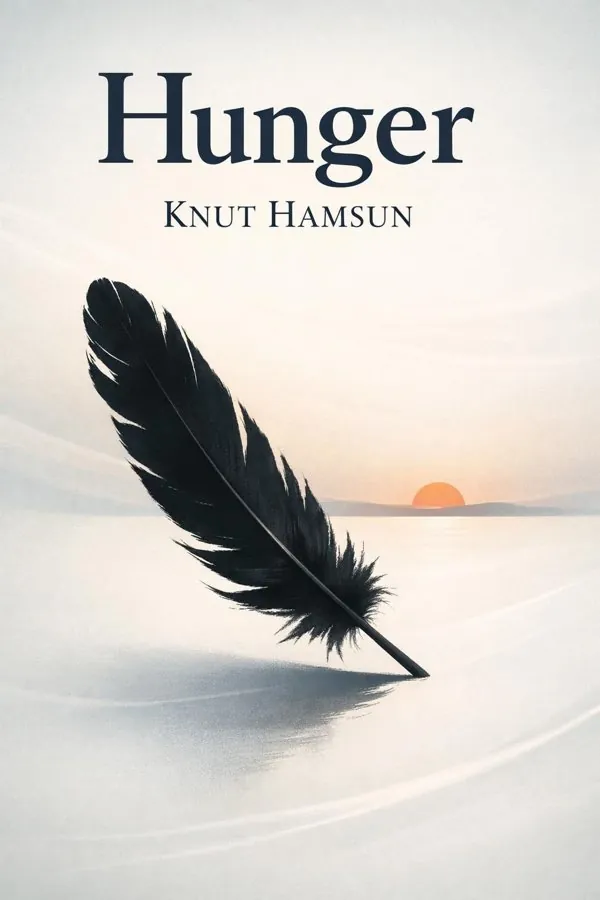
Hunger: Summary & Key Insights
by Knut Hamsun
 10 min6 chaptersAudio available
What Is Hunger About?
Hunger by Knut Hamsun is a classics book spanning 6 pages. Hunger is a novel by Norwegian author Knut Hamsun, first published in 1890. It follows a destitute, unnamed writer wandering the streets of Kristiania (now Oslo) as he struggles with hunger, pride, and despair. Through an intense stream-of-consciousness narrative, Hamsun explores the protagonist’s psychological turmoil and existential struggle. The novel is considered a groundbreaking work of modernist literature.
This FizzRead summary covers all 6 key chapters of Hunger in approximately 10 minutes, distilling the most important ideas, arguments, and takeaways from Knut Hamsun's work. Also available as an audio summary and Key Quotes Podcast.
Hunger
Hunger is a novel by Norwegian author Knut Hamsun, first published in 1890. It follows a destitute, unnamed writer wandering the streets of Kristiania (now Oslo) as he struggles with hunger, pride, and despair. Through an intense stream-of-consciousness narrative, Hamsun explores the protagonist’s psychological turmoil and existential struggle. The novel is considered a groundbreaking work of modernist literature.
Who Should Read Hunger?
This book is perfect for anyone interested in classics and looking to gain actionable insights in a short read. Whether you're a student, professional, or lifelong learner, the key ideas from Hunger by Knut Hamsun will help you think differently.
- ✓Readers who enjoy classics and want practical takeaways
- ✓Professionals looking to apply new ideas to their work and life
- ✓Anyone who wants the core insights of Hunger in just 10 minutes
Want the full summary?
Get instant access to this book summary and 100K+ more with Fizz Moment.
Get Free SummaryAvailable on App Store • Free to download
Key Chapters
I begin with my narrator walking the streets of Kristiania under a pale, indifferent sky. He is nameless, for names are luxuries, and his identity dissolves with each skipped meal. In this bleak landscape, every thought becomes an echo of his craving. The cobblestones blur beneath his feet, the shop windows gleam with unattainable promise, and the world seems both absurdly alive and mocking.
As he wanders, the reader enters the rhythm of deprivation. His hunger is not merely physical; it is metaphysical, a yearning for recognition. Every person he meets — the pawnbroker, the policeman, the editor — becomes a reminder of his invisibility. His mind, however, refuses simplicity. Even as he weakens, he constructs elaborate fantasies, arguing with himself, inventing grand explanations for his misfortune. That inner dialogue is the pulse of the book: a man reasoning himself into madness while clinging to his dignity.
In these pages, I wanted the reader to feel the slow erosion of composure. Hunger erases civility and heightens pride. The narrator struggles against instinct, insisting on moral superiority even as he sleeps on benches, lies to strangers, or offers his last coin in misplaced generosity. Every small decision vibrates with contradiction: self-respect against survival, imagination against reality. His suffering is the crucible through which modern consciousness is forged.
Kristiania itself becomes a living symbol. It is beautiful and cruel, a city of light and coldness. Its people walk past him without seeing, yet its silence speaks louder than any comfort. This alienation — the severing of man from community — is the soil of modern literature. Through that loneliness, we explore not a social commentary but an existential abyss, where one’s worth must be measured against nothing but persistence.
Every rejection shapes him, and each humiliation deepens his resolve. The narrator presents his manuscripts to newspaper editors with trembling hope. He waits, imagines praise, and prepares himself for payment that never arrives. His pride becomes both armor and agony. When told his work is unsuitable, he cannot accept defeat. He withdraws, inventing excuses, convincing himself they misunderstand his genius. It is pride that sustains him in hunger, yet it also breaks him.
In these moments, I wished to depict the artist’s impossible burden — the collision between creative spirit and an indifferent world. The city offers no refuge for subtlety, no payment for sincerity. His starvation becomes symbolic of the writer’s internal famine: the struggle to produce truth in an environment that values utility. As his body weakens, his imagination strengthens cruelly, mocking him with illusions of grandeur. He begins to hear music in the air, to see signs of destiny in random gestures.
Still, amid the degradation, there is beauty. His faith in creation survives beyond practicality. Even as he raves, he continues to write — fragments scrawled on scraps, words that might never be read. That act itself is sacred rebellion. Through hunger, art defies mortality. I wanted this idea to shimmer beneath the madness: that artistic dignity, when stripped of reward, becomes purer in its suffering. The narrator’s refusal to surrender his ideals defines him, even as it destroys him.
+ 4 more chapters — available in the FizzRead app
All Chapters in Hunger
About the Author
Knut Hamsun (1859–1952) was a Norwegian author and Nobel Prize laureate in Literature (1920). Known for his psychological realism and influence on modernist prose, his notable works include Hunger, Growth of the Soil, and Pan.
Get This Summary in Your Preferred Format
Read or listen to the Hunger summary by Knut Hamsun anytime, anywhere. FizzRead offers multiple formats so you can learn on your terms — all free.
Available formats: App · Audio · PDF · EPUB — All included free with FizzRead
Download Hunger PDF and EPUB Summary
Key Quotes from Hunger
“I begin with my narrator walking the streets of Kristiania under a pale, indifferent sky.”
“Every rejection shapes him, and each humiliation deepens his resolve.”
Frequently Asked Questions about Hunger
Hunger by Knut Hamsun is a classics book that explores key ideas across 6 chapters. Hunger is a novel by Norwegian author Knut Hamsun, first published in 1890. It follows a destitute, unnamed writer wandering the streets of Kristiania (now Oslo) as he struggles with hunger, pride, and despair. Through an intense stream-of-consciousness narrative, Hamsun explores the protagonist’s psychological turmoil and existential struggle. The novel is considered a groundbreaking work of modernist literature.
You Might Also Like


Browse by Category
Ready to read Hunger?
Get the full summary and 100K+ more books with Fizz Moment.