
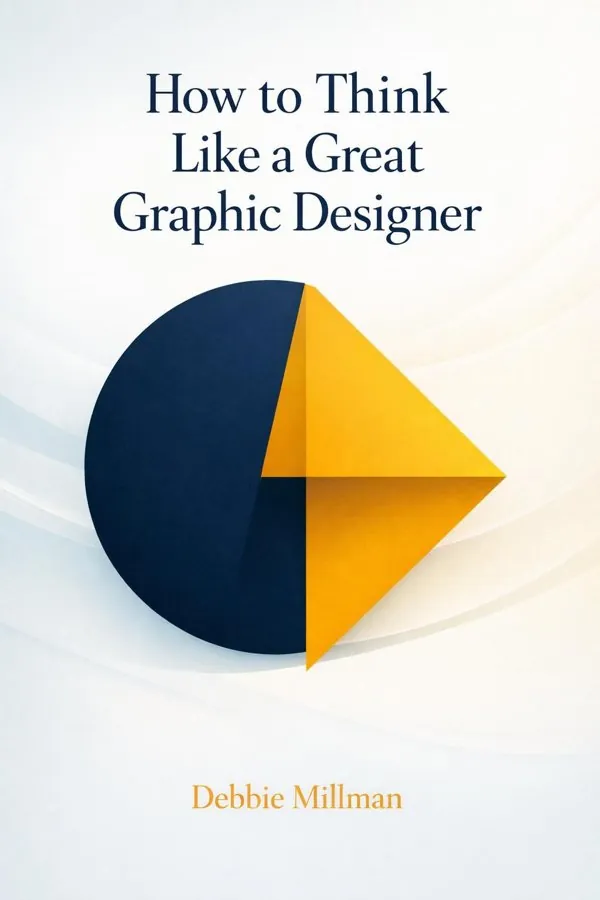
How to Think Like a Great Graphic Designer: Summary & Key Insights
 10 min8 chaptersAudio available
What Is How to Think Like a Great Graphic Designer About?
How to Think Like a Great Graphic Designer by Debbie Millman is a design book spanning 8 pages. A collection of interviews with nineteen of the world’s most influential graphic designers, this book explores their creative processes, philosophies, and personal insights. Debbie Millman delves into how these designers think, connect, and create, offering readers a rare glimpse into the minds behind some of the most iconic visual works of our time.
This FizzRead summary covers all 8 key chapters of How to Think Like a Great Graphic Designer in approximately 10 minutes, distilling the most important ideas, arguments, and takeaways from Debbie Millman's work. Also available as an audio summary and Key Quotes Podcast.
How to Think Like a Great Graphic Designer
A collection of interviews with nineteen of the world’s most influential graphic designers, this book explores their creative processes, philosophies, and personal insights. Debbie Millman delves into how these designers think, connect, and create, offering readers a rare glimpse into the minds behind some of the most iconic visual works of our time.
Who Should Read How to Think Like a Great Graphic Designer?
This book is perfect for anyone interested in design and looking to gain actionable insights in a short read. Whether you're a student, professional, or lifelong learner, the key ideas from How to Think Like a Great Graphic Designer by Debbie Millman will help you think differently.
- ✓Readers who enjoy design and want practical takeaways
- ✓Professionals looking to apply new ideas to their work and life
- ✓Anyone who wants the core insights of How to Think Like a Great Graphic Designer in just 10 minutes
Want the full summary?
Get instant access to this book summary and 100K+ more with Fizz Moment.
Get Free SummaryAvailable on App Store • Free to download
Key Chapters
Before any visual form emerges, design exists as thought—an electric pulse of curiosity and intention. In my conversations with these designers, I quickly learned that thinking like a designer means asking not only "How will it look?" but "Why does it matter?" and "To whom is it speaking?" Design thinking isn’t confined to producing clever solutions; it’s about empathy and connection. It transforms mere aesthetics into communication that impacts culture.
Milton Glaser once told me that every act of design is an act of love. His assertion may sound romantic, but beneath it lies extraordinary discipline. To love through design is to pay attention, to understand that every line, every color choice, every texture carries emotional weight. Paula Scher described her process as a dance between free, expressive intuition and the structure imposed by time and client expectation. For her, thinking like a designer means navigating between passion and professionalism without losing the pulse of play.
Stefan Sagmeister expanded this idea: to think creatively is to make room for emotion. He believes that design can—and should—make people happier. His experiments with emotional design serve as reminders that the relationship between designer and audience is deeply human. Sagmeister’s approach taught me that thought is not merely cerebral—it is embodied, textual, visceral.
The true core of design thinking, as expressed across these conversations, lies in curiosity. Great designers sustain a lifelong dialogue with their surroundings, always asking questions. Massimo Vignelli’s modernist principles remind us that clarity is not tyranny; it’s liberation. And Michael Bierut reinforces that discipline does not stifle creativity—it channels it. To think like a designer is to see problems as invitations, not obstacles.
Through these exchanges, I understood that thinking isn’t just preparation—it is design itself. By cultivating awareness, empathy, and imagination, one becomes capable of transforming invisible ideas into visible experiences.
Milton Glaser approaches design as a philosopher does—through meditation on purpose and meaning. Sitting across from him, I felt the weight of decades spent refining a simple but profound practice: to see design as a moral act. For Glaser, creating isn’t about invention for its own sake; it’s about revealing truth. His famous phrase, "Art is that which makes you a more compassionate person," echoes through every part of our conversation. Design, for him, is a conduit for empathy.
Glaser speaks about intuition as a form of intelligence that transcends logic. He believes that the mind must move beyond rational analysis into a realm of openness, a willingness to be surprised. He works slowly, premeditated, often sketching until an idea begins to breathe. Creativity, he insists, is about being receptive—to life, to mistakes, to evolution.
In thinking like Glaser, you begin to see that design isn’t only visual problem-solving but also contemplation. There’s humility in his process. He doesn’t pursue style; he seeks connection. His reflections taught me that genuine creativity carries ethical responsibility. To think creatively is to care—for the audience, for the culture, for the continuity of beauty.
That perspective reshapes how we see art and design. Glaser reminds us that the designer’s task is to add meaning to the world with honesty and grace. Every act of creation contributes either to clarity or confusion. A great designer must choose clarity, even at the cost of recognition.
+ 6 more chapters — available in the FizzRead app
All Chapters in How to Think Like a Great Graphic Designer
About the Author
Debbie Millman is a designer, author, educator, and host of the award-winning podcast 'Design Matters.' She has worked with major brands and served as President of Sterling Brands. Millman is also Chair of the Masters in Branding Program at the School of Visual Arts in New York City.
Get This Summary in Your Preferred Format
Read or listen to the How to Think Like a Great Graphic Designer summary by Debbie Millman anytime, anywhere. FizzRead offers multiple formats so you can learn on your terms — all free.
Available formats: App · Audio · PDF · EPUB — All included free with FizzRead
Download How to Think Like a Great Graphic Designer PDF and EPUB Summary
Key Quotes from How to Think Like a Great Graphic Designer
“Before any visual form emerges, design exists as thought—an electric pulse of curiosity and intention.”
“Milton Glaser approaches design as a philosopher does—through meditation on purpose and meaning.”
Frequently Asked Questions about How to Think Like a Great Graphic Designer
How to Think Like a Great Graphic Designer by Debbie Millman is a design book that explores key ideas across 8 chapters. A collection of interviews with nineteen of the world’s most influential graphic designers, this book explores their creative processes, philosophies, and personal insights. Debbie Millman delves into how these designers think, connect, and create, offering readers a rare glimpse into the minds behind some of the most iconic visual works of our time.
More by Debbie Millman

You Might Also Like

The Design of Everyday Things
Don Norman
10 min
The Better Angels of Our Nature
Steven Pinker
10 min
A Designer's Art
Paul Rand
10 min
Architects' Sketchbooks
Various Editors
10 min
Architectural Graphic Standards
The American Institute of Architects
10 min
Design Is Storytelling
Ellen Lupton
10 minBrowse by Category
Ready to read How to Think Like a Great Graphic Designer?
Get the full summary and 100K+ more books with Fizz Moment.