
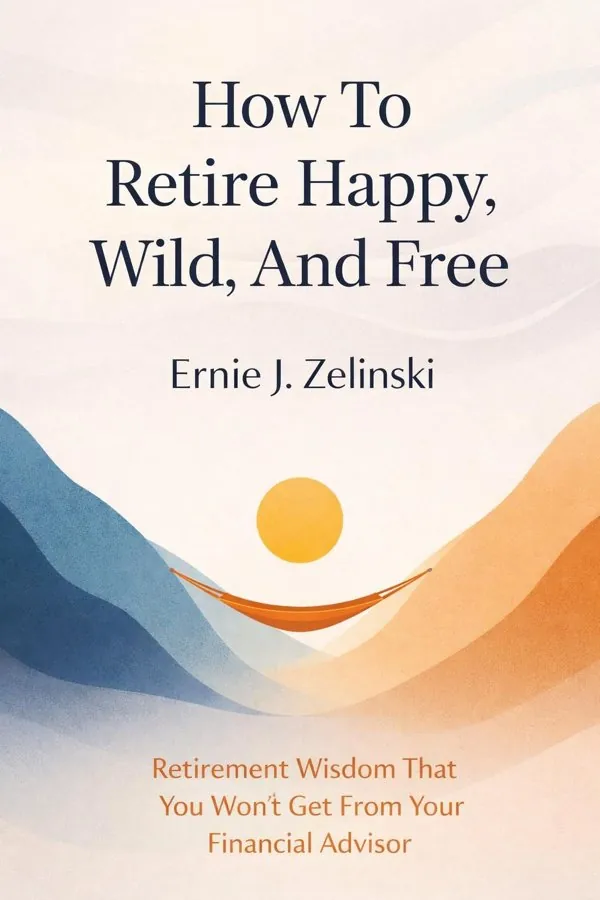
How To Retire Happy, Wild, And Free: Retirement Wisdom That You Won't Get From Your Financial Advisor: Summary & Key Insights
 10 min8 chaptersAudio available
Key Takeaways from How To Retire Happy, Wild, And Free: Retirement Wisdom That You Won't Get From Your Financial Advisor
A large retirement portfolio can buy comfort, but it cannot buy purpose.
Leaving a job is easy compared with leaving behind the identity that job created.
Many adults know how to work hard but have forgotten how to play well.
Retirement becomes lonely surprisingly fast when work had been your main source of social contact.
A fuller retirement often comes not from adding more possessions, but from wanting less and growing more.
What Is How To Retire Happy, Wild, And Free: Retirement Wisdom That You Won't Get From Your Financial Advisor About?
How To Retire Happy, Wild, And Free: Retirement Wisdom That You Won't Get From Your Financial Advisor by Ernie J. Zelinski is a career book spanning 6 pages. Most retirement advice begins and ends with numbers: savings targets, withdrawal rates, pensions, and investment plans. Ernie J. Zelinski argues that this approach misses the most important question of all: what makes life worth living once work is no longer the center of it? In How To Retire Happy, Wild, And Free, he reframes retirement not as a financial finish line but as a chance to design a richer, freer, and more personally meaningful life. The book explores how purpose, creativity, play, friendship, curiosity, and mindset shape the quality of retirement far more than money alone. Zelinski’s message matters because many people arrive at retirement financially prepared yet emotionally unprepared. They know how to stop working, but not how to start living differently. Drawing on his work as an author and speaker on work-life balance, creativity, and nontraditional success, Zelinski offers a refreshing alternative to fear-based retirement planning. His wisdom is practical, encouraging, and often unconventional, helping readers imagine retirement as a vibrant stage of reinvention rather than a slow decline into passivity.
This FizzRead summary covers all 8 key chapters of How To Retire Happy, Wild, And Free: Retirement Wisdom That You Won't Get From Your Financial Advisor in approximately 10 minutes, distilling the most important ideas, arguments, and takeaways from Ernie J. Zelinski's work. Also available as an audio summary and Key Quotes Podcast.
How To Retire Happy, Wild, And Free: Retirement Wisdom That You Won't Get From Your Financial Advisor
Most retirement advice begins and ends with numbers: savings targets, withdrawal rates, pensions, and investment plans. Ernie J. Zelinski argues that this approach misses the most important question of all: what makes life worth living once work is no longer the center of it? In How To Retire Happy, Wild, And Free, he reframes retirement not as a financial finish line but as a chance to design a richer, freer, and more personally meaningful life. The book explores how purpose, creativity, play, friendship, curiosity, and mindset shape the quality of retirement far more than money alone. Zelinski’s message matters because many people arrive at retirement financially prepared yet emotionally unprepared. They know how to stop working, but not how to start living differently. Drawing on his work as an author and speaker on work-life balance, creativity, and nontraditional success, Zelinski offers a refreshing alternative to fear-based retirement planning. His wisdom is practical, encouraging, and often unconventional, helping readers imagine retirement as a vibrant stage of reinvention rather than a slow decline into passivity.
Who Should Read How To Retire Happy, Wild, And Free: Retirement Wisdom That You Won't Get From Your Financial Advisor?
This book is perfect for anyone interested in career and looking to gain actionable insights in a short read. Whether you're a student, professional, or lifelong learner, the key ideas from How To Retire Happy, Wild, And Free: Retirement Wisdom That You Won't Get From Your Financial Advisor by Ernie J. Zelinski will help you think differently.
- ✓Readers who enjoy career and want practical takeaways
- ✓Professionals looking to apply new ideas to their work and life
- ✓Anyone who wants the core insights of How To Retire Happy, Wild, And Free: Retirement Wisdom That You Won't Get From Your Financial Advisor in just 10 minutes
Want the full summary?
Get instant access to this book summary and 100K+ more with Fizz Moment.
Get Free SummaryAvailable on App Store • Free to download
Key Chapters
A large retirement portfolio can buy comfort, but it cannot buy purpose. One of Zelinski’s central insights is that people often overestimate the role of money in creating a fulfilling retirement and underestimate the importance of emotional, social, and spiritual wealth. Financial stability matters, of course, but once basic needs and reasonable freedom are covered, happiness depends far more on how you spend your days than on the exact size of your savings. Many retirees who spent decades chasing income discover an uncomfortable truth: when work disappears, identity can disappear with it. If your sense of value came mostly from productivity, retirement may feel less like freedom and more like emptiness.
Zelinski encourages readers to think about retirement as a lifestyle design problem rather than a purely financial equation. Meaning can come from mentoring others, pursuing a craft, volunteering, learning, traveling, gardening, writing, or simply having enough time to be fully present. A retired teacher might tutor children for joy instead of salary. A former manager might finally devote time to painting, music, or community leadership. What matters is not whether the activity is profitable, but whether it is personally energizing.
This idea also challenges the endless postponement trap. Too many people delay joy until some future point of complete financial certainty. Yet retirement satisfaction comes from cultivating interests and values before retirement, not waiting to invent them afterward. Money supports the structure of life, but meaning fills it.
Actionable takeaway: Make two lists: one of your financial needs and one of the experiences, relationships, and pursuits that make life meaningful. Use both lists to plan retirement, not just the first.
Leaving a job is easy compared with leaving behind the identity that job created. Zelinski highlights a transition many retirees do not anticipate: work structures not only income but time, status, routine, and self-definition. Without meetings, deadlines, and professional roles, some people feel liberated for a few weeks and then disoriented. The question “What do you do?” suddenly becomes harder to answer. Retirement can trigger a quiet identity crisis, especially for high achievers who tied self-worth to busyness and accomplishment.
The book argues that a successful retirement requires a psychological shift from externally directed living to self-directed living. Instead of following a company’s priorities, retirees must choose their own. That freedom sounds ideal, but it can be unsettling if you have spent decades responding to schedules set by others. Zelinski suggests that retirees need to build a new internal compass. This may involve redefining success, embracing slower rhythms, and becoming comfortable with days that are enjoyable even if they are not productive in the traditional sense.
Practical transitions help. Some people benefit from a “bridge phase,” where they reduce work gradually, consult part-time, or explore new interests before fully retiring. Others create a loose weekly structure with anchor activities such as exercise, classes, volunteering, or social gatherings. Even small rituals can restore stability while preserving freedom.
The deeper lesson is that retirement is not the end of usefulness. It is the end of one socially approved script and the start of a more personal one. You do not need a job title to have significance.
Actionable takeaway: Write a short personal identity statement that does not mention your career. Describe who you are through values, interests, and relationships, then use it to guide your retirement choices.
Many adults know how to work hard but have forgotten how to play well. Zelinski sees this as one of the great hidden problems of retirement. People often fantasize about “free time,” yet when it arrives they do not know what to do with it in a way that feels alive and rewarding. Passive entertainment can fill hours, but it rarely creates the deep satisfaction that active leisure and creative engagement provide. Retirement flourishes when leisure becomes intentional rather than accidental.
The book treats creativity not as a luxury for artists but as a human need. Creative activity restores energy, sharpens curiosity, and gives shape to otherwise empty time. That might mean painting, woodworking, photography, cooking elaborate meals, writing memoirs, restoring old furniture, learning an instrument, or designing a garden. The point is not mastery or recognition. It is expression. Play matters too. Games, dancing, hiking, travel adventures, and humorous social experiences make retirement feel expansive rather than repetitive.
Zelinski also pushes back against the guilt many people feel when doing something “unproductive.” Modern work culture teaches us to justify time only through output. Retirement offers a chance to reject that mindset. A person who spends an afternoon sketching birds, walking through a park, or experimenting in the kitchen may look unproductive from the outside, but they may be deeply engaged, mentally stimulated, and emotionally renewed.
A practical way to apply this is to design a “joy portfolio” of leisure activities: some solitary, some social, some creative, some physical. This prevents overreliance on television or routine errands as default time-fillers.
Actionable takeaway: Choose one playful or creative activity you have long postponed and schedule your first session this week, treating it as seriously as you once treated a work meeting.
Retirement becomes lonely surprisingly fast when work had been your main source of social contact. Zelinski emphasizes that relationships are not a side benefit of a good life; they are one of its foundations. During working years, interaction often happens automatically through colleagues, clients, and organizational routines. Once that framework disappears, connection must become more intentional. People who neglect this transition can drift into isolation even if they are financially secure and physically healthy.
The book encourages retirees to actively build community instead of waiting for it to appear. This may involve joining clubs, taking group classes, traveling with others, participating in faith communities, hosting regular meals, or reconnecting with old friends. Intergenerational relationships are especially powerful. Spending time with younger people keeps perspective fresh, while older adults can offer experience, support, and steadiness. Grandparenting, mentoring, tutoring, or simply being a dependable presence in someone else’s life can create tremendous meaning.
Giving is a major part of this idea. Zelinski argues that retirement should not be reduced to self-indulgence. Service creates significance. Volunteering at a library, coaching youth sports, helping at a food bank, serving on a nonprofit board, or sharing professional knowledge with small businesses can transform retirement from private comfort into social contribution. People often feel most alive when they realize they are still needed.
Importantly, giving does not have to be exhausting or sacrificial. The best forms of service align with your strengths and interests. A retired accountant might help a charity with budgeting. A former nurse might support a community clinic. A gardener might organize neighborhood beautification.
Actionable takeaway: Identify one relationship to deepen and one way to contribute regularly each month, then put both commitments on your calendar before retirement drift takes over.
A fuller retirement often comes not from adding more possessions, but from wanting less and growing more. Zelinski promotes a vision of retirement based on simplicity, flexibility, and continued learning. Many people carry into retirement the same consumer habits and status anxieties that shaped their working years. They assume happiness requires a larger house, more purchases, or endless expensive travel. But complexity can create financial pressure, maintenance burdens, and stress. A simpler life often creates more room for joy.
Simplicity means aligning spending with what truly matters. That could involve downsizing, reducing fixed expenses, avoiding status-driven consumption, and choosing experiences over accumulation. A retiree who lives modestly may enjoy greater freedom than one who needs a large income to support a high-maintenance lifestyle. Zelinski’s argument is liberating: you may not need as much money as conventional retirement advice suggests if your life is designed intelligently.
At the same time, simplicity should not become stagnation. Lifelong learning keeps the mind active and the spirit open. Retirement is a chance to study history, languages, philosophy, music, technology, or anything else that sparks curiosity. Learning can happen formally through classes and workshops or informally through books, conversations, travel, and experimentation. It keeps identity evolving instead of shrinking.
This combination of simplicity and growth is powerful. When you reduce unnecessary obligations, you gain the time and attention to explore new ideas. A simpler schedule might make room for a literature group, online course, community college class, or self-directed project.
Actionable takeaway: Review your current lifestyle and remove one recurring expense or obligation that does not add real value, then replace that time or money with a learning activity that excites you.
Two people can enter retirement with similar finances and health yet experience it completely differently. The difference is often mindset. Zelinski argues that retirement is not just a logistical transition but an interpretive one. If you see it as decline, irrelevance, and waiting for the end, your days will feel small. If you see it as autonomy, possibility, and a fresh stage of life, your behavior changes accordingly. Thoughts become habits, and habits become lifestyle.
One harmful mindset is the belief that aging automatically means withdrawal. Zelinski challenges this cultural script. While limitations may increase with age, many people gain freedom, perspective, confidence, and selectivity. Retirement can be the first time in decades that you fully control your schedule. Another limiting belief is that leisure must be “earned” through hard work. After a lifetime of work, some retirees still feel guilty resting or following pleasure. That guilt sabotages the very freedom retirement offers.
A healthy retirement mindset includes gratitude, curiosity, flexibility, and self-responsibility. Gratitude helps you appreciate time rather than fear its passing. Curiosity keeps life open. Flexibility allows you to adapt when plans change, health fluctuates, or interests evolve. Self-responsibility reminds you that no employer, institution, or advisor can design a meaningful retirement for you.
Mindset is reinforced by daily practices. Reading uplifting material, spending time with energetic people, limiting exposure to fear-based narratives about aging, keeping a journal, and reflecting on what brings genuine satisfaction all help shape a more expansive outlook.
Actionable takeaway: Notice one negative belief you hold about retirement or aging, rewrite it into a more empowering statement, and repeat it through daily choices for the next month.
Retirement freedom means little if you lack the energy to enjoy it. Although Zelinski focuses less on medical advice than on life philosophy, his broader message makes clear that vitality is one of retirement’s greatest assets. Many people plan financially for decades but neglect the habits that determine whether they will have the physical and mental capacity to use their freedom well. A meaningful retirement is easier to build when health is treated as an active project rather than a passive hope.
This does not mean chasing youth or perfection. It means respecting the connection between daily routines and quality of life. Regular walking, strength training, stretching, good sleep, balanced eating, and stress management all support independence and enthusiasm. Equally important is mental energy. Boredom, social isolation, and lack of purpose can drain vitality just as surely as poor physical habits. A retiree with moderate health but strong motivation and social engagement may feel more alive than someone with better metrics but no direction.
The book’s philosophy suggests building retirement around rhythms that sustain energy: unhurried mornings, movement built into the day, stimulating conversations, time outdoors, restorative solitude, and meaningful projects. Health becomes more maintainable when it is integrated with enjoyment. Dancing counts. Gardening counts. Walking with friends counts. Cooking nourishing food can become a creative ritual rather than a chore.
Instead of thinking, “How do I avoid decline?” a better question is, “What habits help me feel most alive?” That shift makes health personally motivating rather than abstractly responsible.
Actionable takeaway: Create a simple weekly vitality plan with three pillars: movement, rest, and mental stimulation. Keep it realistic enough that it becomes part of your retirement lifestyle, not another abandoned resolution.
The most fulfilled retirees are often the ones who stop copying conventional scripts. Zelinski’s title itself points to independence: happy, wild, and free. He invites readers to question inherited assumptions about what retirement should look like. Not everyone wants golf, cruises, endless relaxation, or a quiet suburban routine. Some people want adventure. Others want contemplation. Some want part-time work, artistic immersion, volunteering, or relocation. The danger is sleepwalking into a retirement model that looks respectable but feels empty.
Designing retirement on your own terms begins with self-knowledge. What environments energize you? How much structure do you like? Do you prefer travel or rootedness, solitude or community, routine or spontaneity? What unfinished dreams still matter? Zelinski encourages readers to define success personally rather than socially. A retiree living simply in a small town while writing poetry and mentoring neighbors may be far more fulfilled than one living expensively according to someone else’s ideal.
This idea also has practical implications. You can experiment before making major commitments. Rent in a new city before moving permanently. Try seasonal travel before selling your home. Test consulting work before building a full second career. Pilot projects reduce regret and increase confidence.
A custom retirement plan should include more than finances. It should consider where you will live, who you want around you, what a good day looks like, how much novelty you need, and what contribution you want to make. Retirement is not a blank space to be endured; it is a phase to be authored.
Actionable takeaway: Sketch your ideal retirement week in detail, hour by hour if needed, based on what genuinely excites you rather than what seems conventional or impressive.
All Chapters in How To Retire Happy, Wild, And Free: Retirement Wisdom That You Won't Get From Your Financial Advisor
About the Author
Ernie J. Zelinski is a Canadian author and speaker best known for his unconventional books on retirement, work, creativity, and living life on your own terms. He has built an international readership by challenging narrow definitions of success and encouraging people to pursue freedom, meaning, and balance rather than status alone. His writing often blends practical advice with a light, independent-minded tone, making complex life transitions feel more approachable. Zelinski’s books have been translated into many languages and have sold more than a million copies worldwide. In the retirement space, he stands out for focusing not only on financial issues but also on identity, purpose, leisure, and personal fulfillment. His work continues to resonate with readers who want a richer and more imaginative vision of life after full-time work.
Get This Summary in Your Preferred Format
Read or listen to the How To Retire Happy, Wild, And Free: Retirement Wisdom That You Won't Get From Your Financial Advisor summary by Ernie J. Zelinski anytime, anywhere. FizzRead offers multiple formats so you can learn on your terms — all free.
Available formats: App · Audio · PDF · EPUB — All included free with FizzRead
Download How To Retire Happy, Wild, And Free: Retirement Wisdom That You Won't Get From Your Financial Advisor PDF and EPUB Summary
Key Quotes from How To Retire Happy, Wild, And Free: Retirement Wisdom That You Won't Get From Your Financial Advisor
“A large retirement portfolio can buy comfort, but it cannot buy purpose.”
“Leaving a job is easy compared with leaving behind the identity that job created.”
“Many adults know how to work hard but have forgotten how to play well.”
“Retirement becomes lonely surprisingly fast when work had been your main source of social contact.”
“A fuller retirement often comes not from adding more possessions, but from wanting less and growing more.”
Frequently Asked Questions about How To Retire Happy, Wild, And Free: Retirement Wisdom That You Won't Get From Your Financial Advisor
How To Retire Happy, Wild, And Free: Retirement Wisdom That You Won't Get From Your Financial Advisor by Ernie J. Zelinski is a career book that explores key ideas across 8 chapters. Most retirement advice begins and ends with numbers: savings targets, withdrawal rates, pensions, and investment plans. Ernie J. Zelinski argues that this approach misses the most important question of all: what makes life worth living once work is no longer the center of it? In How To Retire Happy, Wild, And Free, he reframes retirement not as a financial finish line but as a chance to design a richer, freer, and more personally meaningful life. The book explores how purpose, creativity, play, friendship, curiosity, and mindset shape the quality of retirement far more than money alone. Zelinski’s message matters because many people arrive at retirement financially prepared yet emotionally unprepared. They know how to stop working, but not how to start living differently. Drawing on his work as an author and speaker on work-life balance, creativity, and nontraditional success, Zelinski offers a refreshing alternative to fear-based retirement planning. His wisdom is practical, encouraging, and often unconventional, helping readers imagine retirement as a vibrant stage of reinvention rather than a slow decline into passivity.
You Might Also Like
60 Seconds & You're Hired!
Robin Ryan
10 min
A New Way for Mothers: A Revolutionary Approach for Mothers to Use Their Skills and Talents While Their Children Are at School
Louise Webster
10 min
Betting on You: How to Put Yourself First and (Finally) Take Control of Your Career
Laurie Ruettimann
10 min
Born for This: How to Find the Work You Were Meant to Do
Chris Guillebeau
10 min
Brag Better: Master the Art of Fearless Self-Promotion
Meredith Fineman
10 min
Build for Tomorrow: An Action Plan for Embracing Change, Adapting Fast, and Future-Proofing Your Career
Jason Feifer
10 minBrowse by Category
Ready to read How To Retire Happy, Wild, And Free: Retirement Wisdom That You Won't Get From Your Financial Advisor?
Get the full summary and 100K+ more books with Fizz Moment.