
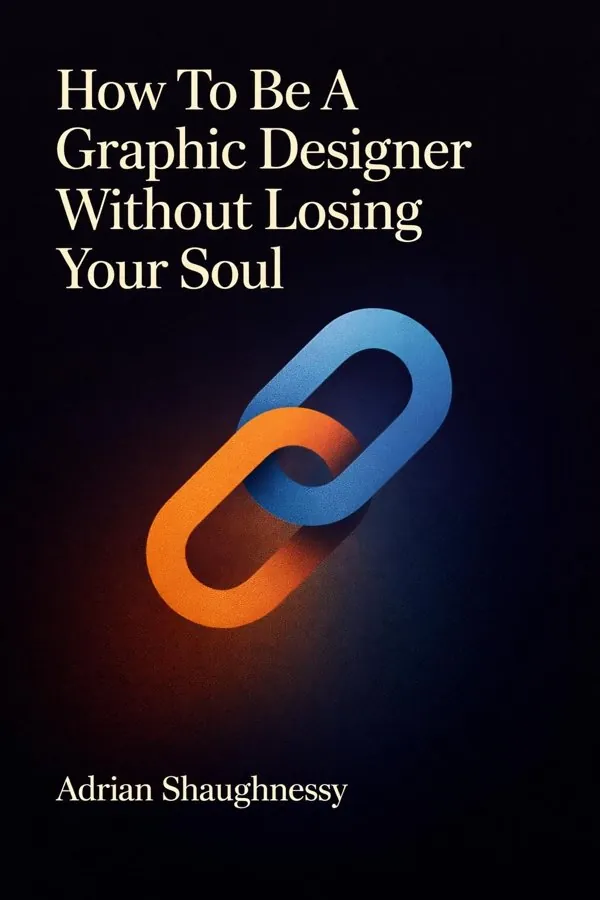
How To Be A Graphic Designer Without Losing Your Soul: Summary & Key Insights
 10 min6 chaptersAudio available
What Is How To Be A Graphic Designer Without Losing Your Soul About?
How To Be A Graphic Designer Without Losing Your Soul by Adrian Shaughnessy is a design book spanning 6 pages. This book offers practical advice and philosophical insights for graphic designers seeking to build a successful career while maintaining their creative integrity. Adrian Shaughnessy draws on his extensive experience in design and publishing to discuss topics such as working with clients, managing projects, finding inspiration, and navigating the ethical challenges of the profession. It serves as both a guide and a reflection on the realities of the design industry.
This FizzRead summary covers all 6 key chapters of How To Be A Graphic Designer Without Losing Your Soul in approximately 10 minutes, distilling the most important ideas, arguments, and takeaways from Adrian Shaughnessy's work. Also available as an audio summary and Key Quotes Podcast.
How To Be A Graphic Designer Without Losing Your Soul
This book offers practical advice and philosophical insights for graphic designers seeking to build a successful career while maintaining their creative integrity. Adrian Shaughnessy draws on his extensive experience in design and publishing to discuss topics such as working with clients, managing projects, finding inspiration, and navigating the ethical challenges of the profession. It serves as both a guide and a reflection on the realities of the design industry.
Who Should Read How To Be A Graphic Designer Without Losing Your Soul?
This book is perfect for anyone interested in design and looking to gain actionable insights in a short read. Whether you're a student, professional, or lifelong learner, the key ideas from How To Be A Graphic Designer Without Losing Your Soul by Adrian Shaughnessy will help you think differently.
- ✓Readers who enjoy design and want practical takeaways
- ✓Professionals looking to apply new ideas to their work and life
- ✓Anyone who wants the core insights of How To Be A Graphic Designer Without Losing Your Soul in just 10 minutes
Want the full summary?
Get instant access to this book summary and 100K+ more with Fizz Moment.
Get Free SummaryAvailable on App Store • Free to download
Key Chapters
Every designer faces the same fundamental conflict: the desire to create meaningful, original work versus the necessity to serve commercial objectives. I’ve always thought of this as the designer’s dilemma. You’re paid to solve problems, but these problems rarely begin with art or philosophy—they begin with money, marketing, or corporate ambition. The creative spirit inside you yearns for expression, but the profession demands restraint and compromise. It’s here that most designers start losing their soul—not out of malice, but through gradual erosion.
To survive this tension, you must redefine the idea of integrity. Integrity isn’t about always doing what you want; it’s about understanding where and why you choose to compromise. When you design under market conditions, you will inevitably balance form with function, innovation with familiarity, and idealism with practicality. The trick is to make these compromises consciously, guided by your principles rather than submission.
Over my career, I’ve seen designers who treat their job as pure service—they abandon authorship altogether. Others rebel, refusing to collaborate or adapt, and often end up isolated or unemployed. The healthy path lies between these extremes. A designer must be both artist and diplomat. You shape cultural artifacts, but you also translate institutions’ messages into something that resonates with people. Your professional survival depends on your ability to find poetry within pragmatism.
Don’t imagine integrity as a fortress from the world; it’s a flexible framework that allows you to stay honest even in complexity. Sometimes it means saying no—turning down projects that conflict with your moral compass. Other times, it means finding subtle ways to inject meaning into even the most restricted brief. Eventually, you learn that integrity is not static; it evolves with your experience, your worldview, and the context of society. The designer’s dilemma will never disappear, but your understanding of it will deepen, and that’s where wisdom resides.
Entering the design industry can feel overwhelming—a blur of possibilities, competition, and uncertainty. Education provides a foundation, but it’s not everything. Real growth happens through practice, observation, and failure. When I started, there was no clear roadmap, and that’s still true today. The world changes too quickly for instruction manuals. So, focus less on perfection and more on curiosity.
Your first challenge is to build a portfolio that reflects your way of seeing and thinking, not just your technical ability. A strong portfolio isn’t a collection of trendy visuals; it’s evidence of design reasoning. Show that you can understand problems, translate ideas, and communicate effectively. Early in your career, every project is a test of clarity and adaptability. Criticism will sting—learn to welcome it. It teaches you humility and sharpens your perspective.
Self-education is crucial. The best designers never stop learning—from history, literature, technology, and daily life. Design doesn’t exist in isolation; it’s part of a wider cultural system. Read widely. Visit exhibitions. Ask uncomfortable questions. The moment you stop feeding your mind, your work becomes sterile.
Networking, too, is part of learning. You’ll find opportunities not through sheer talent, but through relationships. Treat everyone you meet—students, clients, printers, photographers—as potential collaborators. Genuine curiosity and generosity will open more doors than self-promotion ever could.
Starting out isn’t about finding success quickly; it’s about building the resilience to keep going. Some projects will fail. Some clients will ignore your advice. But each experience adds a layer of wisdom. The most valuable lesson? Learn to enjoy the process itself. Every sketch, every mock-up, every late night spent adjusting typography—these moments shape not only your skill but your identity as a designer.
+ 4 more chapters — available in the FizzRead app
All Chapters in How To Be A Graphic Designer Without Losing Your Soul
About the Author
Adrian Shaughnessy is a British graphic designer, writer, and educator. He co-founded the design studio Intro and later became known for his writing on design theory and practice. Shaughnessy has contributed to numerous design publications and teaches at the Royal College of Art in London. His work emphasizes the balance between creativity, professionalism, and ethical responsibility in design.
Get This Summary in Your Preferred Format
Read or listen to the How To Be A Graphic Designer Without Losing Your Soul summary by Adrian Shaughnessy anytime, anywhere. FizzRead offers multiple formats so you can learn on your terms — all free.
Available formats: App · Audio · PDF · EPUB — All included free with FizzRead
Download How To Be A Graphic Designer Without Losing Your Soul PDF and EPUB Summary
Key Quotes from How To Be A Graphic Designer Without Losing Your Soul
“Every designer faces the same fundamental conflict: the desire to create meaningful, original work versus the necessity to serve commercial objectives.”
“Entering the design industry can feel overwhelming—a blur of possibilities, competition, and uncertainty.”
Frequently Asked Questions about How To Be A Graphic Designer Without Losing Your Soul
How To Be A Graphic Designer Without Losing Your Soul by Adrian Shaughnessy is a design book that explores key ideas across 6 chapters. This book offers practical advice and philosophical insights for graphic designers seeking to build a successful career while maintaining their creative integrity. Adrian Shaughnessy draws on his extensive experience in design and publishing to discuss topics such as working with clients, managing projects, finding inspiration, and navigating the ethical challenges of the profession. It serves as both a guide and a reflection on the realities of the design industry.
You Might Also Like

The Design of Everyday Things
Don Norman
10 min
The Better Angels of Our Nature
Steven Pinker
10 min
A Designer's Art
Paul Rand
10 min
Architects' Sketchbooks
Various Editors
10 min
Architectural Graphic Standards
The American Institute of Architects
10 min
Design Is Storytelling
Ellen Lupton
10 minBrowse by Category
Ready to read How To Be A Graphic Designer Without Losing Your Soul?
Get the full summary and 100K+ more books with Fizz Moment.