
Fox: Summary & Key Insights
 10 min9 chaptersAudio available
Key Takeaways from Fox
Real friendship often begins not in strength, but in shared brokenness.
Temptation rarely appears as something obviously evil; more often, it arrives looking like possibility.
Every meaningful choice leaves a mark, and Fox is unsparing in showing that betrayal cannot be undone by a quick apology.
We are often most easily misled at the point where loss has reshaped who we think we are.
The most dangerous manipulator is not the one who shouts, but the one who notices what you secretly fear and builds a story around it.
What Is Fox About?
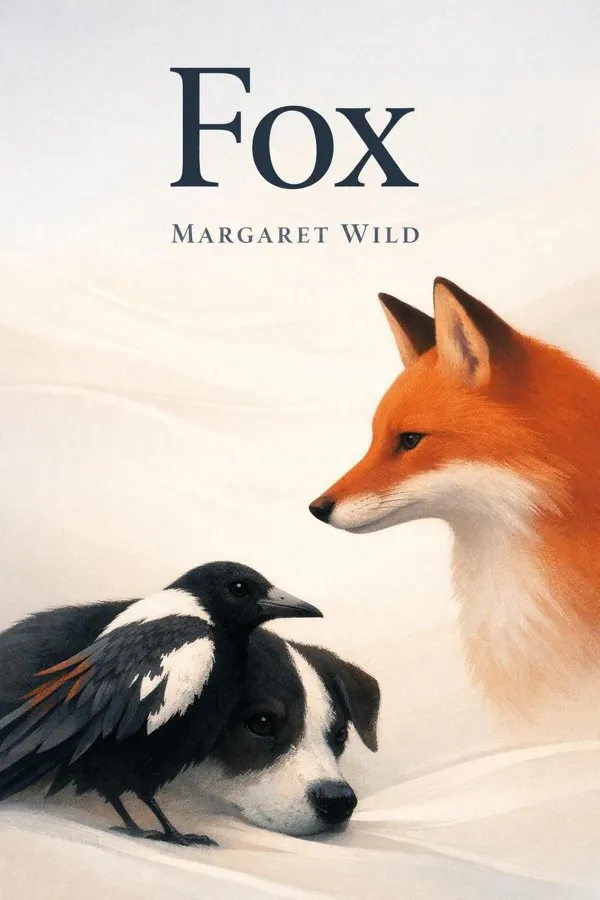
Fox by Margaret Wild is a classics book spanning 3 pages. Some stories are brief enough to read in one sitting yet powerful enough to linger for years. Margaret Wild’s Fox is one of those rare picture books. Set in the stark Australian outback and brought to life through haunting illustrations by Ron Brooks, it tells the story of Magpie, whose wing has been burned and can no longer carry her into the sky, and Dog, who has only one eye but offers her shelter, companionship, and devotion. Their fragile friendship seems to promise healing—until Fox arrives, sharp, charismatic, and dangerous, awakening desire, envy, and doubt. What makes Fox matter is its emotional honesty. Wild refuses to simplify pain into a neat moral lesson. Instead, she explores loyalty, temptation, insecurity, betrayal, and the difficult path toward self-knowledge. The book speaks to children with clarity and to adults with unsettling depth, showing how easily love can be tested when wounded beings long for what they have lost. Margaret Wild is widely respected for writing children’s literature that treats young readers seriously, and Fox stands as one of her most acclaimed works: spare in language, profound in meaning, and unforgettable in impact.
This FizzRead summary covers all 9 key chapters of Fox in approximately 10 minutes, distilling the most important ideas, arguments, and takeaways from Margaret Wild's work. Also available as an audio summary and Key Quotes Podcast.
Fox
Some stories are brief enough to read in one sitting yet powerful enough to linger for years. Margaret Wild’s Fox is one of those rare picture books. Set in the stark Australian outback and brought to life through haunting illustrations by Ron Brooks, it tells the story of Magpie, whose wing has been burned and can no longer carry her into the sky, and Dog, who has only one eye but offers her shelter, companionship, and devotion. Their fragile friendship seems to promise healing—until Fox arrives, sharp, charismatic, and dangerous, awakening desire, envy, and doubt.
What makes Fox matter is its emotional honesty. Wild refuses to simplify pain into a neat moral lesson. Instead, she explores loyalty, temptation, insecurity, betrayal, and the difficult path toward self-knowledge. The book speaks to children with clarity and to adults with unsettling depth, showing how easily love can be tested when wounded beings long for what they have lost. Margaret Wild is widely respected for writing children’s literature that treats young readers seriously, and Fox stands as one of her most acclaimed works: spare in language, profound in meaning, and unforgettable in impact.
Who Should Read Fox?
This book is perfect for anyone interested in classics and looking to gain actionable insights in a short read. Whether you're a student, professional, or lifelong learner, the key ideas from Fox by Margaret Wild will help you think differently.
- ✓Readers who enjoy classics and want practical takeaways
- ✓Professionals looking to apply new ideas to their work and life
- ✓Anyone who wants the core insights of Fox in just 10 minutes
Want the full summary?
Get instant access to this book summary and 100K+ more with Fizz Moment.
Get Free SummaryAvailable on App Store • Free to download
Key Chapters
Real friendship often begins not in strength, but in shared brokenness. At the heart of Fox is the deeply moving bond between Dog and Magpie, two creatures marked by injury and loss. Magpie’s wing has been burned, leaving her unable to fly. Dog has only one eye. In another kind of story, these physical wounds might simply define them as victims. Margaret Wild does something richer: she shows how vulnerability can become the basis of mutual care.
Dog carries Magpie on his back, helping her move through a world she can no longer navigate alone. Magpie, in turn, offers Dog companionship, purpose, and affection. Their relationship is not built on perfection or equality of power, but on trust. Each gives the other something essential. This is why their connection feels so authentic. Friendship here is not sentimental. It is practical, daily, and embodied.
The book invites readers to think about how relationships are formed when people or animals recognize one another’s pain. In real life, many of our strongest bonds emerge when someone sees our limitations without turning away. A child who struggles in school may trust the teacher who patiently encourages them. A grieving friend may feel closest to the person who simply stays present. Care creates belonging.
At the same time, Fox reminds us that loving someone vulnerable means understanding how easily insecurity can enter the relationship. The stronger the bond, the greater the fear of losing it. That fear sets the stage for what follows.
Actionable takeaway: Think about one relationship in your life that has been strengthened by honesty about weakness rather than displays of strength. Nurture it through one practical act of care this week.
Temptation rarely appears as something obviously evil; more often, it arrives looking like possibility. Fox enters the story as a force of disruption, but his power does not come only from menace. He is sleek, persuasive, and alert to hidden desires. Where Dog offers safety and loyalty, Fox offers excitement, movement, and the dream of becoming more than one’s wounded self. That contrast makes him compelling.
Fox quickly senses the emotional fault line in the relationship between Dog and Magpie. He understands that Magpie’s deepest pain is not only her injury, but the memory of what she once was. She was made for flight, and now she depends on another creature to move through the world. Fox exploits this wound. He does not need to attack directly; he only needs to suggest that Dog, despite all his love, is not enough. Temptation works by magnifying dissatisfaction.
This dynamic is recognizable far beyond the story. In friendships, partnerships, and communities, betrayal often begins with comparison. Someone whispers that there is a better option, a more glamorous future, a more complete version of ourselves if only we leave behind what is steady and imperfect. We may not betray because we hate what we have, but because we are seduced by what we imagine we lack.
Wild portrays betrayal not as a simple moral failure, but as a tragic response to longing. Magpie’s choice hurts because readers understand why she is vulnerable to Fox’s influence. That complexity gives the story its emotional force.
Actionable takeaway: When you feel drawn toward a risky choice, pause and ask: am I moving toward something truly good, or am I reacting to an old wound that someone else has learned to manipulate?
Every meaningful choice leaves a mark, and Fox is unsparing in showing that betrayal cannot be undone by a quick apology. Once Magpie leaves Dog under Fox’s influence, the emotional world of the story changes. The trust that once sustained her friendship with Dog is broken, and the journey that follows forces her to confront the cost of her decision. Margaret Wild does not treat consequences as punishment imposed from outside; they arise naturally from what has been damaged.
This is one reason the book feels so mature. It does not suggest that love protects us from making mistakes, nor that regret automatically repairs what has been lost. Instead, redemption begins with recognition. Magpie must see Fox clearly for what he is and understand something difficult about herself: her desire to regain freedom made her vulnerable to deception. That realization is painful, but it is also the first step toward moral growth.
In life, many harmful choices come from understandable emotions—loneliness, jealousy, restlessness, or the fear of dependence. Redemption does not mean pretending those feelings never existed. It means taking responsibility for where they led. A student who cheats because of anxiety, a friend who breaks confidence for social approval, or a partner who pursues attention outside a relationship all face the same truth: healing begins when self-justification ends.
The story also reminds us that forgiveness, if it comes, is not a simple reset. It is part of a more difficult process of rebuilding. Broken trust may be mended, but it is never untouched.
Actionable takeaway: If you have made a choice that hurt someone, name the harm honestly without excuses. Responsibility is the doorway through which any real redemption must pass.
We are often most easily misled at the point where loss has reshaped who we think we are. In Fox, Magpie’s burnt wing is more than an injury; it is an identity wound. She is a bird who cannot fly, which means she lives in constant tension between memory and reality. Dog’s one eye carries a similar meaning. Both characters are defined not only by what they have, but by what they no longer possess.
Margaret Wild shows how loss does not remain in the past. It continues to influence present choices. Magpie’s longing for flight is not irrational. It is rooted in a former self she cannot stop remembering. Fox becomes dangerous precisely because he speaks to that unresolved ache. He offers not merely companionship, but the illusion of restoration. In doing so, he exposes a truth about human experience: when we have not fully grieved what we lost, we may chase false recoveries.
This idea applies across many stages of life. Someone who loses a career may become obsessed with status. A person recovering from illness may feel drawn to risky promises of instant transformation. After a breakup, people sometimes pursue relationships that flatter their ego rather than nourish their well-being. Loss creates vulnerability when it becomes a silent ruler of our desires.
The book does not ask readers to stop longing. Longing is part of being alive. But it suggests that we must understand our losses honestly, or they will govern us from the shadows. Naming grief helps reduce its power to distort judgment.
Actionable takeaway: Identify one old loss that still influences your choices. Write down how it affects your desires today, and ask whether your current decisions are healing that wound or merely reacting to it.
Some settings do more than hold a story; they express its emotional truth. The Australian outback in Fox is not a decorative backdrop but a psychological landscape. Harsh, exposed, and elemental, it reflects the characters’ emotional lives with extraordinary precision. Heat, distance, and emptiness amplify the fragility of trust and the risks of survival. In such a place, companionship is not a luxury. It is a form of shelter.
This environment matters because it strips the story down to essentials. There are no distractions, no softening comforts, no crowded social world to absorb conflict. As a result, the drama between Dog, Magpie, and Fox feels primal. Hunger, movement, danger, and desire all become more vivid against the severe terrain. The land seems to ask the same question the story does: what sustains life when conditions are unforgiving?
Wild’s use of setting offers a useful lesson for readers and writers alike. Outer circumstances often intensify inner conflict. In our own lives, stressful environments can reveal vulnerabilities we might otherwise overlook. Financial pressure can strain a marriage. Social isolation can heighten insecurity. Competitive workplaces can expose the temptation to betray values for advancement. When resources feel scarce, trust becomes more precious—and more vulnerable.
The outback also carries symbolic force. It is a place of exposure where illusions eventually burn away. Fox may seem powerful, but the land does not protect deception forever. In that sense, the setting becomes an agent of truth.
Actionable takeaway: When you are navigating conflict, consider how your environment may be shaping your emotions. Before making a major decision, ask whether stress and isolation are intensifying fears that need reflection rather than immediate action.
Length and simplicity do not determine seriousness. Fox is often categorized as a children’s picture book, yet it carries the emotional and moral complexity of a much larger literary work. Margaret Wild uses spare language, but every sentence carries weight. The brevity forces concentration. Readers are not given long explanations, so they must infer motive, feel tension, and wrestle with ambiguity. That active reading experience is one reason the book resonates with adults as strongly as with children.
The collaboration between text and illustration deepens this effect. Ron Brooks’s art does not merely depict the events; it intensifies them. Texture, color, and movement communicate mood in ways words alone cannot. The result is a layered narrative in which visual and verbal storytelling work together to explore fear, longing, and betrayal. Young readers can grasp the emotional arc, while older readers can detect the subtler psychological undercurrents.
This matters because many people underestimate picture books as a form. In reality, the best picture books distill complicated truths into memorable, accessible shapes. They are excellent tools for discussing difficult subjects—loss, trust, jealousy, resilience—with children, and they often offer adults a more concentrated emotional encounter than longer prose can.
Teachers, parents, and discussion groups can use Fox to open conversations about relationships and ethics. Asking children why Magpie followed Fox or how Dog might have felt encourages empathy and critical thinking. Adults can go further, examining power, desire, and forgiveness.
Actionable takeaway: Revisit one acclaimed picture book as if it were literary fiction. Read both the words and the images closely, and ask what emotional truths become clearer because the story is told so economically.
Trust is one of the quietest forces in life, yet we notice its value most when it is broken. In Fox, the relationship between Dog and Magpie depends on trust built through repeated acts of care. Dog carries Magpie, protects her, and stays beside her. Their bond is sustained not by grand declarations, but by reliability. That is exactly how trust works in real life: it grows from consistency.
What makes the story painful is how quickly trust can be destabilized once doubt enters. Fox does not need to erase Dog’s loyalty; he only needs to make Magpie question whether loyalty is enough. This distinction is crucial. Trust is not destroyed solely by wrongdoing. Sometimes it erodes because fear, insecurity, or desire changes how we interpret another person’s actions. We begin to wonder whether care is limitation, whether devotion is dependence, whether stability means settling. Once suspicion alters perception, even genuine love can look inadequate.
This insight has broad relevance. Teams fall apart when members stop assuming good faith. Friendships fracture when comparison replaces gratitude. Families struggle when old resentments reinterpret present kindness. Rebuilding trust requires more than time. It needs honesty, accountability, and new evidence of safety.
Fox reminds us that trust deserves active protection. It cannot survive indefinitely on good intentions alone. It must be reinforced by communication and defended against forces that thrive on secrecy and shame.
Actionable takeaway: Choose one important relationship and strengthen trust through a concrete practice—clear communication, keeping a promise, expressing gratitude, or addressing a growing doubt before it hardens into distance.
Many stories treat forgiveness as a soft ending, but Fox suggests something more demanding: forgiveness, if it is possible, must be rooted in truth rather than denial. After betrayal, the temptation is often to simplify. We either condemn completely or excuse too quickly. Margaret Wild avoids both extremes. Her story recognizes the emotional reasons behind Magpie’s actions without pretending those reasons erase the damage.
This is an important distinction for readers of all ages. Genuine forgiveness is not forgetting, minimizing, or pretending trust was never broken. Nor is it automatic reconciliation. Instead, it begins by seeing clearly: what happened, why it happened, and what it cost. Only then can a meaningful response emerge. Sometimes forgiveness includes renewed closeness; sometimes it means release without restoration. The book leaves enough emotional space for readers to reflect on that complexity.
In practical life, this approach can be deeply helpful. Parents teaching children about conflict can explain that saying sorry matters, but understanding the hurt matters too. Adults can apply the same principle in friendships or families. If someone repeatedly disappoints us, forgiveness may coexist with stronger boundaries. If we are the ones who caused harm, we should not demand immediate absolution as proof of love.
Fox frames forgiveness as a moral achievement, not an emotional shortcut. It asks readers to hold compassion and truth together. That balance is difficult, but it is the only kind of mercy that heals rather than conceals.
Actionable takeaway: When facing hurt, try this two-step reflection: first name the truth of what happened, then ask what response—apology, boundary, conversation, or release—would honor both compassion and honesty.
All Chapters in Fox
About the Author
Margaret Wild is an acclaimed Australian author whose work has had a lasting impact on children’s and young adult literature. Born in South Africa and later based in Australia, she built a distinguished career writing books that combine lyrical simplicity with emotional depth. Wild is especially admired for her willingness to explore difficult subjects—loss, loneliness, love, fear, betrayal, and resilience—in ways that remain accessible to young readers without ever feeling simplistic. Her stories often trust children to grapple with complex feelings and moral ambiguity. Among her many celebrated titles, Fox stands out as one of her most powerful achievements, especially in collaboration with illustrator Ron Brooks. Across her body of work, Wild has received numerous awards and remains recognized as a major voice in contemporary Australian literature for young readers.
Get This Summary in Your Preferred Format
Read or listen to the Fox summary by Margaret Wild anytime, anywhere. FizzRead offers multiple formats so you can learn on your terms — all free.
Available formats: App · Audio · PDF · EPUB — All included free with FizzRead
Download Fox PDF and EPUB Summary
Key Quotes from Fox
“Real friendship often begins not in strength, but in shared brokenness.”
“Temptation rarely appears as something obviously evil; more often, it arrives looking like possibility.”
“Every meaningful choice leaves a mark, and Fox is unsparing in showing that betrayal cannot be undone by a quick apology.”
“We are often most easily misled at the point where loss has reshaped who we think we are.”
“The most dangerous manipulator is not the one who shouts, but the one who notices what you secretly fear and builds a story around it.”
Frequently Asked Questions about Fox
Fox by Margaret Wild is a classics book that explores key ideas across 9 chapters. Some stories are brief enough to read in one sitting yet powerful enough to linger for years. Margaret Wild’s Fox is one of those rare picture books. Set in the stark Australian outback and brought to life through haunting illustrations by Ron Brooks, it tells the story of Magpie, whose wing has been burned and can no longer carry her into the sky, and Dog, who has only one eye but offers her shelter, companionship, and devotion. Their fragile friendship seems to promise healing—until Fox arrives, sharp, charismatic, and dangerous, awakening desire, envy, and doubt. What makes Fox matter is its emotional honesty. Wild refuses to simplify pain into a neat moral lesson. Instead, she explores loyalty, temptation, insecurity, betrayal, and the difficult path toward self-knowledge. The book speaks to children with clarity and to adults with unsettling depth, showing how easily love can be tested when wounded beings long for what they have lost. Margaret Wild is widely respected for writing children’s literature that treats young readers seriously, and Fox stands as one of her most acclaimed works: spare in language, profound in meaning, and unforgettable in impact.
You Might Also Like



Browse by Category
Ready to read Fox?
Get the full summary and 100K+ more books with Fizz Moment.