
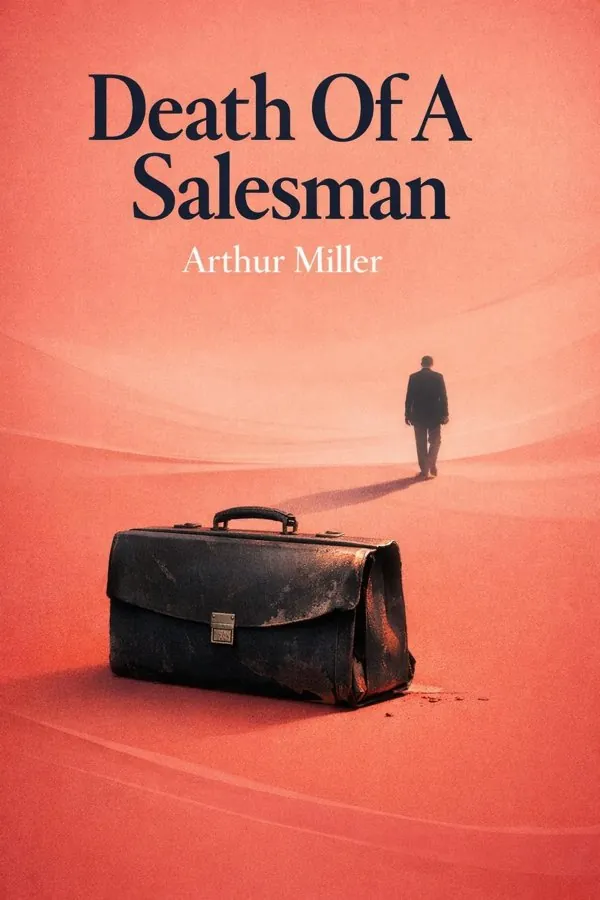
Death Of A Salesman: Summary & Key Insights
 10 min10 chaptersAudio available
What Is Death Of A Salesman About?
Death Of A Salesman by Arthur Miller is a classics book spanning 10 pages. Death of a Salesman is a 1949 play by American playwright Arthur Miller. It tells the story of Willy Loman, an aging salesman struggling to cope with the realities of his life and the failures of his dreams. The play explores themes of identity, family, and the pursuit of success in postwar America, and is considered one of the greatest works of American theater.
This FizzRead summary covers all 10 key chapters of Death Of A Salesman in approximately 10 minutes, distilling the most important ideas, arguments, and takeaways from Arthur Miller's work. Also available as an audio summary and Key Quotes Podcast.
Death Of A Salesman
Death of a Salesman is a 1949 play by American playwright Arthur Miller. It tells the story of Willy Loman, an aging salesman struggling to cope with the realities of his life and the failures of his dreams. The play explores themes of identity, family, and the pursuit of success in postwar America, and is considered one of the greatest works of American theater.
Who Should Read Death Of A Salesman?
This book is perfect for anyone interested in classics and looking to gain actionable insights in a short read. Whether you're a student, professional, or lifelong learner, the key ideas from Death Of A Salesman by Arthur Miller will help you think differently.
- ✓Readers who enjoy classics and want practical takeaways
- ✓Professionals looking to apply new ideas to their work and life
- ✓Anyone who wants the core insights of Death Of A Salesman in just 10 minutes
Want the full summary?
Get instant access to this book summary and 100K+ more with Fizz Moment.
Get Free SummaryAvailable on App Store • Free to download
Key Chapters
I open the play in the confines of a small Brooklyn home, surrounded by the encroaching city. The stage directions mirror Willy’s mind—claustrophobic, fading into fragments of imagination. He has returned from another sales trip, weary and defeated. His exhaustion is not merely physical; it’s existential. I wanted his entrance to carry the weight of decades—dreams deferred, illusions sustained. Willy’s first words are scattered, showing his thought drifting unpredictably between the present and long-ago triumphs that perhaps never truly occurred. He argues with himself, recalls laughter from old business colleagues, and tries to banish the creeping doubt that he’s become obsolete. It was important for me that the audience see not an extraordinary downfall, but the erosion of an ordinary man.
Willy’s failures are not grand—they are the accumulation of half-truths and missed chances. His car, which once symbolized freedom and mobility, now betrays him. His profession, once a mark of independence, now exposes his vulnerability. As he walks into his home, the line between memory and reality blurs, foreshadowing how memory becomes both his refuge and his trap. This first moment situates Willy as both victim and participant in his own disillusionment. Through him, I aimed to reveal how modern individuals, caught in the machinery of consumer promise, slowly lose the boundary between who they are and what they sell.
Linda Loman stands as the moral center of the household—a quiet force of compassion watching her husband disintegrate. Her concern isn’t sentimental patronage; it is grounded in the stark awareness of their economic and emotional fragility. When Linda speaks, the tone of the play changes. Her voice brings steadiness to Willy’s chaos, yet behind her gentleness lies deep sorrow. She sees the cracks he denies. Her loyalty, despite his delusions, shows that love carries both endurance and blindness.
Through Linda, I wanted to reveal the invisible labor of emotional support that women bear in a fractured family system. She protects Willy’s dignity even when his lies erode it. She pleads with her sons to notice their father—not as the salesman or dreamer, but as the man longing for respect. Her words illuminate the moral failure of a society that measures worth only by success. Linda’s famous cry—asking the boys to be kind to their father—is not merely domestic defense but a rebellion against dehumanization. Her love is painful because it is powerless to save him, yet she never ceases to believe his life still means something.
+ 8 more chapters — available in the FizzRead app
All Chapters in Death Of A Salesman
About the Author
Arthur Miller (1915–2005) was an American playwright and essayist known for his critical portrayals of the American Dream and social responsibility. His major works include The Crucible, A View from the Bridge, and Death of a Salesman, which won the Pulitzer Prize for Drama and the Tony Award for Best Play.
Get This Summary in Your Preferred Format
Read or listen to the Death Of A Salesman summary by Arthur Miller anytime, anywhere. FizzRead offers multiple formats so you can learn on your terms — all free.
Available formats: App · Audio · PDF · EPUB — All included free with FizzRead
Download Death Of A Salesman PDF and EPUB Summary
Key Quotes from Death Of A Salesman
“I open the play in the confines of a small Brooklyn home, surrounded by the encroaching city.”
“Linda Loman stands as the moral center of the household—a quiet force of compassion watching her husband disintegrate.”
Frequently Asked Questions about Death Of A Salesman
Death Of A Salesman by Arthur Miller is a classics book that explores key ideas across 10 chapters. Death of a Salesman is a 1949 play by American playwright Arthur Miller. It tells the story of Willy Loman, an aging salesman struggling to cope with the realities of his life and the failures of his dreams. The play explores themes of identity, family, and the pursuit of success in postwar America, and is considered one of the greatest works of American theater.
More by Arthur Miller

You Might Also Like






Browse by Category
Ready to read Death Of A Salesman?
Get the full summary and 100K+ more books with Fizz Moment.