
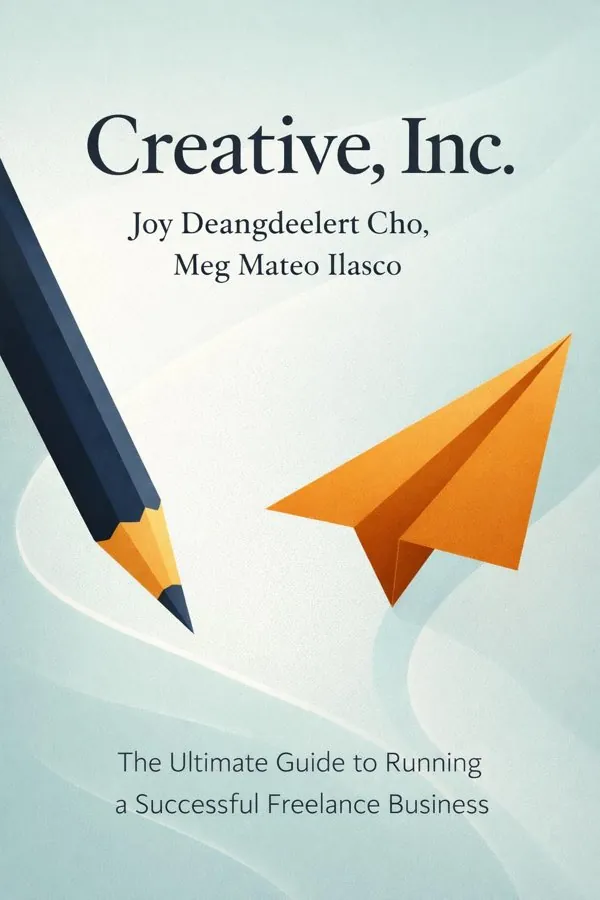
Creative, Inc.: The Ultimate Guide to Running a Successful Freelance Business: Summary & Key Insights
by Joy Deangdeelert Cho, Meg Mateo Ilasco
 10 min9 chaptersAudio available
Key Takeaways from Creative, Inc.: The Ultimate Guide to Running a Successful Freelance Business
Freedom is often the most advertised part of freelancing, but responsibility is what truly defines it.
Creative confidence grows faster when it rests on a solid business structure.
In a crowded creative marketplace, skill alone is rarely enough; people remember clarity.
The biggest freelance myth is that good work automatically finds its audience.
Underpricing often begins as insecurity disguised as generosity.
What Is Creative, Inc.: The Ultimate Guide to Running a Successful Freelance Business About?
Creative, Inc.: The Ultimate Guide to Running a Successful Freelance Business by Joy Deangdeelert Cho, Meg Mateo Ilasco is a entrepreneurship book spanning 7 pages. Creative, Inc. is a hands-on guide for artists, designers, illustrators, stylists, writers, and other creative professionals who want to turn talent into a sustainable freelance business. Rather than romanticizing self-employment, Joy Deangdeelert Cho and Meg Mateo Ilasco show what freelancing really requires: clear positioning, consistent marketing, smart pricing, legal protection, professional communication, and the discipline to manage both creative work and business operations. The book matters because many creatives are highly skilled at making beautiful work but feel unprepared for invoices, contracts, negotiations, boundaries, and business development. That gap often determines whether a freelance career becomes liberating or exhausting. Drawing from their own entrepreneurial experience and insights from successful freelancers across creative fields, the authors offer practical, experience-based advice instead of abstract theory. Their message is reassuring but realistic: you do not need to know everything at the beginning, but you do need systems, confidence, and a willingness to treat your work like a business. For anyone trying to build a freelance career with both artistic integrity and financial stability, this book provides a strong foundation.
This FizzRead summary covers all 9 key chapters of Creative, Inc.: The Ultimate Guide to Running a Successful Freelance Business in approximately 10 minutes, distilling the most important ideas, arguments, and takeaways from Joy Deangdeelert Cho, Meg Mateo Ilasco's work. Also available as an audio summary and Key Quotes Podcast.
Creative, Inc.: The Ultimate Guide to Running a Successful Freelance Business
Creative, Inc. is a hands-on guide for artists, designers, illustrators, stylists, writers, and other creative professionals who want to turn talent into a sustainable freelance business. Rather than romanticizing self-employment, Joy Deangdeelert Cho and Meg Mateo Ilasco show what freelancing really requires: clear positioning, consistent marketing, smart pricing, legal protection, professional communication, and the discipline to manage both creative work and business operations. The book matters because many creatives are highly skilled at making beautiful work but feel unprepared for invoices, contracts, negotiations, boundaries, and business development. That gap often determines whether a freelance career becomes liberating or exhausting. Drawing from their own entrepreneurial experience and insights from successful freelancers across creative fields, the authors offer practical, experience-based advice instead of abstract theory. Their message is reassuring but realistic: you do not need to know everything at the beginning, but you do need systems, confidence, and a willingness to treat your work like a business. For anyone trying to build a freelance career with both artistic integrity and financial stability, this book provides a strong foundation.
Who Should Read Creative, Inc.: The Ultimate Guide to Running a Successful Freelance Business?
This book is perfect for anyone interested in entrepreneurship and looking to gain actionable insights in a short read. Whether you're a student, professional, or lifelong learner, the key ideas from Creative, Inc.: The Ultimate Guide to Running a Successful Freelance Business by Joy Deangdeelert Cho, Meg Mateo Ilasco will help you think differently.
- ✓Readers who enjoy entrepreneurship and want practical takeaways
- ✓Professionals looking to apply new ideas to their work and life
- ✓Anyone who wants the core insights of Creative, Inc.: The Ultimate Guide to Running a Successful Freelance Business in just 10 minutes
Want the full summary?
Get instant access to this book summary and 100K+ more with Fizz Moment.
Get Free SummaryAvailable on App Store • Free to download
Key Chapters
Freedom is often the most advertised part of freelancing, but responsibility is what truly defines it. Creative, Inc. begins by reframing the freelance dream: working for yourself is not simply about escaping a boss or choosing your own hours. It means becoming the person responsible for generating income, setting standards, managing clients, solving problems, and protecting your time. That shift in mindset is essential because many creative professionals begin freelancing with artistic confidence but business uncertainty.
The book explains that freelance life blends several roles into one. You are not only the designer, illustrator, or writer; you are also the marketer, accountant, negotiator, project manager, and customer service representative. Some weeks are creatively rewarding, while others are dominated by proposals, follow-ups, and administrative tasks. Understanding this reality early helps prevent disappointment and helps freelancers build routines that support long-term success rather than relying on inspiration alone.
The authors also emphasize that freelancing is not one fixed model. Some people want full independence, others use freelance work as a bridge to entrepreneurship, and others combine client projects with products, licensing, teaching, or content creation. The key is defining what kind of freelance life you actually want. Do you want high-paying corporate clients, flexible family-friendly hours, or a boutique practice with a small roster of dream clients? Your decisions about branding, pricing, and scheduling should support that vision.
A practical way to apply this idea is to write a one-page freelance vision statement. Include your ideal services, clients, income goals, work hours, and creative boundaries. Actionable takeaway: stop thinking of freelancing as just doing creative work independently, and start defining it as running a business designed around the life and career you want.
Creative confidence grows faster when it rests on a solid business structure. Before chasing clients, the book urges freelancers to put the basics in place so their business can function professionally from day one. This includes deciding how to operate legally, setting up a separate bank account, tracking income and expenses, understanding taxes, and creating systems for invoices, receipts, and recordkeeping.
For many creatives, these topics feel intimidating because they seem disconnected from the work they love. But the authors make a simple point: disorganization is expensive. If you mix personal and business finances, forget to invoice promptly, or ignore tax obligations, even a talented freelancer can end up stressed and underpaid. A strong foundation reduces chaos and creates confidence. It also signals professionalism to clients, who are more likely to trust someone who has clear processes.
The book suggests starting with manageable steps rather than trying to build a perfect business overnight. For example, a new freelancer might begin as a sole proprietor, use accounting software to categorize expenses, open a dedicated business checking account, and create templates for invoices and proposals. As income grows, they can consult an accountant or attorney about whether forming an LLC or another structure makes sense. The point is not complexity; it is clarity.
This foundation also includes practical readiness. Can clients easily contact you? Do you have a professional email address? Can you send a quote quickly? Do you know your payment terms? These details shape first impressions. A designer with an excellent portfolio but no organized process may lose business to someone slightly less talented but more dependable.
Actionable takeaway: spend time creating simple business systems before aggressively seeking work. The freelancer who is prepared to onboard clients smoothly, track money accurately, and meet legal obligations has a much better chance of turning sporadic gigs into a durable career.
In a crowded creative marketplace, skill alone is rarely enough; people remember clarity. One of the book’s most valuable lessons is that freelancers need a brand, not in the superficial sense of a logo alone, but as a clear impression that tells clients who you are, what you do, and why your work is distinct. Your brand becomes the bridge between your creative style and the kinds of opportunities you attract.
The authors encourage freelancers to think carefully about positioning. A broad message such as “I do graphic design” makes it harder for clients to know when to hire you. A more focused identity, such as “I create playful packaging and visual branding for lifestyle and food companies,” is more memorable and easier to recommend. Your website, portfolio, biography, social media presence, and even email tone should reinforce that positioning.
Portfolio curation is especially important. Many freelancers make the mistake of showing everything they have ever made, hoping variety will appeal to more people. In reality, an unfocused portfolio can confuse potential clients. The book advises selecting work strategically so your strongest and most relevant projects tell a coherent story. If you want editorial illustration work, your portfolio should make that obvious. If you want wedding photography, lead with that. Clients usually hire based on what they can easily imagine you doing for them.
Practical application might include rewriting your homepage headline, narrowing your portfolio categories, and updating your bio to emphasize your specialty and perspective. Testimonials, case studies, and process descriptions can also strengthen your brand by demonstrating not only style but reliability and results.
Actionable takeaway: define the niche, tone, and visual consistency you want to be known for, then align every public touchpoint around that message so clients understand your value quickly and confidently.
The biggest freelance myth is that good work automatically finds its audience. In reality, even excellent creatives need deliberate visibility. Creative, Inc. treats client acquisition as an ongoing practice rather than a desperate activity reserved for slow months. This shift matters because freelancers who market only when they are out of work often end up trapped in cycles of feast and famine.
The authors describe multiple ways freelancers can find clients: personal referrals, email outreach, social media, blogging, networking events, collaborations, industry communities, and maintaining relationships with past clients. The key is consistency. One thoughtful introduction email, one polished portfolio update, or one useful social media post may not change your business instantly, but repeated over time, these actions create familiarity and trust.
The book also stresses the importance of being easy to hire. When someone lands on your website or social profile, can they immediately understand your services? Is there a clear contact path? Do you show recent work? Are your rates or process explained enough to reduce uncertainty? Marketing is not just promotion; it is reducing friction.
A practical example is setting a weekly business development routine. A freelancer might spend Monday reaching out to two dream clients, Tuesday sharing a recent project online, Wednesday following up with a former client, and Friday reviewing leads. Another useful strategy is asking satisfied clients for referrals or testimonials right after completing a successful project, when enthusiasm is high.
Importantly, visibility should feel aligned with your personality. Not every creative needs to become loud online. Some build business through thoughtful newsletters, in-person relationships, or niche communities. Actionable takeaway: choose two or three marketing channels you can sustain, then show up consistently so client outreach becomes a habit, not an emergency response.
Underpricing often begins as insecurity disguised as generosity. One of the central business lessons in Creative, Inc. is that freelancers must learn to price their work based on value, time, expertise, and sustainability rather than fear of losing the job. Creative professionals frequently undervalue themselves because they compare their rates to hobbyists, overlook hidden business costs, or assume clients are paying only for hours worked rather than years of skill and judgment.
The book encourages freelancers to understand different pricing models, including hourly, project-based, day rates, retainers, and licensing where appropriate. Each has advantages depending on the work. Hourly pricing can help with undefined scopes, while project pricing can reward efficiency and communicate outcomes more clearly. What matters most is knowing your numbers. You need to account for taxes, software, equipment, unpaid admin time, revisions, health insurance, and nonbillable days. Without that math, rates that seem reasonable may still leave you under-earning.
Negotiation is presented as a normal professional conversation, not a confrontation. Clients may ask for lower fees, faster timelines, or expanded scope. Rather than reacting emotionally, freelancers can respond with options: reduce deliverables, extend the timeline, or clarify what the quoted price includes. This preserves professionalism and avoids agreeing to unsustainable terms just to secure work.
For example, if a branding project expands from logo design into social templates, packaging, and website graphics, the freelancer should revise the quote rather than absorb the extra tasks. Clear pricing language also helps: include payment schedules, revision limits, late fees, and usage rights where relevant.
Actionable takeaway: calculate a baseline rate that supports your actual business, choose a pricing method suited to the project, and practice responding to negotiation with calm clarity instead of instinctive discounting.
A contract is not a sign of mistrust; it is a tool for mutual clarity. Creative freelancers sometimes avoid contracts because they worry formal agreements will feel awkward or scare clients away. The book argues the opposite: a clear contract protects both sides, reduces misunderstandings, and creates a professional framework for the work. It allows creativity to flourish because expectations have already been defined.
The authors highlight essential elements that should be addressed in writing, including scope of work, timeline, deliverables, revision rounds, payment terms, cancellation terms, ownership and licensing rights, expenses, and what happens if the project changes. These details matter because many freelance conflicts begin with assumptions. A client may think “a few tweaks” means unlimited revisions, while the freelancer believes the project ends after the second round. Without a contract, those assumptions can become resentment.
The book also helps creatives understand that legal protection is part of respecting their own work. Illustrators, photographers, and designers especially need to know when they are transferring ownership versus granting limited usage. If a client wants broader rights, the fee should reflect that. Likewise, requiring a deposit before work begins helps establish commitment and protects the freelancer from spending unpaid time on projects that may disappear.
A practical application is creating a standard agreement template reviewed by a legal professional, then customizing it for each project. Even smaller jobs can be covered with a concise agreement or proposal acceptance document. The point is not legal complexity; it is written alignment.
Actionable takeaway: never begin client work based on verbal enthusiasm alone. Put the scope, money, rights, revisions, and timeline in writing so both you and your client know exactly what the project includes and how the relationship will work.
Many freelance problems are not caused by bad clients alone, but by unclear communication early in the relationship. Creative, Inc. emphasizes that successful freelancers learn how to manage expectations, communicate boundaries, and guide projects with confidence. This does not mean becoming rigid or overly corporate; it means being dependable, responsive, and clear enough that clients feel supported throughout the process.
The authors show that client management starts before the work begins. Discovery conversations, proposals, onboarding emails, and kickoff meetings all help establish how you work. If you explain your process, timeline, file delivery, feedback windows, and revision policy up front, clients are less likely to become confused later. Communication should also be documented. A friendly call is useful, but key decisions should be followed up in writing so everyone has the same reference point.
Professionalism also involves emotional steadiness. Freelancers may encounter vague briefs, delayed feedback, scope creep, or criticism. The book encourages creatives to respond constructively rather than defensively. For example, if a client asks for changes that weaken the design, you can explain your recommendation while still honoring the project goals. If deadlines slip because feedback arrives late, you can revise the timeline instead of silently absorbing the pressure.
Simple habits make a major difference: reply within a reasonable time, send regular status updates, summarize meetings, and ask specific questions instead of general ones. A photographer might confirm shot lists and usage expectations before a shoot; a copywriter might present two tone directions to avoid rewrites later. These steps save time and build trust.
Actionable takeaway: treat communication as part of the creative service you provide. By setting expectations early, documenting decisions, and responding calmly to challenges, you turn client management from a source of stress into one of your strongest competitive advantages.
A freelance career survives not just on inspiration, but on rhythm. One of the book’s most grounded ideas is that creative professionals must learn to balance artistic energy with the administrative and strategic work that keeps the business alive. Many freelancers either overfocus on creating and neglect operations, or become so consumed by admin that they lose connection to the work they care about. Sustainable success requires both.
The authors acknowledge that creative work is mentally demanding. Deep focus, experimentation, and original thinking need time and space. At the same time, invoices, emails, marketing, bookkeeping, and planning cannot be ignored. Instead of seeing business tasks as interruptions, the book encourages freelancers to integrate them into a weekly structure. This reduces stress and protects creative time from constant fragmentation.
For example, a designer might reserve mornings for client work, schedule one afternoon a week for admin, and set aside monthly time to review finances and update the portfolio. Another freelancer might batch social media posts in advance, automate invoices, and maintain a simple project tracker to avoid last-minute scrambling. Personal energy management matters too. Freelancers need boundaries around work hours, breaks, and client access, especially when working from home.
The book also touches on the emotional side of freelancing. Because income and identity are closely tied to personal output, slow periods can feel discouraging and busy periods can become overwhelming. Building routines, taking rest seriously, and measuring progress with more than immediate revenue can help stabilize the experience.
Actionable takeaway: design a workweek that protects focused creative time while giving business tasks a consistent place. The goal is not perfect balance every day, but a repeatable system that helps you create excellent work without neglecting the business behind it.
The most reliable freelance pipeline is often built less on constant self-promotion and more on trust accumulated over time. Creative, Inc. makes clear that long-term success depends heavily on relationships: with clients, collaborators, peers, vendors, and your broader professional community. A good reputation compounds. People remember freelancers who are talented, organized, kind, and easy to work with.
Many creatives focus intensely on landing new clients while underestimating the value of existing ones. Repeat work is often more profitable because the client already understands your process, communication is smoother, and less time is spent proving yourself. Similarly, referrals from satisfied clients tend to be warmer leads than cold outreach because trust has already been transferred.
The book encourages freelancers to nurture these relationships intentionally. That can mean sending a thank-you note after a project, checking in with former clients, sharing relevant updates, crediting collaborators publicly, and being generous within your creative community. Networking here is not framed as transactional collecting of contacts. It is about genuine professional connection and being remembered positively.
A practical example: after completing a branding project, a freelancer might send final files neatly packaged, include usage guidance, ask for a testimonial, and then reconnect a few months later to see how the brand launch is going. That small effort can lead to future packaging work, social media graphics, or a referral to another business owner. Likewise, staying in touch with photographers, developers, printers, or editors can lead to collaborations that expand your service opportunities.
Actionable takeaway: treat every project as the start of a relationship, not a one-time transaction. Deliver excellent work, communicate well, follow up thoughtfully, and invest in your professional community so your reputation becomes one of your strongest business assets.
All Chapters in Creative, Inc.: The Ultimate Guide to Running a Successful Freelance Business
About the Authors
Joy Deangdeelert Cho is a designer, author, blogger, and founder of the lifestyle brand Oh Joy!, known for its colorful, cheerful visual identity and wide influence in design, products, and creative media. She has built a career that blends artistic vision with entrepreneurship, making her a credible voice on freelance and creative business topics. Meg Mateo Ilasco is a designer, writer, and entrepreneur who has authored and contributed to several books on design, creativity, and business. Her work reflects a strong understanding of how creative professionals can turn their skills into viable careers. Together, Cho and Ilasco combine firsthand freelance experience, business insight, and industry knowledge, offering practical guidance for creatives who want to grow sustainable, professional, and fulfilling independent careers.
Get This Summary in Your Preferred Format
Read or listen to the Creative, Inc.: The Ultimate Guide to Running a Successful Freelance Business summary by Joy Deangdeelert Cho, Meg Mateo Ilasco anytime, anywhere. FizzRead offers multiple formats so you can learn on your terms — all free.
Available formats: App · Audio · PDF · EPUB — All included free with FizzRead
Download Creative, Inc.: The Ultimate Guide to Running a Successful Freelance Business PDF and EPUB Summary
Key Quotes from Creative, Inc.: The Ultimate Guide to Running a Successful Freelance Business
“Freedom is often the most advertised part of freelancing, but responsibility is what truly defines it.”
“Creative confidence grows faster when it rests on a solid business structure.”
“In a crowded creative marketplace, skill alone is rarely enough; people remember clarity.”
“The biggest freelance myth is that good work automatically finds its audience.”
“Underpricing often begins as insecurity disguised as generosity.”
Frequently Asked Questions about Creative, Inc.: The Ultimate Guide to Running a Successful Freelance Business
Creative, Inc.: The Ultimate Guide to Running a Successful Freelance Business by Joy Deangdeelert Cho, Meg Mateo Ilasco is a entrepreneurship book that explores key ideas across 9 chapters. Creative, Inc. is a hands-on guide for artists, designers, illustrators, stylists, writers, and other creative professionals who want to turn talent into a sustainable freelance business. Rather than romanticizing self-employment, Joy Deangdeelert Cho and Meg Mateo Ilasco show what freelancing really requires: clear positioning, consistent marketing, smart pricing, legal protection, professional communication, and the discipline to manage both creative work and business operations. The book matters because many creatives are highly skilled at making beautiful work but feel unprepared for invoices, contracts, negotiations, boundaries, and business development. That gap often determines whether a freelance career becomes liberating or exhausting. Drawing from their own entrepreneurial experience and insights from successful freelancers across creative fields, the authors offer practical, experience-based advice instead of abstract theory. Their message is reassuring but realistic: you do not need to know everything at the beginning, but you do need systems, confidence, and a willingness to treat your work like a business. For anyone trying to build a freelance career with both artistic integrity and financial stability, this book provides a strong foundation.
You Might Also Like

Lean Analytics
Alistair Croll, Benjamin Yoskovitz
10 min
21 Days To A Big Idea: Creating Breakthrough Business Concepts
Bryan Mattimore
10 min
Sam Walton: Made in America: My Story
Sam Walton
10 min
10x Is Easier Than 2x: How World-Class Entrepreneurs Achieve More by Doing Less
Dan Sullivan, Benjamin Hardy
10 min
12 Months to $1 Million: How to Pick a Winning Product, Build a Real Business, and Become a Seven-Figure Entrepreneur
Ryan Daniel Moran
10 min
24 Assets: Create a Digital, Scalable, Valuable Business
Daniel Priestley
10 minFeatured In
Browse by Category
Ready to read Creative, Inc.: The Ultimate Guide to Running a Successful Freelance Business?
Get the full summary and 100K+ more books with Fizz Moment.