
Mindset vs Peak: Secrets from the New Science of Expertise: Which Should You Read?
A detailed comparison of Mindset by Carol Dweck and Peak: Secrets from the New Science of Expertise by Anders Ericsson, Robert Pool. Discover the key differences, strengths, and which book is right for you.
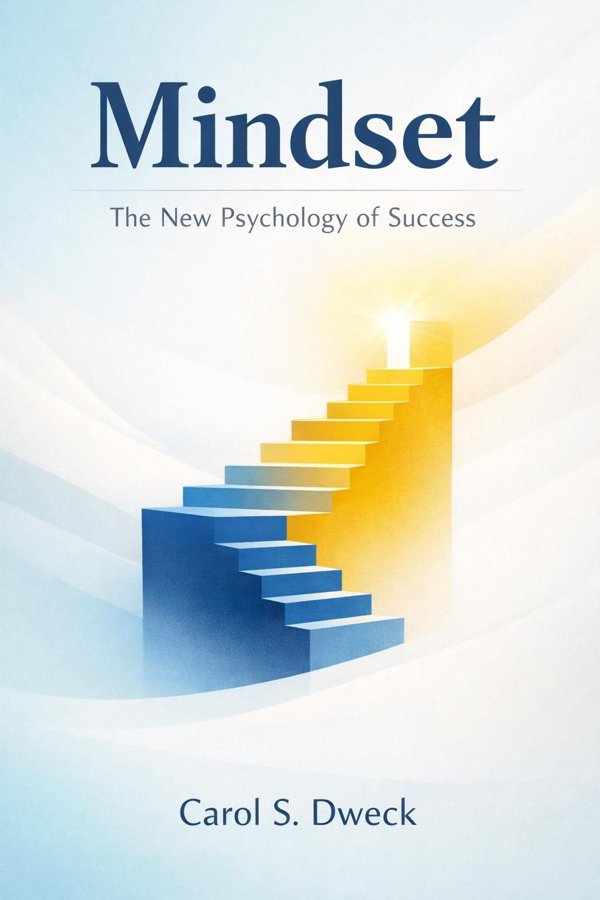

Mindset
Peak: Secrets from the New Science of Expertise
In-Depth Analysis
Carol Dweck’s 'Mindset' and Anders Ericsson & Robert Pool’s 'Peak' both advance powerful arguments about human potential, yet they operate from distinct philosophical and methodological vantage points. While both challenge the notion of innate talent as the primary driver of success, their approaches, evidence bases, and practical recommendations diverge in meaningful ways.
'Mindset' introduces readers to a dichotomy: the fixed mindset, which regards abilities as static, and the growth mindset, which sees them as malleable through effort and learning. Dweck marshals decades of psychological research and field observations—such as experiments with schoolchildren reacting to failure—to show how these underlying beliefs influence behavior, resilience, and achievement. For example, she describes how children praised for intelligence (fixed mindset) tend to avoid challenges, while those praised for effort (growth mindset) embrace them. The book’s strength lies in its universality: the mindset framework applies to education, parenting, business, sports, and relationships. Dweck uses stories of famous figures (e.g., Michael Jordan, Thomas Edison), classroom dynamics, and even personal anecdotes to illustrate how adopting a growth mindset enables individuals and organizations to navigate setbacks and realize potential.
'Peak' delves deeper into the mechanics of skill acquisition, making a more granular and empirical argument. Ericsson, renowned for his research on expertise, and Pool, a science writer, dismantle the 'talent myth' by showing that deliberate practice—intense, focused training designed to improve specific components of performance—is the true engine of mastery. They cite research on chess grandmasters, violin prodigies, and memory champions, demonstrating that world-class performance arises from years of structured practice rather than genetic endowment. For instance, Ericsson recounts his famous studies of violinists at Berlin’s elite music academy, revealing that those who practiced more deliberately, not those with supposed 'natural ability,' became the best performers. The book is loaded with practical advice, from designing feedback-rich practice routines to developing mental representations (internal models that allow experts to process information efficiently). 'Peak' addresses not only how to improve but also the cognitive science behind why certain practice methods work, making it invaluable for readers seeking to master a specific discipline.
Philosophically, 'Mindset' is rooted in the psychology of beliefs, motivation, and identity. Dweck’s argument is that our internal narratives about ability shape our willingness to learn, persevere, and grow. Her methodology is primarily experimental and observational, focusing on interventions (e.g., changing praise language) that shift mindsets and, in turn, outcomes. 'Mindset' is less prescriptive about what to do day-to-day to acquire skills, instead emphasizing the importance of adopting a growth-oriented outlook as a foundation for all learning.
In contrast, 'Peak' is grounded in expertise research and cognitive science. Ericsson and Pool emphasize the external, environmental factors—such as high-quality mentoring and access to effective training methods—that enable deliberate practice. Their methodology is empirical and longitudinal, relying on case studies, controlled experiments, and data from elite performers. 'Peak' is highly prescriptive, providing blueprints for structuring practice, measuring progress, and overcoming plateaus. For example, the authors explain how a chess player might break down games into patterns, or how a musician might isolate difficult passages, to maximize learning efficiency.
Practically, the books address overlapping but distinct domains. 'Mindset' is broadly applicable: educators can use it to foster resilience in students, leaders can cultivate a growth culture in organizations, and parents can encourage children to embrace challenges. However, its recommendations are often high-level—shift your beliefs, praise effort, reframe failure. 'Peak' is more suited for readers intent on achieving high performance in a particular field. It offers detailed, actionable steps—such as setting specific goals, seeking immediate feedback, and pushing beyond comfort zones—that can be directly implemented in sports, music, business, or any skill-based pursuit.
Ultimately, the two books complement each other. 'Mindset' provides the motivational and psychological groundwork for lifelong learning, while 'Peak' furnishes the technical tools for turning that motivation into real expertise. Together, they offer a nuanced, evidence-based roadmap for anyone seeking personal or professional growth.
Side-by-Side Comparison
| Aspect | Mindset | Peak: Secrets from the New Science of Expertise |
|---|---|---|
| Core Philosophy | Mindset centers on the distinction between a fixed mindset (abilities are static) and a growth mindset (abilities can be developed), arguing that beliefs about intelligence shape outcomes. | Peak posits that excellence is not the result of innate talent but of deliberate, structured practice, emphasizing that expertise can be systematically developed by anyone. |
| Writing Style | Dweck’s prose is accessible, anecdotal, and motivational, using personal stories and research vignettes to illustrate psychological principles. | Ericsson and Pool adopt a more analytical, case-driven style, blending research explanations with in-depth profiles of world-class performers. |
| Practical Application | Mindset offers actionable strategies for shifting beliefs in various contexts like education, work, and parenting, with exercises to foster a growth mindset. | Peak provides detailed, step-by-step guidance for implementing deliberate practice in specific fields, including templates and examples for structuring personal improvement. |
| Scientific Rigor | Dweck leverages decades of psychological research, but often translates findings into accessible lessons, sometimes glossing over methodological complexity. | Ericsson and Pool meticulously detail the studies behind their claims, emphasizing experimental evidence and the nuances of cognitive science research. |
| Target Audience | Aimed at a general audience—students, parents, teachers, and professionals—seeking to understand and improve their own and others’ potential. | Targets readers interested in skill acquisition and mastery—athletes, musicians, professionals—who want a practical blueprint for achieving expertise. |
| Emotional Impact | Mindset inspires optimism by reframing failure as an opportunity for growth, often eliciting emotional engagement through relatable scenarios. | Peak motivates through awe at human potential, but its tone is more technical, focusing on process and discipline rather than emotional transformation. |
| Actionability | Encourages readers to reflect on and actively change their beliefs, but provides fewer concrete daily routines for skill-building. | Offers actionable frameworks and examples for deliberate practice that readers can directly apply to improve in chosen domains. |
| Depth of Analysis | Mindset explores psychological mechanisms and social implications but sometimes simplifies complex issues for a broad readership. | Peak dives deeply into the mechanisms of skill acquisition, discussing mental representations and the granularities of practice with scholarly depth. |
| Readability | Highly readable, engaging, and accessible to those without a background in psychology. | While clearly written, Peak’s technical sections may require more concentration, especially for readers unfamiliar with cognitive psychology. |
| Long-term Value | Offers enduring insights into personal development and motivation that can reshape attitudes across a lifetime. | Serves as a long-term reference for those pursuing mastery in specific skills, providing lasting practical tools for continuous improvement. |
Key Differences
Theoretical Focus
'Mindset' explores the psychology of beliefs—how our mindset shapes learning and achievement. 'Peak' investigates the mechanics of skill acquisition, focusing on deliberate practice and cognitive science.
Practical Guidance
'Mindset' offers general strategies for fostering a growth mindset but is less prescriptive about specific practice routines. 'Peak' provides step-by-step, field-tested methods for achieving expertise in concrete domains.
Research Emphasis
Dweck’s work is rooted in experimental and observational psychology, emphasizing mindset interventions. Ericsson and Pool rely on longitudinal studies and case analyses of elite performers, providing granular data on what drives expertise.
Target Audience
'Mindset' addresses a broad audience—students, parents, teachers, and leaders—while 'Peak' aims at those pursuing high-level mastery in particular skills, such as athletes, musicians, and professionals.
Emotional Versus Technical Tone
'Mindset' is more motivational and emotionally resonant, using relatable stories to inspire change. 'Peak' is analytical, focusing on the process and science behind improvement.
Breadth Versus Depth
'Mindset' covers a wide range of life domains with its core concept. 'Peak' offers deeper, more technical exploration of how expertise is developed in specific fields.
Who Should Read Which?
The Motivated Parent or Teacher
→ Mindset
Dweck’s book provides actionable insights into how adults can cultivate resilience and a love of learning in children. Its focus on praise, feedback, and classroom dynamics makes it invaluable for those shaping young minds.
The Aspiring Expert or Performer
→ Peak: Secrets from the New Science of Expertise
For readers committed to achieving mastery—whether in sports, music, or a professional field—'Peak' delivers concrete, research-based methods for structured improvement and sustained excellence.
The Curious Self-Improver
→ Mindset
'Mindset' is ideal for individuals seeking broad, lifelong personal growth. Its universal lessons about learning and overcoming failure apply to any stage of life or career, regardless of specific skill goals.
Which Should You Read First?
For most readers, it is advisable to start with 'Mindset.' Dweck’s exploration of the fixed versus growth mindset lays the psychological foundation necessary for meaningful self-improvement. By first understanding how beliefs about ability influence behavior and motivation, readers can prime themselves to embrace the challenges and setbacks inherent in any learning process. This mindset shift is essential before delving into the demanding, sometimes painstaking routines that 'Peak' prescribes. Once equipped with a growth-oriented outlook, readers can turn to 'Peak' to learn the practical, research-backed methods for skill acquisition. Those with a background in psychology or cognitive science may appreciate starting with 'Peak,' but for most—including educators, parents, and beginners—establishing the right attitude through 'Mindset' will make the technical strategies in 'Peak' more effective and sustainable.
Want the full summary?
Get instant access to this book summary and 100K+ more with Fizz Moment.
Get Free SummaryAvailable on App Store • Free to download
Frequently Asked Questions
Is 'Mindset' better than 'Peak' for beginners interested in self-improvement?
'Mindset' is generally more accessible for beginners, especially those new to personal development concepts. Dweck’s narrative is easy to follow, and her focus on changing one’s beliefs about learning and intelligence provides a foundational mindset shift that can benefit anyone starting their journey. While 'Peak' offers more technical detail, 'Mindset' lays the groundwork for understanding why improvement matters, making it an ideal entry point for novices.
What does 'Peak' offer that 'Mindset' does not for professionals seeking expertise?
'Peak' goes beyond motivational concepts to deliver a detailed blueprint for acquiring expertise through deliberate practice. It explains the specific, structured steps professionals can take to improve performance in their field, drawing on empirical examples from music, sports, and medicine. For those ready to move from attitude adjustment to actionable routines, 'Peak' provides the scientific foundation and practical methods that 'Mindset' does not cover in depth.
Which book is more scientifically rigorous: 'Mindset' or 'Peak'?
While both books are grounded in research, 'Peak' offers greater scientific rigor in its exploration of skill acquisition. Ericsson and Pool meticulously review studies, outline methodologies, and discuss experimental findings in detail. 'Mindset' presents robust psychological research but often summarizes findings for a general audience, sometimes sacrificing nuance for accessibility.
Should educators and parents read 'Mindset' or 'Peak' to help children succeed?
'Mindset' is particularly well-suited for educators and parents, as it addresses how praise, feedback, and learning environments shape children's attitudes toward failure and growth. Dweck provides practical suggestions for fostering a growth mindset in students and children, which leads to greater resilience and motivation. While 'Peak' offers valuable insights into training methods, 'Mindset' is more directly relevant to shaping young learners’ beliefs and behaviors.
How do 'Mindset' and 'Peak' approach the concept of talent versus effort?
Both books challenge the traditional notion of innate talent. 'Mindset' focuses on the belief systems that determine whether individuals attribute success to talent or to effort, advocating for an effort-based perspective. 'Peak' provides empirical evidence showing that expertise is the result of years of targeted, deliberate practice, not inborn ability. While 'Mindset' argues for changing beliefs about effort, 'Peak' details how to translate that belief into effective action.
Is it necessary to read both 'Mindset' and 'Peak' to achieve personal growth?
While not strictly necessary, reading both books is highly beneficial for anyone serious about personal development. 'Mindset' equips readers with the psychological tools to embrace learning and resilience, whereas 'Peak' supplies the frameworks for skill mastery. Together, they offer a comprehensive understanding of both the mental and practical dimensions of growth, making for a more holistic approach to self-improvement.
The Verdict
Both 'Mindset' by Carol Dweck and 'Peak' by Anders Ericsson and Robert Pool are landmark texts in the science of personal development, yet they serve complementary purposes. 'Mindset' is best suited for readers seeking to transform their fundamental beliefs about learning, resilience, and achievement. It excels for educators, parents, and anyone looking to foster motivation and healthy attitudes toward failure in themselves or others. Its broad, inspiring approach makes it accessible and universally applicable. 'Peak,' on the other hand, is indispensable for those who want to move beyond inspiration to the nuts and bolts of skill acquisition. If your goal is to achieve mastery in a specific domain—be it music, sports, or professional expertise—'Peak' offers the empirical insights and structured strategies you need. It is especially valuable for coaches, trainers, and serious learners who demand more than motivational advice. Ideally, readers should begin with 'Mindset' to establish the right outlook, then turn to 'Peak' for an in-depth guide to putting that outlook into action. In sum, read 'Mindset' for the 'why' and 'Peak' for the 'how.'
Related Comparisons


Want to read both books?
Get AI-powered summaries of both Mindset and Peak: Secrets from the New Science of Expertise in just 20 minutes total.