
The Body Keeps the Score vs Man's Search for Meaning: Which Should You Read?
A detailed comparison of The Body Keeps the Score by Bessel van der Kolk and Man's Search for Meaning by Viktor Frankl. Discover the key differences, strengths, and which book is right for you.
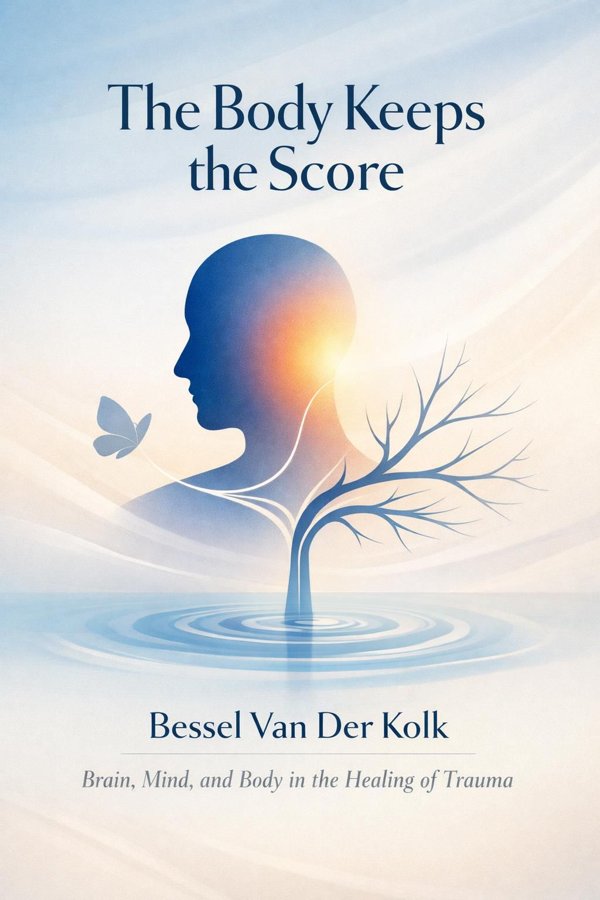

The Body Keeps the Score
Man's Search for Meaning
In-Depth Analysis
Bessel van der Kolk’s "The Body Keeps the Score" and Viktor Frankl’s "Man’s Search for Meaning" are both transformative psychological texts, but they approach the human response to trauma and suffering from fundamentally different angles, shaped by their authors’ backgrounds and experiences.
Van der Kolk, a psychiatrist and researcher, meticulously documents how trauma is encoded in the human body and brain. Drawing from decades of clinical work, he details how traumatic experiences—especially those in childhood—can disrupt neurobiology, compromise emotional regulation, and fracture one’s sense of self. For example, Van der Kolk explains how trauma can cause the brain’s alarm system (the amygdala) to become hyperactive, while the rational brain (prefrontal cortex) is weakened, leading to dissociation, flashbacks, and difficulty in self-control. He supplements these insights with patient narratives—such as the story of a Vietnam veteran whose body kept reliving battlefield experiences—demonstrating that trauma is not simply a psychological wound but a physiological one.
The book’s methodology is highly scientific. Van der Kolk references brain imaging studies, neurofeedback trials, and emerging therapies such as EMDR (Eye Movement Desensitization and Reprocessing), yoga, and drama therapy. He advocates for a holistic, embodied approach to trauma treatment, emphasizing that talk therapy alone is insufficient. Instead, interventions must leverage the body’s innate neuroplasticity. This is a significant contribution to trauma studies, as it bridges neuroscience, psychotherapy, and somatic practices, offering clinicians and survivors a roadmap to healing that is both evidence-based and empathetic.
In contrast, Viktor Frankl’s "Man’s Search for Meaning" is a profoundly existential and philosophical examination of suffering. Frankl, a neurologist and psychiatrist, recounts his years in Nazi concentration camps, where he observed the extremes of human depravity and resilience. The first half is a harrowing memoir that immerses the reader in the dehumanizing realities of camp life, from the "shock of arrival" to the "emotional detachment" that many prisoners adopted as a survival strategy. Frankl’s clinical detachment and personal vulnerability intersect as he reflects on moments such as holding onto memories of his wife or finding beauty in a sunset, even amidst horror.
Frankl’s theoretical framework emerges from these experiences. He argues that life’s primary motivational force is the pursuit of meaning—a belief that forms the core of logotherapy. Unlike Freudian psychoanalysis (focused on the pleasure principle) or Adlerian psychology (power), Frankl insists that meaning can be found in every circumstance, even unavoidable suffering. For example, he writes, "When we are no longer able to change a situation, we are challenged to change ourselves." This radical freedom, the ability to choose one’s attitude, is for Frankl the last of the human freedoms.
Methodologically, Frankl’s work is less empirical and more philosophical. His insights derive from keen observation and existential reflection rather than controlled studies. This makes "Man’s Search for Meaning" accessible and universally resonant, though less useful as a clinical manual. Rather, it is a guide for living, offering solace and direction to those facing adversity by reframing suffering as an opportunity for growth and self-transcendence.
The practical implications of these books are distinct. "The Body Keeps the Score" is a manual for therapists and trauma survivors, brimming with actionable strategies—from mindfulness practices to group therapy. It attends to the granular details of trauma’s impact, equipping readers with tools for healing. For instance, Van der Kolk provides step-by-step accounts of how yoga and bodywork can help trauma survivors reclaim bodily ownership and safety.
"Man’s Search for Meaning," while inspiring and psychologically profound, offers fewer concrete interventions. Its value lies in shifting the reader’s perspective: by emphasizing that meaning can be created in any situation, it provides existential hope and motivation. Frankl’s message is particularly relevant for those contending with loss, existential crisis, or seemingly insurmountable suffering.
Philosophically, the books diverge sharply. Van der Kolk’s stance is neurobiological and integrative: trauma is a mind-body phenomenon to be treated holistically. Frankl’s is existentialist: suffering is a challenge to one’s meaning-making capacity. Both are deeply humane, grounded in the authors’ direct encounters with suffering, but their recommendations reflect their divergent worldviews.
In summary, "The Body Keeps the Score" is a rigorous, practical, and scientifically grounded resource for understanding and healing trauma, suitable for professionals and lay readers seeking depth. "Man’s Search for Meaning" is a universal meditation on suffering, meaning, and the resilience of the human spirit, best suited for readers seeking philosophical guidance or existential comfort. Together, they offer complementary perspectives on the human capacity to endure and transcend adversity.
Side-by-Side Comparison
| Aspect | The Body Keeps the Score | Man's Search for Meaning |
|---|---|---|
| Core Philosophy | The Body Keeps the Score posits that trauma is fundamentally embodied, altering both neurological pathways and physical health, and that healing requires addressing both mind and body. | Man's Search for Meaning asserts that even in the worst suffering, humans retain the freedom to choose their attitude and can find meaning through suffering, forming the basis of Frankl's logotherapy. |
| Writing Style | Van der Kolk writes in a clinical yet compassionate style, interweaving research studies, patient stories, and practical observations. | Frankl’s style is both memoiristic and philosophical, combining vivid personal narrative with concise, accessible psychological theory. |
| Scientific Rigor | Heavily grounded in decades of neuroscience, psychiatry, and clinical trials, the book cites numerous studies and cases to support its claims. | Frankl’s work is more experiential and philosophical, with logotherapy based on his observations and existential philosophy rather than empirical data. |
| Practical Application | Offers actionable therapeutic techniques—such as yoga, EMDR, and neurofeedback—for clinicians and trauma survivors. | Encourages the reader to search for personal meaning in suffering, but provides fewer concrete tools for psychological intervention. |
| Emotional Impact | Delves into painful realities of trauma but offers hope through stories of resilience and recovery. | Frankl’s first-person account of surviving the Holocaust is deeply moving, fostering empathy and existential reflection. |
| Target Audience | Best for mental health professionals, trauma survivors, and anyone interested in the science of trauma. | Accessible to a broad audience, including those seeking inspiration, existential insight, or understanding of human resilience. |
| Actionability | Readers gain tangible methods to address trauma in themselves or clients. | Readers are inspired to reflect on their own lives and attitudes but may find practical guidance less direct. |
| Depth of Analysis | Provides a comprehensive exploration of trauma’s multifaceted effects on body, brain, and relationships. | Focuses deeply on the existential dimension of suffering and the power of meaning, but is less detailed on psychological mechanisms. |
| Readability | Dense in places due to scientific explanations, but made accessible through case studies and clear prose. | Highly readable, with short chapters and emotionally resonant storytelling. |
| Long-term Value | Serves as a foundational text for trauma-informed care and ongoing reference for practitioners. | Enduring classic in existential philosophy and psychology, often revisited for its uplifting perspective on suffering. |
Key Differences
Scientific vs. Philosophical Approach
"The Body Keeps the Score" is rooted in neuroscience and clinical research, whereas "Man’s Search for Meaning" is grounded in existential philosophy and personal narrative.
Therapeutic Actionability
Van der Kolk’s book provides detailed descriptions of therapeutic interventions such as EMDR, yoga, and neurofeedback, offering actionable guidance. Frankl’s book, while inspiring, focuses more on attitude and perspective than specific methods.
Narrative Style
"The Body Keeps the Score" intersperses case studies with scientific explanations. "Man’s Search for Meaning" is primarily a memoir, using Frankl’s experiences in concentration camps as a springboard for broader psychological insights.
Focus on Trauma
Van der Kolk extensively analyzes the impact of trauma on the brain and body, while Frankl addresses trauma as one form of suffering among many, focusing on meaning as the core issue.
Intended Audience
"The Body Keeps the Score" is tailored for mental health professionals and those seeking trauma recovery. "Man’s Search for Meaning" is written for a general audience, including those seeking existential guidance.
Emphasis on the Body
Van der Kolk emphasizes the physical embodiment of trauma and the necessity of somatic therapies, whereas Frankl’s approach is more cognitive and spiritual, centering on meaning and choice.
Level of Scientific Detail
"The Body Keeps the Score" delves into neuroanatomy, brain imaging, and physiological mechanisms, while "Man’s Search for Meaning" remains accessible for lay readers with minimal scientific jargon.
Who Should Read Which?
The Trauma Survivor
→ The Body Keeps the Score
This book provides practical, evidence-based tools for understanding and healing from trauma, including neuroscience explanations and actionable therapies. Survivors will find validation and hope in the stories and interventions presented.
The Philosophical Seeker
→ Man’s Search for Meaning
Frankl’s memoir and existential analysis offer profound insights into the nature of suffering, resilience, and the pursuit of meaning—ideal for readers grappling with life’s big questions or seeking existential guidance.
The Mental Health Professional
→ The Body Keeps the Score
This book is an indispensable resource for clinicians, featuring in-depth analysis of trauma’s effects and a wide array of therapeutic approaches, making it essential reading for anyone working in psychological care.
Which Should You Read First?
The optimal reading order depends on the reader’s needs and background. For those seeking a foundational understanding of how trauma affects the body and brain, or for mental health professionals, reading "The Body Keeps the Score" first provides a rigorous scientific and clinical framework. This can establish a baseline of understanding about trauma, making the existential insights in "Man’s Search for Meaning" more personally resonant and contextually rich. Conversely, readers who are not familiar with psychological concepts or are experiencing existential distress may benefit from starting with "Man’s Search for Meaning." Frankl’s narrative is accessible and emotionally compelling, offering hope and perspective before delving into the complexities of trauma science. For readers interested in both the science of trauma and the human search for meaning, reading both in sequence—starting with Van der Kolk for grounding, then Frankl for transcendence—yields the most holistic understanding.
Want the full summary?
Get instant access to this book summary and 100K+ more with Fizz Moment.
Get Free SummaryAvailable on App Store • Free to download
Frequently Asked Questions
Is The Body Keeps the Score better than Man's Search for Meaning for beginners in psychology?
For beginners in psychology, "Man's Search for Meaning" is generally more accessible due to its narrative style and focus on universal human experiences. "The Body Keeps the Score" delves into neuroscience, treatment modalities, and clinical terminology, which can be dense for those new to the field. However, if a beginner is specifically interested in trauma or intends to pursue mental health work, Van der Kolk's book is invaluable despite its complexity.
Which book provides more practical tools for trauma recovery: The Body Keeps the Score or Man's Search for Meaning?
"The Body Keeps the Score" offers a comprehensive suite of practical tools for trauma recovery, including detailed explanations of therapies like EMDR, mindfulness, yoga, and neurofeedback. "Man’s Search for Meaning" inspires readers to find meaning in adversity but does not provide step-by-step therapeutic interventions. Those seeking actionable strategies for healing will find Van der Kolk’s book far more useful in practical terms.
How do the philosophical approaches differ between The Body Keeps the Score and Man's Search for Meaning?
Van der Kolk’s approach in "The Body Keeps the Score" is rooted in neurobiology and integrative therapy, focusing on the physiological and psychological mechanisms of trauma. Frankl’s approach in "Man’s Search for Meaning" is existential, arguing that humans have the freedom to choose their response to suffering and can create meaning even in dire circumstances. While Van der Kolk addresses how trauma damages the self, Frankl explores how meaning can be found and chosen regardless of circumstance.
What is the emotional impact of reading The Body Keeps the Score versus Man's Search for Meaning?
"The Body Keeps the Score" can be intense and at times distressing, as it delves into personal stories of trauma and loss, but ultimately offers hope through stories of recovery and resilience. "Man’s Search for Meaning," while recounting harrowing suffering, often leaves the reader uplifted and inspired by the human capacity for dignity and meaning in adversity. Both are emotionally powerful, but Frankl’s work tends to leave a lingering sense of existential hope.
For someone seeking to understand trauma’s effects on the brain, which book is more informative?
"The Body Keeps the Score" is the definitive choice for understanding trauma’s effects on the brain and body. Van der Kolk explains the neurobiology of trauma in detail, from changes in brain regions to the role of memory and bodily sensations. Frankl’s book, while psychologically insightful, does not address neuroscience or the physiological basis of trauma.
Is Man’s Search for Meaning suitable for mental health professionals?
"Man’s Search for Meaning" is suitable for mental health professionals seeking to deepen their understanding of existential psychology and the role of meaning in recovery. While it is not a clinical manual, it enriches practitioners’ empathy and philosophical insight, which can be valuable in therapeutic settings. For clinical techniques, however, Van der Kolk’s book is far more comprehensive.
Can these books be read together, or should they be approached separately?
Reading both books together can offer a holistic perspective: Van der Kolk provides the scientific and therapeutic framework for trauma recovery, while Frankl offers existential and philosophical context. Readers interested in both the mechanics of trauma and the search for meaning will benefit from the complementary insights. However, those seeking direct clinical guidance should prioritize Van der Kolk, whereas those seeking inspiration may prefer Frankl.
The Verdict
Both "The Body Keeps the Score" and "Man’s Search for Meaning" are essential works in the field of psychology, but they serve different purposes and audiences. Van der Kolk’s book is the definitive resource for understanding the neurobiological and somatic dimensions of trauma and offers concrete, evidence-based tools for healing. It is best suited for clinicians, trauma survivors, and anyone seeking a deep, scientific understanding of how trauma shapes the mind and body. Frankl’s memoir, on the other hand, is a timeless meditation on the human spirit’s resilience. Its existential insights and accessible prose make it ideal for readers grappling with suffering, loss, or questions of meaning. It does not provide clinical interventions, but it does offer profound philosophical solace and motivation to endure adversity. For those seeking practical trauma recovery tools or a foundational text for mental health work, start with "The Body Keeps the Score." For those in existential crisis, searching for inspiration, or interested in the philosophical dimensions of suffering, "Man’s Search for Meaning" is indispensable. Many readers will benefit from both, as together they bridge the gap between science and the search for meaning.
Related Comparisons

Want to read both books?
Get AI-powered summaries of both The Body Keeps the Score and Man's Search for Meaning in just 20 minutes total.