
Becoming vs Greenlights: Which Should You Read?
A detailed comparison of Becoming by Michelle Obama and Greenlights by Matthew McConaughey. Discover the key differences, strengths, and which book is right for you.
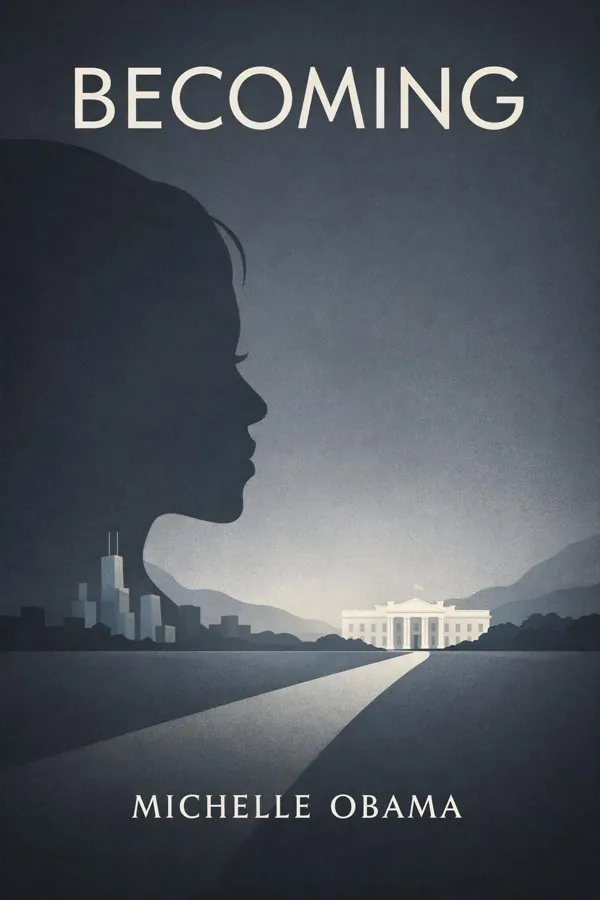
Becoming
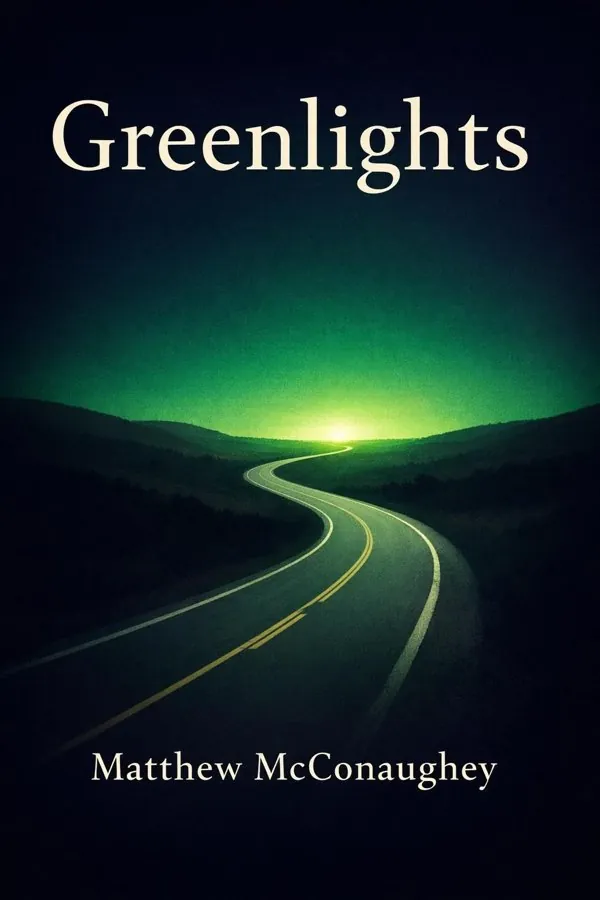
Greenlights
In-Depth Analysis
At first glance, Becoming and Greenlights belong to the same broad shelf category: celebrity memoirs by widely recognizable public figures who translate personal history into life lessons. But in practice, they represent two very different models of memoir. Michelle Obama's Becoming is a carefully built narrative of identity formation under pressure—from family expectations, institutional gatekeeping, marriage, motherhood, race, and national visibility. Matthew McConaughey's Greenlights, by contrast, is a philosophy-forward memoir assembled from journals, stories, slogans, and hard-earned intuitions about how to move through life with style, courage, and receptivity. Both books ask how a person builds a life. They differ in what they believe a life is built from.
Becoming is anchored in context. Michelle Obama begins not with fame but with place: the South Side of Chicago, her family's small apartment, her parents' steadiness, and her brother Craig's companionship. These scenes matter because they establish the book's moral vocabulary—discipline, dignity, education, and emotional restraint. The memoir's title is crucial: Obama presents selfhood as iterative. She is not revealing a fixed authentic essence that was always there; she is tracing how each environment forced her to renegotiate who she was. Her years at Whitney Young and Princeton illustrate this dynamic powerfully. Achievement opens doors, but it also generates alienation. She learns to perform excellence in spaces not designed for her, and the book does not romanticize that success. It often feels exhausting.
That tension gives Becoming its depth. When Obama describes Harvard Law School and her early law career, she is strikingly honest about the gap between external accomplishment and internal clarity. This is one of the memoir's strongest themes: meritocratic success is real, but it is not emotionally self-explanatory. She can win the game and still ask whether the game is worthy of her. That question becomes even richer when Barack Obama enters the story. Their courtship is not framed as fairy-tale destiny but as an encounter between two ambitious, intellectually serious people testing compatibility. Later, marriage is depicted with unusual candor for a public figure. The strain of two careers, the pressures of his political ascent, and the logistics of raising daughters while under scrutiny all complicate the idea of partnership. The memoir's emotional credibility comes from this refusal to flatten love into inspiration.
Greenlights is built differently. McConaughey's memoir is less a linear becoming than a collage of episodes that demonstrate a worldview. The title itself is a thesis: life goes better when you learn to see openings inside resistance. From his Texas upbringing—where, as he presents it, love, conflict, masculinity, humor, and faith all coexist messily—to his college pivot away from law toward film, McConaughey crafts a mythology of instinct. He wants the reader to believe that paying attention to inner signals matters more than overplanning. Where Obama often interrogates circumstances, McConaughey often absorbs them and asks how to surf them.
That gives Greenlights a different kind of appeal. It is more openly quotable, more designed for motivational extraction. The stories operate as proofs of concept for maxims about risk, endurance, authenticity, and surrender. Even the stylistic choices—journal snippets, poetic fragments, one-liners, and irreverent tonal swerves—support this. The book feels like listening to a charismatic storyteller making meaning in real time. For some readers, that energy is liberating. It grants permission to stop overcontrolling life and trust pattern recognition, courage, and reframing.
But this same quality marks its limitation. McConaughey's philosophy can sometimes feel retroactively neat, as though the lesson emerges because the narrator already survived the event and knows how to package it. The book's account of fame, failure, and authenticity is compelling precisely because he tries to reclaim authorship over his own image, especially after being typecast in romantic comedies before seeking more serious roles. Yet Greenlights tends to universalize from singular experience. Its wisdom is often persuasive as temperament rather than argument.
This is where Becoming stands apart. Obama's memoir is less slogan-ready but more analytically durable. It understands that the self is shaped not only by attitude but by institutions, expectations, and history. Her reflections on being a Black woman in elite educational and political spaces give the book a social dimension that Greenlights largely lacks. Even her most personal chapters—on miscarriage, IVF, motherhood, and marital counseling—carry larger implications about labor, gender, and the invisible work of holding a family together. She is not just telling readers how she felt; she is showing what systems demanded of her.
Emotionally, the books also diverge in rhythm. Becoming deepens over time. Its most affecting moments often arrive quietly: a father living with physical limitation but preserving pride, a young woman second-guessing whether she belongs, a mother trying to shield daughters from political spectacle. Greenlights works in spikes—wild family stories, romantic intensity, career turns, travel, spiritual searching. Its emotional world is vivid but less cumulative.
Ultimately, the comparison comes down to what readers want memoir to do. If memoir should illuminate how private identity interacts with public structures, Becoming is the stronger book. If memoir should energize, entertain, and offer a memorable personal philosophy for confronting adversity, Greenlights excels. Obama gives readers a disciplined, humane study of self-construction. McConaughey gives them a charismatic manual for reframing life's traffic signals. One is more historically grounded; the other more improvisational. Both are sincere. But Becoming leaves a broader intellectual and emotional afterlife because it does not merely narrate success—it examines the cost, complexity, and continual unfinishedness of becoming.
Side-by-Side Comparison
| Aspect | Becoming | Greenlights |
|---|---|---|
| Core Philosophy | Becoming is organized around the idea of identity as an ongoing process rather than a finished achievement. Michelle Obama repeatedly returns to the question of how to remain grounded, self-defined, and purposeful while moving through class mobility, professional pressure, marriage, motherhood, and public life. | Greenlights advances a looser, slogan-like life philosophy: obstacles, detours, and even pain can be reframed as 'greenlights' if met with the right attitude. Matthew McConaughey emphasizes instinct, acceptance, resilience, and turning lived experience into personal momentum. |
| Writing Style | Michelle Obama writes in a polished, intimate, highly structured narrative voice. Her prose is reflective and accessible, balancing vivid storytelling with careful emotional framing, especially in sections on Chicago, Princeton, marriage, and the White House. | McConaughey writes in a performative, conversational, often aphoristic style that feels part campfire storytelling, part journal collage. The book uses poems, catchphrases, diary fragments, and swaggering asides, creating energy but sometimes sacrificing narrative coherence. |
| Practical Application | The lessons in Becoming are practical in a gradual, lived way: invest in education, build supportive relationships, examine ambition honestly, and define success for yourself. Its usefulness comes less from explicit advice than from watching Michelle Obama revise her values across life stages. | Greenlights is more overtly positioned as a life-guide, offering memorable rules of thumb about risk, discipline, perspective, and surrender. Readers looking for immediately quotable principles may find it easier to apply in daily motivation, even when the guidance is impressionistic. |
| Target Audience | Becoming will especially resonate with readers interested in memoirs of social mobility, Black womanhood, family formation, public service, and the hidden labor behind political life. It also speaks strongly to readers navigating achievement culture and the tension between competence and fulfillment. | Greenlights is aimed at readers drawn to celebrity memoir, masculine self-mythology, adventure narratives, and upbeat self-help philosophy. It suits those who enjoy unconventional life wisdom and are comfortable with a narrator who turns his own persona into part of the message. |
| Scientific Rigor | Neither book is research-driven, but Becoming is careful and credible in a memoiristic sense because it grounds its claims in concrete lived experience rather than broad universal theories. Michelle Obama rarely overgeneralizes; she tends to speak from observation, context, and personal memory. | Greenlights has low scientific rigor because its philosophy is built on anecdote, intuition, and retrospective meaning-making rather than evidence. Its insights can be energizing, but they often function as personal maxims rather than tested frameworks. |
| Emotional Impact | Becoming carries deep emotional force through its candor about fertility struggles, marital strain, racialized scrutiny, and the burden of visibility. The emotional arc feels cumulative, with quiet scenes from her childhood and motherhood often landing as powerfully as the public milestones. | Greenlights generates emotional impact through high-voltage storytelling, family intensity, romantic episodes, misadventures, and moments of vulnerability beneath McConaughey's bravado. Its feelings come in bursts rather than the steady emotional deepening found in Becoming. |
| Actionability | The book is actionable for readers willing to translate narrative into reflection: journal your values, reassess career success, nurture partnership through honesty, and protect family identity under pressure. Its actionability is implicit and strongest for readers who learn by example. | Greenlights is highly actionable in tone because it offers repeatable mental cues: reframe red lights, trust your inner signal, commit fully, and find meaning in adversity. The risk is that some advice may feel too personalized to McConaughey's unusual life trajectory. |
| Depth of Analysis | Becoming offers more sustained analysis of class, race, gender, institutions, and the emotional cost of aspiration. Michelle Obama not only recounts events but interprets how environments shaped her, from the South Side to elite schools to national politics. | Greenlights favors experiential insight over social analysis. McConaughey is often perceptive about his own choices and instincts, but the book is less interested in structural critique and more interested in extracting attitude-based lessons from dramatic episodes. |
| Readability | Becoming is highly readable because its chronology is clear, the voice is warm, and the scenes are well developed. Even longer reflective passages remain easy to follow because the book is carefully scaffolded around major life transitions. | Greenlights is fast and entertaining, especially for readers who enjoy fragmented memoir and oral-storytelling rhythm. However, its nonlinear jumps and stylized presentation may feel uneven to readers who prefer a steadier narrative arc. |
| Long-term Value | Becoming has strong long-term value as both a personal memoir and a social document of upward mobility, marriage, motherhood, and public life in contemporary America. Readers may return to it at different ages and find new meaning in its reflections on ambition, belonging, and self-definition. | Greenlights has long-term value primarily as a motivational re-read and as a vivid expression of McConaughey's worldview. Its most durable element is its permission to reinterpret setbacks, though some of its charm depends on the reader's taste for the author's persona. |
Key Differences
Identity Formation vs Life Reframing
Becoming is fundamentally about the slow construction of self across changing environments. Greenlights is more about reinterpretation—how to see adversity, detours, and contradictions as signals to move forward rather than reasons to stop.
Social Context vs Personal Mythology
Michelle Obama consistently places her story inside broader structures such as race, class, education, and political visibility. McConaughey centers a more individualized narrative, where family intensity, instinct, travel, and career pivots become elements in a self-authored legend.
Chronological Narrative vs Journal-Driven Mosaic
Becoming follows a clear life arc, making each chapter feel like a step in an ongoing evolution. Greenlights feels assembled from notebooks and reflections, which creates spontaneity but also a more fragmented reading experience.
Measured Reflection vs Performative Voice
Obama's voice is intimate, composed, and emotionally precise, even when discussing painful topics like fertility struggles or marital strain. McConaughey's voice is louder, more theatrical, and more aphoristic, often turning scenes into memorable lessons or punchlines.
Institutional Pressure vs Temperamental Freedom
A major thread in Becoming is how institutions shape opportunity and belonging, from Whitney Young to Princeton to the White House. Greenlights is less interested in institutions than in attitude—how a person meets chaos, chance, and challenge with nerve and openness.
Relational Depth vs Experiential Energy
Becoming dwells on family bonds, partnership, and caregiving with sustained seriousness, especially in its treatment of marriage and motherhood. Greenlights prioritizes movement, adventure, and high-intensity episodes, giving it kinetic charm but less relational excavation.
Implicit Lessons vs Explicit Maxims
Michelle Obama's lessons arise through example: readers infer principles from the way she navigates school, work, family, and public life. McConaughey more directly states his philosophy, offering readers repeatable phrases and mindsets built around the 'greenlight' concept.
Who Should Read Which?
Readers interested in identity, social mobility, and emotionally intelligent memoir
→ Becoming
This reader will likely value Michelle Obama's attention to family, education, race, marriage, and the emotional cost of success. The memoir offers both personal intimacy and broader cultural insight, making it richer for reflective readers.
Readers who want motivational storytelling and a strong narrator persona
→ Greenlights
McConaughey's memoir is ideal for readers who like memorable life lessons, adventurous anecdotes, and a highly distinctive voice. It is less analytically dense but more immediately energizing and quotable.
Book club readers or discussion-oriented readers
→ Becoming
Becoming opens up more substantial conversations about ambition, family roles, gender expectations, public life, and structural inequality. Its scenes and themes invite richer debate than Greenlights, which is more centered on whether readers connect with McConaughey's worldview.
Which Should You Read First?
Read Becoming first, then Greenlights. Becoming provides the stronger narrative foundation because it is more structured, emotionally cumulative, and analytically rich. Starting with Michelle Obama's memoir lets you settle into a clear life arc and engage deeply with questions of identity, ambition, family, and social context. It also sets a high bar for what memoir can do beyond celebrity storytelling: interpret a life rather than simply recount it. Following it with Greenlights works well because McConaughey's book then feels like a tonal change rather than a downgrade. After the discipline and depth of Becoming, Greenlights can be refreshing—looser, funnier, more impulsive, and more openly motivational. Its fragmented style and slogan-driven wisdom are easier to enjoy once you are no longer looking for the same kind of social and emotional architecture that Becoming provides. In short, read Becoming first for substance and perspective; read Greenlights second for energy, reframing, and a different model of personal truth-telling.
Want the full summary?
Get instant access to this book summary and 100K+ more with Fizz Moment.
Get Free SummaryAvailable on App Store • Free to download
Frequently Asked Questions
Is Becoming better than Greenlights for beginners who do not usually read memoirs?
For most beginners, Becoming is the easier and more reliable entry point. Its structure is chronological, its prose is clear, and Michelle Obama consistently situates the reader in specific places and life stages, from the South Side of Chicago to Princeton, law, marriage, motherhood, and the White House. Greenlights can be very engaging for beginners who like high-energy storytelling, but its journal-like fragments, catchphrases, and nonlinear rhythm may feel less stable. If a new memoir reader wants emotional clarity, character development, and a strong narrative arc, Becoming is usually the better first choice. If they want a breezier, more motivational, personality-driven read, Greenlights may suit them better.
Which memoir is more inspiring: Becoming or Greenlights?
They inspire in different ways. Becoming is inspiring through discipline, endurance, and honesty about the long work of shaping a life. Michelle Obama shows how ambition, family loyalty, self-doubt, and public responsibility coexist, making her achievements feel earned rather than mythic. Greenlights is more immediately energizing because Matthew McConaughey packages inspiration into vivid stories and memorable reframing tactics. It is built to spark momentum: take the risk, trust the signal, turn the setback. Readers who want sustainable, grounded inspiration often prefer Becoming. Readers who want a motivational jolt and a more playful philosophy often find Greenlights more exciting in the moment.
Is Greenlights or Becoming more useful for personal growth and life advice?
For practical personal growth, the answer depends on how you learn. Greenlights is more explicit about life advice. McConaughey gives readers portable mantras and mindset shifts that can be quickly applied to setbacks, career pivots, or confidence struggles. Becoming offers fewer overt rules, but it may produce deeper reflection because Michelle Obama models how values evolve across real circumstances: school pressure, career dissatisfaction, marriage stress, infertility, parenting, and public life. If you want direct, quotable advice, Greenlights is more immediately useful. If you want a memoir that helps you think more seriously about identity, purpose, and the mismatch between achievement and fulfillment, Becoming has greater long-term growth value.
Which book has better writing quality: Becoming by Michelle Obama or Greenlights by Matthew McConaughey?
In terms of consistency, structure, and prose control, Becoming has the stronger writing. Michelle Obama builds scenes carefully, transitions smoothly between life phases, and balances intimacy with reflection. Her voice feels measured without becoming stiff, and the emotional revelations are usually embedded in well-shaped narrative context. Greenlights is more stylistically eccentric. Its voice is distinctive, charismatic, and often very funny, but it can also feel self-consciously performative. Some readers love that improvisational texture; others find it uneven. So if 'better writing quality' means polish, coherence, and sustained depth, Becoming wins. If it means originality of voice and quotability, Greenlights has a real claim.
Should I read Becoming or Greenlights first if I want a memoir with emotional depth?
Read Becoming first. It offers stronger emotional layering because Michelle Obama traces vulnerability across decades rather than delivering it in isolated flashes. Her childhood memories, educational ascent, relationship with Barack Obama, fertility struggles, and experience of raising children under public scrutiny accumulate into a fuller emotional portrait. Greenlights certainly has moving material—family complexity, heartbreak, career uncertainty, and soul searching—but its emotional power tends to come in bursts, often filtered through swagger or philosophy. If your priority is sustained emotional depth and a richer understanding of how a person changes over time, Becoming is the better first read.
Is Becoming better than Greenlights for book clubs and discussion groups?
Yes, in most cases Becoming is the better book club choice because it opens more avenues for discussion. Readers can talk about race, class mobility, education, marriage, motherhood, public image, political life, and the emotional costs of success. The memoir invites both personal response and broader social analysis. Greenlights can still work well for discussion groups, especially those interested in masculinity, reinvention, celebrity identity, and self-help philosophy, but its conversation tends to revolve more around whether readers connect with McConaughey's persona and worldview. For layered, wide-ranging discussion, Becoming usually generates more substantial exchanges.
The Verdict
If you want the more substantial, lasting memoir, choose Becoming. Michelle Obama delivers not just a compelling life story but a layered meditation on identity, ambition, race, marriage, motherhood, and public responsibility. The book's great strength is that it never confuses accomplishment with self-understanding. Whether she is describing her father's quiet strength, her unease in elite institutions, her evolving marriage to Barack Obama, or the invisible burdens of public life, she brings context and emotional intelligence to every stage. It is both intimate and socially aware, which gives it unusual staying power. Choose Greenlights if what you want is momentum. Matthew McConaughey's memoir is more eccentric, more overtly motivational, and more driven by voice than by careful analysis. Its best passages are energetic and memorable, especially when he writes about instinct, reinvention, and finding opportunities inside setbacks. It works well as a charismatic life-philosophy book disguised as a memoir. Overall, Becoming is the stronger recommendation for most readers because it offers greater narrative coherence, emotional depth, and interpretive richness. Greenlights is the better pick for readers who value spontaneity, quotable wisdom, and an unconventional, high-voltage storytelling style. One book helps you think more deeply about how a life is formed; the other helps you face life with more swagger. If forced to choose one, Becoming is the more rewarding and complete reading experience.
Want to read both books?
Get AI-powered summaries of both Becoming and Greenlights in just 20 minutes total.