
1984 vs Brave New World: Which Should You Read?
A detailed comparison of 1984 by George Orwell and Brave New World by Aldous Huxley. Discover the key differences, strengths, and which book is right for you.

1984
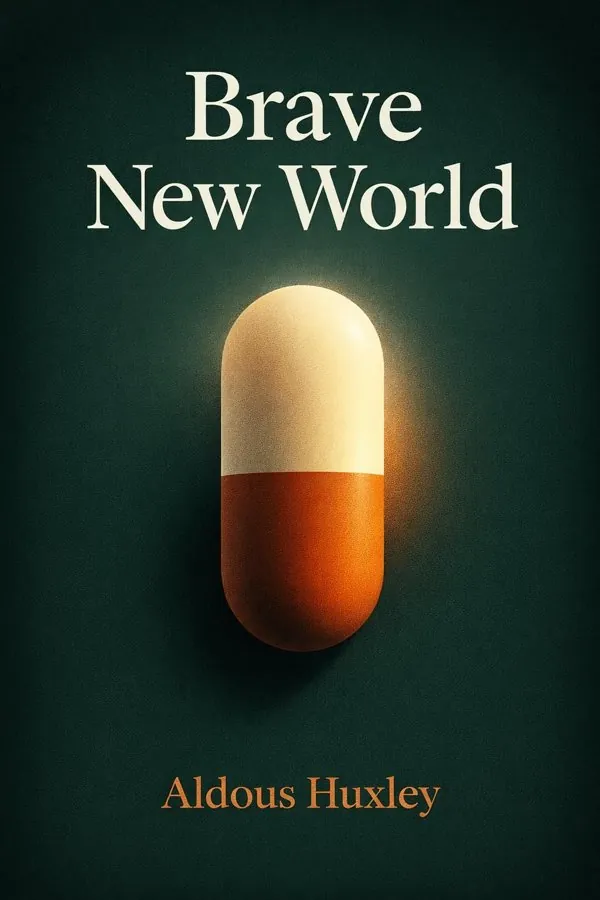
Brave New World
In-Depth Analysis
George Orwell’s 1984 and Aldous Huxley’s Brave New World are foundational texts of dystopian literature, offering starkly different yet equally chilling visions of controlled societies. Their differences are not simply a matter of method—fear versus pleasure—but stem from divergent philosophical premises about human nature, authority, and the mechanisms of power.
Orwell’s Oceania is a world of relentless surveillance, enforced orthodoxy, and ceaseless manipulation. The Party’s control is embodied in the ever-present gaze of Big Brother and the Ministry of Truth’s devastation of language and history. Winston Smith, a minor bureaucrat, dares to question the regime, embarking on a doomed quest for personal and intellectual freedom. The novel’s most powerful moments—such as Winston’s secret diary entries, his relationship with Julia, and his ultimate betrayal in Room 101—expose how totalitarianism weaponizes fear and isolation. The Party’s innovation is not simply the suppression of opposition, but the destruction of the very possibility of dissent. Newspeak, for example, is designed to make subversive thought literally unthinkable, while the two minutes hate and perpetual war keep the population in a state of anxious conformity.
Brave New World, by contrast, is a society where repression is internalized. The World State engineers its citizens from conception at the Hatchery and Conditioning Centre, assigning them to castes and training them for contentment and compliance. Soma, endless entertainment, and engineered sexuality ensure that no one is left dissatisfied for long. Bernard Marx’s alienation is rooted in his sense of difference, but his rebellion is half-hearted and self-interested, contrasting with Winston’s more principled defiance. The arrival of John, the Savage, introduces a voice from outside the system—a man raised on Shakespeare, who sees the World State’s pleasures as empty and its citizens as dehumanized. John’s climactic debates with Mustapha Mond, the World Controller, foreground Huxley’s philosophical concerns: is it better to be unhappy but free, or happy but enslaved?
Methodologically, Orwell’s narrative is intimate and claustrophobic, immersing the reader in Winston’s perspective and the daily terrors of life under the Party. The prose is austere, mirroring the bleakness of the setting, and the plot is tightly focused on Winston’s psychological journey. In contrast, Huxley’s approach is more panoramic and satirical. The opening chapters tour the Hatchery, exposing the mechanics of social engineering, and the narrative shifts between multiple characters to illustrate the breadth and depth of the World State’s control. Huxley’s tone is often ironic, highlighting the absurdities of a society obsessed with efficiency and pleasure.
Philosophically, 1984 is a treatise on the fragility of truth and the violence of authoritarianism. Its most harrowing insight is that power’s ultimate aim is not merely to control action, but to dominate thought. O’Brien’s interrogation of Winston—"If you want a picture of the future, imagine a boot stamping on a human face—forever"—captures the nihilism at the heart of Orwell’s vision. Brave New World, meanwhile, interrogates the perils of hedonism and technocracy. The World State’s motto—"Community, Identity, Stability"—masks a society where individuality, art, and authentic emotion are sacrificed for shallow contentment. John’s tragic end, as he succumbs to despair and isolation, is a testament to the cost of a world that eliminates pain at the expense of meaning.
Practically, both novels remain urgent. 1984 is invoked in debates about surveillance, censorship, and fake news, while Brave New World is cited in discussions of consumerism, bioethics, and the manipulation of desire. Each novel anticipates different dangers: Orwell warns of repression through terror and lies; Huxley warns of repression through pleasure and distraction. Their enduring relevance lies in their ability to illuminate the mechanisms by which societies might forfeit freedom—whether through fear or through comfort.
In sum, Orwell and Huxley offer complementary diagnoses of the threats to autonomy and meaning in modernity. 1984’s vision is one of overt oppression, whereas Brave New World’s is of subtle, self-imposed servitude. Both demand vigilance, reflection, and the courage to ask what kind of future we are building.
Side-by-Side Comparison
| Aspect | 1984 | Brave New World |
|---|---|---|
| Core Philosophy | 1984's core philosophy revolves around the dangers of totalitarianism, focusing on the suppression of truth, history, and individuality through fear, surveillance, and brute force. | Brave New World presents a society that achieves control not through fear, but via engineered pleasure, conditioning, and the suppression of individuality through enforced happiness and consumerism. |
| Writing Style | Orwell’s prose is stark, direct, and laden with bleak imagery, mirroring the oppressive atmosphere of Oceania and immersing readers in a sense of claustrophobia and dread. | Huxley’s style is more satirical and ironic, with lyrical, descriptive passages that highlight the artificiality and superficiality of the World State. |
| Emotional Impact | 1984 elicits an intense emotional response, particularly a sense of despair, paranoia, and outrage at the Party��s psychological manipulation and Winston’s ultimate defeat. | Brave New World’s emotional tenor is subtler, evoking unease and disquiet through the characters’ numbness and the society’s shallow contentment, culminating in John’s tragic alienation. |
| Antagonistic Forces | The antagonistic force is explicit—Big Brother, the Party, and the Thought Police exert visible, violent control over individuals like Winston. | Control is exercised through invisible mechanisms: genetic engineering, hypnopaedia, and social conditioning, with no single villain but a pervasive, faceless system. |
| Philosophical Underpinnings | Orwell explores epistemology and the malleability of reality, with the Party’s manipulation of language and history exemplified by Newspeak and the Ministry of Truth. | Huxley interrogates the ethics of utilitarianism, questioning whether engineered happiness and stability justify the sacrifice of freedom, depth, and authentic emotion. |
| Protagonist’s Journey | Winston Smith’s arc is one of gradual awakening, rebellion, and tragic capitulation, serving as a case study in the crushing of dissent. | Bernard Marx and John the Savage are both outsiders: Bernard’s dissatisfaction is ambiguous and self-serving, while John’s journey is a philosophical confrontation with the World State, ending in self-destruction. |
| Societal Control Methods | 1984’s society controls through surveillance, torture, fear, and the systematic erasure of personal and historical truth. | Brave New World relies on conditioning, entertainment, drugs (soma), and engineered contentment to prevent the desire for rebellion. |
| Relevance to Modern Readers | 1984 remains viscerally relevant for its exploration of surveillance, state propaganda, and the fragility of truth, resonating with concerns about government overreach and privacy. | Brave New World’s themes of distraction, consumer culture, and engineered happiness feel prescient in an age of digital media, algorithmic manipulation, and bioengineering. |
| Worldbuilding | Orwell constructs a tightly controlled, claustrophobic world with rigid hierarchies, pervasive poverty, and constant surveillance—a warning of power unchecked. | Huxley’s World State is expansive, technologically sophisticated, and outwardly utopian, hiding its dehumanizing costs beneath a veneer of pleasure and order. |
Key Differences
Mechanisms of Control
1984 enforces conformity through surveillance, fear, and violence, epitomized by the Thought Police and Room 101. Brave New World achieves compliance through pleasure, conditioning, and distraction, using soma and entertainment to prevent dissatisfaction.
Role of Technology
Technology in 1984 is primarily a tool of oppression—telescreens monitor citizens, and technology is harnessed for propaganda. In Brave New World, technology is used for social engineering, from genetic manipulation to psychological conditioning, and is central to the society’s operation.
Nature of Rebellion
Winston’s rebellion in 1984 is clandestine, intellectual, and ultimately personal, while John the Savage’s resistance in Brave New World is existential and philosophical, stemming from his inability to accept the World State’s values.
Philosophical Focus
1984 centers on epistemology and the manipulation of truth, while Brave New World interrogates utilitarianism and the ethical costs of engineered happiness.
Emotional Tone
1984 is relentlessly bleak, engendering dread and outrage, especially through Winston’s ultimate defeat. Brave New World, while superficially cheerful, is undercut by irony and a sense of emptiness, culminating in John’s tragic alienation.
Worldbuilding Scope
Orwell’s Oceania is narrow, oppressive, and focused on the protagonist��s immediate reality. Huxley’s World State is expansive, with detailed mechanisms of control spanning biology, psychology, and culture.
Antagonist Structure
1984 offers a clear antagonist in Big Brother and the Party, personifying evil and oppression. Brave New World’s antagonism is systemic and diffuse, with no single villain but a collective, impersonal system.
Who Should Read Which?
The Political Activist
→ 1984
Activists focused on issues of surveillance, propaganda, and state power will find 1984's exploration of these themes both urgent and insightful. The novel provides a compelling critique of authoritarianism that continues to inform political discourse and resistance strategies.
The Technological Ethicist
→ Brave New World
Readers interested in the social impact of technology, bioengineering, and ethical dilemmas posed by scientific progress will gain the most from Brave New World. Its detailed depiction of a society engineered for stability and pleasure raises crucial questions about the costs of innovation.
The Literary Explorer
→ Brave New World
Those who enjoy irony, complex worldbuilding, and philosophical debate will appreciate Huxley's satirical style and the nuanced portrayal of the World State. The interplay of ideas and the broader societal scope make it a rewarding read for those seeking intellectual engagement.
Which Should You Read First?
For most readers, starting with 1984 is advantageous due to its clear narrative structure and immediate emotional impact. The novel’s directness draws readers into the stakes of a dystopian society, providing a strong foundation for understanding the genre’s concerns with power and truth. Those new to dystopian fiction will find its focus on a single protagonist and his struggle both accessible and gripping. Afterward, Brave New World offers a contrasting vision that deepens and complicates the discussion by shifting the focus to technological and psychological forms of control. Readers with a background in science, ethics, or social critique may prefer to begin with Brave New World, as it foregrounds issues of bioengineering and pleasure as mechanisms of control. Ultimately, reading both in succession allows for a richer appreciation of their dialogue about the future of humanity, with 1984 setting the stage and Brave New World expanding the thematic landscape.
Want the full summary?
Get instant access to this book summary and 100K+ more with Fizz Moment.
Get Free SummaryAvailable on App Store • Free to download
Frequently Asked Questions
Is 1984 better than Brave New World for beginners to dystopian literature?
For beginners, 1984 offers a more straightforward narrative with a clear protagonist and antagonist, immersing readers quickly in the stakes and tension of a totalitarian regime. Its language is direct and its worldbuilding is tightly focused, making it accessible for those new to dystopian fiction. However, the emotional bleakness and the harshness of its themes may be intense for first-time readers. Brave New World, while more satirical and conceptually complex, uses irony and a broader range of characters, which can be engaging but potentially more challenging for those unfamiliar with the genre. Ultimately, both are classics, but 1984 is generally more approachable for newcomers.
What are the main differences between the societies in 1984 and Brave New World?
The society in 1984 is maintained through fear, surveillance, and force, with the Party controlling every aspect of life, including history and language. Citizens are kept in a state of anxiety and conformity by constant monitoring and brutal punishments. In contrast, Brave New World's World State achieves stability through genetic engineering, social conditioning, and pleasure, using entertainment, drugs like soma, and engineered happiness to eliminate dissent. While 1984's control is overt and violent, Brave New World's is subtle and insidious, relying on satisfaction and distraction rather than terror.
Which book, 1984 or Brave New World, is more relevant to today's society?
Both books remain relevant, but in different ways. 1984 resonates strongly in discussions about surveillance, government overreach, and the distortion of truth in media and politics. Its warnings about the dangers of authoritarianism and censorship are frequently cited in contemporary debates. Brave New World, on the other hand, feels prescient in an age of technological advancement, algorithm-driven entertainment, and bioengineering. Its critique of a society obsessed with pleasure, distraction, and engineered contentment has become increasingly pertinent as technology shapes our desires and behaviors. Readers may find one or the other more resonant depending on current events and personal concerns.
Does Brave New World offer a more optimistic vision than 1984?
While Brave New World appears more optimistic on the surface due to its absence of violence and abundance of pleasure, its vision is ultimately just as bleak, if not more so. The citizens' happiness is shallow, engineered, and devoid of authentic emotion or individuality. The lack of overt suffering masks a deeper loss: the eradication of meaning, art, and genuine connection. John the Savage's tragic experience shows that even in a world free of pain, the cost to human spirit can be devastating. In this sense, both novels are grim, but Brave New World's optimism is revealed to be a façade.
Are the protagonists of 1984 and Brave New World similar?
Winston Smith (1984) and John the Savage (Brave New World) both serve as outsiders who question their societies, but their motivations and arcs differ. Winston's rebellion is intellectual and personal, driven by a longing for truth and freedom. His journey is ultimately crushed by the Party's overwhelming power. John, raised outside the World State, is an existential critic whose confrontation is philosophical and emotional; he cannot reconcile his ideals with the World State's values, leading to his isolation and self-destruction. Bernard Marx, another central figure in Brave New World, is less principled and more self-serving than Winston. Both novels use their protagonists to explore the limits of resistance in oppressive societies.
Should I read Brave New World if I want more focus on technology and science?
Yes, Brave New World is deeply concerned with the implications of technology and science on society. The novel explores genetic engineering, psychological conditioning, and the use of drugs and entertainment to regulate human behavior. Huxley’s depiction of the Hatchery and Conditioning Centre, as well as the social hierarchies based on engineered intelligence, make it a foundational text for those interested in the intersection of science, ethics, and social order. If your interests lean toward the ethical consequences of scientific advancement, Brave New World is particularly relevant.
The Verdict
Both 1984 and Brave New World are indispensable works of dystopian fiction, but their distinct approaches serve different readers and purposes. 1984 is ideal for those seeking a direct, emotionally intense warning about surveillance, authoritarianism, and the erasure of truth. Its clarity, focused narrative, and psychological depth make it especially compelling for readers interested in political theory, the mechanics of tyranny, or the resilience of the individual spirit. Brave New World is best suited for readers interested in philosophical questions about happiness, technology, and the costs of engineered stability. Its broader, satirical sweep and exploration of pleasure as a tool of control make it crucial for those reflecting on consumer culture, bioethics, and the role of science in shaping society. For students, activists, and anyone concerned with authoritarian power, 1984 remains the essential starting point. For technologists, ethicists, and those questioning the limits of progress, Brave New World offers unparalleled insight. Ideally, both should be read—each complements the other, providing a fuller picture of the perils facing modernity. Start with the one whose themes resonate most with your current concerns, but don’t neglect the other.
Related Comparisons
Want to read both books?
Get AI-powered summaries of both 1984 and Brave New World in just 20 minutes total.