
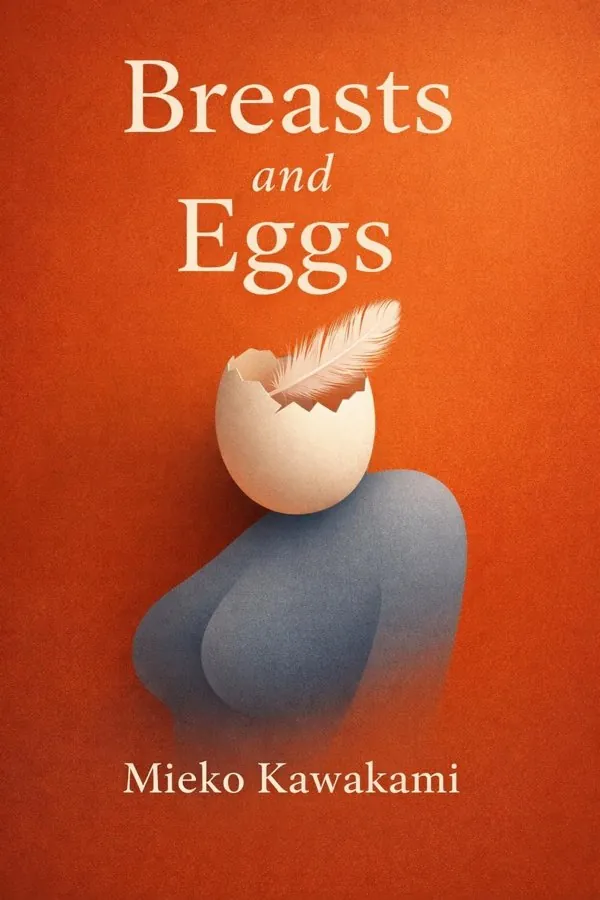
Breasts and Eggs: Summary & Key Insights
 10 min9 chaptersAudio available
Key Takeaways from Breasts and Eggs
Sometimes the deepest family conflicts arrive not through shouting, but through what no one can say aloud.
A body is never just a body in this novel; it is a site where private desire and public expectation meet.
Adolescence often begins when language no longer feels big enough for what the body is doing.
The novel’s second major movement asks a radical question: what if a woman wants a child but not the institutions traditionally attached to motherhood?
Growing up does not mean escaping the past; it means deciding which parts of it will continue through you.
What Is Breasts and Eggs About?
Breasts and Eggs by Mieko Kawakami is a classics book spanning 4 pages. Breasts and Eggs by Mieko Kawakami is a bold, intimate novel about what it means to live in a female body while being watched, judged, and shaped by family, class, and society. Set in contemporary Japan, the book follows three women—Natsuko, her older sister Makiko, and Makiko’s teenage daughter Midoriko—as they wrestle with beauty, silence, money, motherhood, and the pressure to become someone legible to others. In its later movement, the novel widens into a searching exploration of reproductive choice, especially the desire to have a child outside marriage. What makes this novel matter is not only its subject but its method: Kawakami captures ordinary conversation, private thought, and bodily unease with astonishing honesty, making deeply personal conflicts feel social and political at once. Originally published in a shorter form and later expanded in English translation by Sam Bett and David Boyd, Breasts and Eggs has become a landmark work of contemporary fiction. Kawakami writes with the precision of a poet and the fearlessness of a social critic, turning everyday female experience into literature of rare depth and urgency.
This FizzRead summary covers all 9 key chapters of Breasts and Eggs in approximately 10 minutes, distilling the most important ideas, arguments, and takeaways from Mieko Kawakami's work. Also available as an audio summary and Key Quotes Podcast.
Breasts and Eggs
Breasts and Eggs by Mieko Kawakami is a bold, intimate novel about what it means to live in a female body while being watched, judged, and shaped by family, class, and society. Set in contemporary Japan, the book follows three women—Natsuko, her older sister Makiko, and Makiko’s teenage daughter Midoriko—as they wrestle with beauty, silence, money, motherhood, and the pressure to become someone legible to others. In its later movement, the novel widens into a searching exploration of reproductive choice, especially the desire to have a child outside marriage. What makes this novel matter is not only its subject but its method: Kawakami captures ordinary conversation, private thought, and bodily unease with astonishing honesty, making deeply personal conflicts feel social and political at once. Originally published in a shorter form and later expanded in English translation by Sam Bett and David Boyd, Breasts and Eggs has become a landmark work of contemporary fiction. Kawakami writes with the precision of a poet and the fearlessness of a social critic, turning everyday female experience into literature of rare depth and urgency.
Who Should Read Breasts and Eggs?
This book is perfect for anyone interested in classics and looking to gain actionable insights in a short read. Whether you're a student, professional, or lifelong learner, the key ideas from Breasts and Eggs by Mieko Kawakami will help you think differently.
- ✓Readers who enjoy classics and want practical takeaways
- ✓Professionals looking to apply new ideas to their work and life
- ✓Anyone who wants the core insights of Breasts and Eggs in just 10 minutes
Want the full summary?
Get instant access to this book summary and 100K+ more with Fizz Moment.
Get Free SummaryAvailable on App Store • Free to download
Key Chapters
Sometimes the deepest family conflicts arrive not through shouting, but through what no one can say aloud. In the opening section of Breasts and Eggs, Makiko and her daughter Midoriko travel from Osaka to Tokyo to stay with Natsuko. On the surface, it is an ordinary family visit. Beneath that surface, however, each woman carries an urgent private struggle. Makiko is obsessed with getting breast augmentation, convinced that changing her body may restore confidence, possibility, or youth. Midoriko has stopped speaking almost entirely, using her notebook instead to communicate fragments of feeling and confusion about puberty, menstruation, sex, and her mother’s choices. Natsuko, the quieter observer, is left to absorb the tension and try to understand what each silence means.
Kawakami uses the trip to stage a generational encounter: a mother shaped by economic hardship and bodily insecurity, a daughter horrified by the expectations placed on female bodies, and a sister who notices how love can fail when language does. The apartment becomes a pressure chamber where class, beauty, and maternal desire collide. What is remarkable is that no one is reduced to a simple position. Makiko is not vain in any shallow sense; her desire emerges from labor, loneliness, and a world that measures women relentlessly. Midoriko’s refusal to speak is not mere rebellion but a protest against entering that same world.
In real life, families often misread silence as stubbornness, when it may actually be fear, shame, or overload. Kawakami reminds us that conflict is often stored physically before it becomes verbal. A useful takeaway is to treat silence as communication rather than absence: ask gentler questions, leave room for written or indirect expression, and remember that family intimacy does not guarantee mutual understanding.
A body is never just a body in this novel; it is a site where private desire and public expectation meet. Breasts and Eggs returns repeatedly to the female body as both deeply personal and heavily regulated by social gaze. Makiko thinks about breasts not as abstract symbols but as practical, emotional, and economic realities. Midoriko experiences menstruation and maturation as bewildering evidence that her body is being drafted into womanhood without her consent. Natsuko, meanwhile, reflects on her own distance from conventional sexuality, beauty standards, and the scripts women are told to inhabit.
Kawakami’s achievement lies in showing how bodily consciousness is shaped by class and vulnerability. Cosmetic surgery is not treated simply as vanity, nor is discomfort with one’s body framed as weakness. Instead, the novel asks what happens when a person’s body becomes the main language through which society reads value. For working women, especially those with limited power, appearance can feel like currency, burden, and prison all at once. The body can become a border: between childhood and adulthood, freedom and surveillance, selfhood and performance.
This idea travels well beyond the novel. Many people know what it means to feel estranged from the body others think they understand. Social media, beauty industries, and cultural expectations amplify that estrangement. Kawakami encourages readers to ask not only, “How do I feel about my body?” but also, “Who taught me to feel this way?” That shift is practical and liberating. The actionable takeaway is to separate bodily care from social punishment: notice which desires are genuinely yours, question which anxieties have been inherited, and resist making your worth dependent on visual approval.
Adolescence often begins when language no longer feels big enough for what the body is doing. Midoriko is one of the novel’s most striking presences because she refuses speech at the very moment adults expect explanation. Her silence is not emptiness. Through her written notes and inner intensity, Kawakami reveals a girl overwhelmed by menstruation, reproduction, and the prospect of becoming a woman in a world that seems to make womanhood synonymous with pain, scrutiny, and compromise.
Midoriko watches her mother’s fixation on breast surgery and sees not empowerment but submission to a cruel social order. She cannot reconcile the tenderness and damage of motherhood. Why would women choose a system that humiliates them? Why is the female body expected to absorb so much blood, labor, and self-denial? These are not naive questions; they are moral ones. Midoriko’s muteness becomes a form of ethical resistance. She rejects easy participation in adult language because that language often normalizes what should remain troubling.
Kawakami captures a truth many adults forget: teenagers are often not confused because they understand too little, but because they understand too much too early. Midoriko perceives hypocrisy with painful clarity. Her silence exposes the limits of family conversation, especially when adults themselves are still struggling to explain their lives.
This dynamic is highly recognizable outside fiction. Young people may withdraw when they encounter topics—body changes, sex, family dysfunction—that adults discuss awkwardly or defensively. Rather than forcing immediate openness, the novel suggests honoring alternative forms of expression: journals, messages, art, or simple time. The actionable takeaway is to meet adolescent silence with patience and curiosity, not control. Create conditions for trust before demanding explanation.
The novel’s second major movement asks a radical question: what if a woman wants a child but not the institutions traditionally attached to motherhood? Years after the family visit, Natsuko is living in Tokyo as a writer, older and more settled in her solitude, yet increasingly drawn to the possibility of becoming a mother. What makes this desire complex is that she does not imagine it through romance, marriage, or conventional family life. Instead, she explores sperm donation and the ethical, emotional, and social complications surrounding single motherhood.
Kawakami treats this not as a plot twist but as a deepening of the novel’s central concerns. If women are told that motherhood completes them, what happens when they seek it on their own terms? If a society idealizes family while stigmatizing nontraditional paths to it, then reproductive desire becomes a political problem as much as a personal one. Natsuko’s inquiries force her to consider law, inheritance, anonymity, the child’s future, economic security, and her own uncertain relation to sex and intimacy.
What makes this section powerful is its refusal of easy celebration or condemnation. Natsuko’s wish is real, but so are the risks and ambiguities. She speaks with others, listens to competing views, and recognizes that wanting a child does not automatically answer the question of whether one should have one. This honesty makes the novel especially relevant in an era of changing family structures.
For readers, the broader lesson is that independence is not the absence of attachment; it is the right to shape attachment deliberately. The actionable takeaway is to approach major life desires—parenthood, partnership, solitude—not as defaults but as choices requiring reflection, practical planning, and honest conversation about consequences.
Growing up does not mean escaping the past; it means deciding which parts of it will continue through you. One of the novel’s quiet strengths is the way it tracks continuity and change across time. Midoriko, once defined by her silence and alarm at womanhood, grows older. Natsuko, once mainly an observer of others’ bodily and emotional struggle, becomes the person facing an irreversible decision. The book suggests that maturity is not clarity achieved once and for all, but a changing relationship to uncertainty.
Kawakami avoids the simplistic idea that people either break cycles or repeat them. Instead, she shows how family patterns persist in transformed ways. Shame, tenderness, bodily anxiety, economic pressure, and the longing to be seen all travel across generations. Yet each woman interprets these inheritances differently. Midoriko is not her mother. Natsuko is not merely a more intellectual version of Makiko. Their futures are not predetermined, even if they are shaped by what came before.
This makes the novel especially thoughtful about agency. Choice is never pure freedom, because it arises inside conditions we did not choose—class background, gender norms, family wounds, legal limits. But choice still matters. Natsuko’s eventual direction carries weight precisely because it is made in full view of these constraints rather than in denial of them.
In practical terms, the novel invites readers to examine their own inherited scripts. Do you equate love with sacrifice because your family did? Do you fear dependence because you witnessed its abuses? Do you avoid certain futures simply because they were made to look shameful? The actionable takeaway is to identify one inherited belief shaping your life and test whether it still deserves authority. Continuity is inevitable; conscious change is the work.
Economic pressure is one of the novel’s most important forces, even when it remains in the background of conversation. Breasts and Eggs is not only about bodies and motherhood; it is about what poverty, precarious work, and class insecurity do to a person’s imagination of what is possible. Makiko’s concerns about her appearance cannot be separated from the realities of labor and aging. Natsuko’s choices about independence and parenthood are inseparable from money, housing, work stability, and the fragility of support systems.
Kawakami is unusually sharp in showing how class shapes self-perception. For women with fewer resources, the body may feel like one of the only negotiable assets available for protection or advancement. This does not mean the characters are calculating in a crude sense. Rather, they are living in a society where beauty, youth, and femininity are linked to opportunity, safety, and dignity. Cosmetic enhancement, romantic partnership, or motherhood are never merely emotional choices; they are also economic calculations made under pressure.
The novel also reveals how class affects voice. People from less privileged backgrounds are often expected to explain themselves in terms approved by institutions that do not understand them. Kawakami refuses that flattening. She lets her characters be contradictory, intelligent, impulsive, and wounded without reducing them to examples.
Readers can apply this insight by looking more carefully at the material conditions behind personal decisions—both their own and others’. Instead of judging choices in isolation, ask what constraints surround them. The actionable takeaway is to add a class lens to intimate questions: when considering beauty, family, work, or freedom, identify the financial structures influencing your options before calling any decision purely personal.
Some experiences become most vivid not when they are fully explained, but when language strains to contain them. Breasts and Eggs is fascinated by voice: spoken voice, withheld voice, written voice, and the inner monologue that never reaches others intact. Natsuko’s narration often dwells in observation and reflection, while Midoriko’s notebook entries provide another texture entirely—compressed, urgent, often more revealing than conversation. This formal contrast is not decorative. It enacts the novel’s core idea that women’s lives are often overinterpreted publicly and underarticulated privately.
Kawakami understands that speech does not automatically produce truth. Families talk past one another. Social language about beauty or motherhood comes loaded with cliché. Institutions use neutral words to disguise moral judgment. Against this, the novel searches for more honest forms of expression, even when they are fragmented or awkward. The result is a book that feels both conversational and deeply literary, intimate and analytical.
This matters because many readers recognize the mismatch between what they feel and what they can comfortably say. Questions about the body, sex, fertility, and family are often surrounded by embarrassment or borrowed language. Kawakami demonstrates the value of trying anyway, even imperfectly. Writing things down, speaking tentatively, or admitting uncertainty can be more truthful than repeating polished opinions.
A practical lesson follows: when a subject feels too charged for immediate discussion, create another route for expression. Journaling, letter writing, voice notes, or structured conversation prompts can surface what ordinary talk suppresses. The actionable takeaway is to stop equating fluency with honesty. If something matters, give it a form—even an unfinished one—before silence hardens into distance.
What counts as a major subject in literature is itself a political question. Breasts and Eggs treats menstruation, breasts, loneliness, beauty work, reproductive planning, and women’s everyday conversation as material worthy of the highest artistic seriousness. That may sound simple, but it is quietly revolutionary. Historically, many of these experiences have been trivialized, sentimentalized, or pushed to the margins. Kawakami places them at the center without apology.
The novel’s power comes partly from its scale. There are no grand historical spectacles driving the story forward, yet the emotional stakes are enormous. By lingering over ordinary scenes—train rides, cramped rooms, awkward meals, private thoughts—Kawakami shows how social structures live inside daily life. A conversation about breasts becomes a conversation about class. A teenager’s silence becomes a critique of gender ideology. A woman’s wish for a child becomes an inquiry into law, ethics, and freedom.
This is why the book resonates so widely. Readers often feel that the most important struggles in their lives look small from the outside. Kawakami validates that experience. She reminds us that the ordinary is not minor; it is where power is felt most continuously.
For writers, readers, and anyone trying to make sense of their own life, this is an encouraging lesson. Pay attention to recurring discomforts, domestic rituals, and private obsessions. They may contain your deepest questions. The actionable takeaway is to stop dismissing everyday concerns as insignificant. If an experience organizes your emotions, decisions, or self-image, it deserves serious thought—and perhaps serious art.
All Chapters in Breasts and Eggs
About the Author
Mieko Kawakami is a Japanese novelist, poet, and essayist born in Osaka in 1976. Before becoming internationally known as a writer, she worked in music and gained early attention for her poetry, which already showed the lyrical intensity and emotional precision that define her fiction. She rose to major literary prominence after winning the Akutagawa Prize for the original novella version of Breasts and Eggs. Kawakami’s work often examines gender, class, the body, sexuality, loneliness, and the pressures placed on women in modern society. Her novels, including Heaven and All the Lovers in the Night, have been widely translated and acclaimed around the world. She is celebrated for combining poetic language with fearless social observation, making her one of the most important contemporary voices in Japanese literature.
Get This Summary in Your Preferred Format
Read or listen to the Breasts and Eggs summary by Mieko Kawakami anytime, anywhere. FizzRead offers multiple formats so you can learn on your terms — all free.
Available formats: App · Audio · PDF · EPUB — All included free with FizzRead
Download Breasts and Eggs PDF and EPUB Summary
Key Quotes from Breasts and Eggs
“Sometimes the deepest family conflicts arrive not through shouting, but through what no one can say aloud.”
“A body is never just a body in this novel; it is a site where private desire and public expectation meet.”
“Adolescence often begins when language no longer feels big enough for what the body is doing.”
“The novel’s second major movement asks a radical question: what if a woman wants a child but not the institutions traditionally attached to motherhood?”
“Growing up does not mean escaping the past; it means deciding which parts of it will continue through you.”
Frequently Asked Questions about Breasts and Eggs
Breasts and Eggs by Mieko Kawakami is a classics book that explores key ideas across 9 chapters. Breasts and Eggs by Mieko Kawakami is a bold, intimate novel about what it means to live in a female body while being watched, judged, and shaped by family, class, and society. Set in contemporary Japan, the book follows three women—Natsuko, her older sister Makiko, and Makiko’s teenage daughter Midoriko—as they wrestle with beauty, silence, money, motherhood, and the pressure to become someone legible to others. In its later movement, the novel widens into a searching exploration of reproductive choice, especially the desire to have a child outside marriage. What makes this novel matter is not only its subject but its method: Kawakami captures ordinary conversation, private thought, and bodily unease with astonishing honesty, making deeply personal conflicts feel social and political at once. Originally published in a shorter form and later expanded in English translation by Sam Bett and David Boyd, Breasts and Eggs has become a landmark work of contemporary fiction. Kawakami writes with the precision of a poet and the fearlessness of a social critic, turning everyday female experience into literature of rare depth and urgency.
More by Mieko Kawakami
You Might Also Like



Browse by Category
Ready to read Breasts and Eggs?
Get the full summary and 100K+ more books with Fizz Moment.