
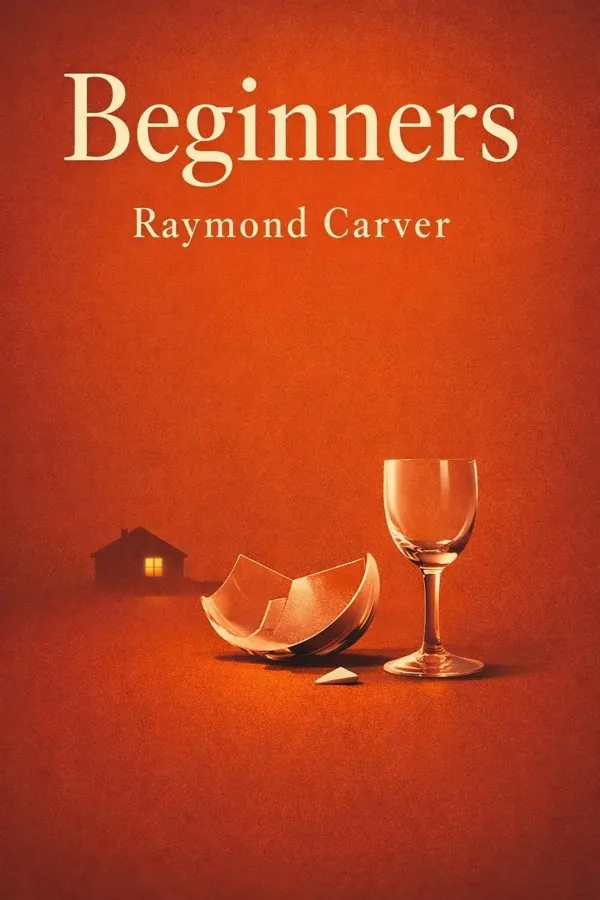
Beginners: The Original Version of What We Talk About When We Talk About Love: Summary & Key Insights
 10 min9 chaptersAudio available
Key Takeaways from Beginners: The Original Version of What We Talk About When We Talk About Love
Sometimes the most revealing portrait of a life is not a confession but a room left in disarray.
Loneliness is rarely dramatic; more often, it arrives as a life narrowed by habit, grief, or shame.
A relationship usually does not collapse in a single moment; it erodes through repetition, compromise, resentment, and avoidance.
Some losses expose how badly ordinary language fails us.
Terrible acts do not always begin with terrible intentions.
What Is Beginners: The Original Version of What We Talk About When We Talk About Love About?
Beginners: The Original Version of What We Talk About When We Talk About Love by Raymond Carver is a classics book spanning 13 pages. Beginners is Raymond Carver’s restored original manuscript for the collection later published, in heavily edited form, as What We Talk About When We Talk About Love. More than a literary curiosity, it offers readers a rare chance to see how tone can change meaning. In these fuller versions of the stories, Carver’s world remains broken, lonely, and painfully ordinary, but it also feels more spacious, compassionate, and emotionally direct. Marriages are collapsing, conversations fail, grief arrives without warning, and people reach for love with clumsy hands. Yet beneath the damage is a stubborn human longing to connect. What makes this book matter is not only the stories themselves, but the window it opens onto authorship, revision, and voice. The collection reveals Carver before editorial compression sharpened him into the icon of minimalist despair. Here, he is still precise and unsentimental, but also warmer, funnier, and more forgiving. Carver’s authority comes from his unmatched ability to capture working-class American lives in moments of emotional exposure. Beginners shows that his greatest subject was never simply emptiness. It was the fragile, often unsuccessful effort people make to speak honestly to one another before time, shame, or loss closes in.
This FizzRead summary covers all 9 key chapters of Beginners: The Original Version of What We Talk About When We Talk About Love in approximately 10 minutes, distilling the most important ideas, arguments, and takeaways from Raymond Carver's work. Also available as an audio summary and Key Quotes Podcast.
Beginners: The Original Version of What We Talk About When We Talk About Love
Beginners is Raymond Carver’s restored original manuscript for the collection later published, in heavily edited form, as What We Talk About When We Talk About Love. More than a literary curiosity, it offers readers a rare chance to see how tone can change meaning. In these fuller versions of the stories, Carver’s world remains broken, lonely, and painfully ordinary, but it also feels more spacious, compassionate, and emotionally direct. Marriages are collapsing, conversations fail, grief arrives without warning, and people reach for love with clumsy hands. Yet beneath the damage is a stubborn human longing to connect.
What makes this book matter is not only the stories themselves, but the window it opens onto authorship, revision, and voice. The collection reveals Carver before editorial compression sharpened him into the icon of minimalist despair. Here, he is still precise and unsentimental, but also warmer, funnier, and more forgiving. Carver’s authority comes from his unmatched ability to capture working-class American lives in moments of emotional exposure. Beginners shows that his greatest subject was never simply emptiness. It was the fragile, often unsuccessful effort people make to speak honestly to one another before time, shame, or loss closes in.
Who Should Read Beginners: The Original Version of What We Talk About When We Talk About Love?
This book is perfect for anyone interested in classics and looking to gain actionable insights in a short read. Whether you're a student, professional, or lifelong learner, the key ideas from Beginners: The Original Version of What We Talk About When We Talk About Love by Raymond Carver will help you think differently.
- ✓Readers who enjoy classics and want practical takeaways
- ✓Professionals looking to apply new ideas to their work and life
- ✓Anyone who wants the core insights of Beginners: The Original Version of What We Talk About When We Talk About Love in just 10 minutes
Want the full summary?
Get instant access to this book summary and 100K+ more with Fizz Moment.
Get Free SummaryAvailable on App Store • Free to download
Key Chapters
Sometimes the most revealing portrait of a life is not a confession but a room left in disarray. In “Why Don’t You Dance?” a man carries the contents of his home onto the lawn: bed, lamp, television, record player, glasses, and whiskey. What could look absurd or comic quickly becomes devastating. He is not simply moving furniture. He is arranging the remains of a marriage as if, by placing each object in the open air, he might understand what has been lost.
This story captures one of Carver’s deepest strengths: he lets objects carry emotion. The furniture is not symbolic in a grand literary sense; it is intimate evidence. The bed suggests shared life, the lamp domestic routine, the records a vanished mood. A young couple wanders into this accidental stage set and treats it like a yard sale, unable to grasp the grief underneath. Their casual curiosity contrasts with the man’s quiet collapse.
In the original version collected in Beginners, the emotional atmosphere feels less purely bleak than in the edited Carver many readers know. There is still strangeness, but also tenderness. The man’s actions are irrational and deeply human at once. He cannot say what happened, so he builds a scene others might enter.
In real life, people often do this too. We reorganize closets after breakups, keep old messages, or linger over ordinary objects because they hold the shape of a life we can no longer inhabit. Carver reminds us that emotional truth often appears sideways, through behavior rather than explanation.
Actionable takeaway: When someone seems odd, withdrawn, or fixated on small things after loss, look past the behavior and ask what invisible grief those objects or routines may be holding together.
Loneliness is rarely dramatic; more often, it arrives as a life narrowed by habit, grief, or shame. “Viewfinder” begins with a man who has lost both hands traveling door to door taking Polaroid photographs. His disability is immediately visible, but Carver’s deeper interest lies elsewhere: in the private incompleteness of the narrator, a man estranged from his family and from himself. The visitor and the homeowner are both marked by absence, though in different forms.
What makes the story powerful is the way connection emerges not through intimacy, but through awkward transaction. The photographer sells images. The narrator resists, then engages. Their exchange remains stilted, even strange, yet something in the encounter shifts. The narrator sees another person not as a category, but as a presence. The photographer, in turn, continues his work with matter-of-fact dignity.
Carver often writes about people who are incapable of graceful emotional speech. They do not have epiphanies in polished sentences. Instead, recognition happens through gesture: a look, a joke, a shared act, a moment on a rooftop. Beginners makes these movements feel more emotionally legible. The stories breathe longer, allowing vulnerability to emerge through rhythm rather than omission alone.
This matters because many real relationships begin not with deep disclosure but with small, uneasy encounters. A conversation with a stranger, a brief service interaction, or an accidental moment of honesty can interrupt isolation. We often assume connection requires eloquence. Carver suggests it may only require staying present long enough for another person’s reality to register.
Actionable takeaway: Treat minor encounters with more attention. A few extra moments of genuine curiosity can turn a routine exchange into a small but meaningful break in someone’s loneliness, including your own.
A relationship usually does not collapse in a single moment; it erodes through repetition, compromise, resentment, and avoidance. That insight runs through stories like “Mr. Coffee and Mr. Fixit,” “Gazebo,” and “The Fling,” where everyday domestic life reveals marriages and affairs already under pressure. Carver is not interested in melodramatic betrayals alone. He cares about how people keep living beside one another while trust thins out, habits harden, and tenderness becomes difficult to access.
In “Gazebo,” for example, a couple working at a motel drift through drinking, infidelity, and paralysis. Their conversations circle the obvious but rarely land on truth. In “The Fling,” what seems casual exposes emotional costs no one fully controls. “Mr. Coffee and Mr. Fixit” shows how gender roles, dependence, and low-grade dissatisfaction shape the atmosphere of a household. Across these stories, love does not disappear all at once. It becomes mixed with exhaustion, blame, nostalgia, and need.
Beginners is especially valuable here because the restored versions make Carver’s couples feel less like specimens of despair and more like recognizable people trapped inside their own limitations. They still wound one another, but they also remember better times, misread signals, and sometimes want to repair what they are actively damaging.
This is part of why Carver remains so relevant. Many readers recognize that serious relationship problems often do not look dramatic from the inside. They look like repeated arguments, numbing routines, secrecy, and the inability to say what is wrong before the damage compounds.
Actionable takeaway: Notice recurring patterns rather than waiting for a crisis. If the same resentment, silence, or escape behavior keeps returning, name it early and directly before ordinary strain turns into emotional collapse.
Some losses expose how badly ordinary language fails us. In “A Small, Good Thing” and “The Bath,” Carver explores the aftermath of a child’s injury and death through two different versions of related material. The contrast is one of the most illuminating parts of Beginners. “The Bath��� is spare, abrupt, and haunting. “A Small, Good Thing” is fuller, warmer, and more redemptive, allowing grief to move toward a fragile human meeting.
The central idea is that suffering becomes unbearable when surrounded by indifference, routine, or bureaucratic misunderstanding. Parents in crisis are forced to interact with hospital systems, phone calls, and obligations that continue as if nothing fundamental has changed. The world does not pause, and that is part of the pain. In “A Small, Good Thing,” the baker who once seemed cruel becomes, unexpectedly, a source of consolation. Food, conversation, and shared humanity cannot undo death, but they can create a brief shelter from its coldness.
Carver’s genius lies in refusing sentimentality while still allowing compassion. He does not claim grief can be solved. He shows that what bereaved people need most is witness: someone to remain present, speak plainly, and offer care without trying to tidy the experience into a lesson.
This applies far beyond the story. In real life, people often rush to fix pain with explanations, advice, or optimistic framing. Carver suggests a more difficult and more generous response: stay, listen, feed, accompany. A small kindness may not be small at all when someone’s world has collapsed.
Actionable takeaway: When someone is grieving, resist the urge to explain or cheer them up. Offer practical care, stay present, and let your attention do the comforting that words cannot.
Terrible acts do not always begin with terrible intentions. In “Tell the Women We’re Going,” Carver shows how ordinary restlessness, entitlement, and emotional vacancy can slide toward irreversible violence. Two men leave behind domestic routine in search of excitement, escape, or proof of vitality. What begins as aimless motion becomes something monstrous. The story is shocking not because evil appears from nowhere, but because it emerges from habits of thought that seem, at first, merely immature or selfish.
Carver refuses to offer comforting distance. The men are not exotic villains; they are familiar in their boredom, their dissatisfaction, their casual objectification of others. That familiarity is the point. The story exposes how unchecked resentment and fantasy can detach people from moral reality. Once others become abstractions rather than persons, cruelty becomes easier to imagine and then enact.
This concern extends into stories like “After the Denim” and “So Much Water So Close to Home,” where the moral question is not only what happened, but how people respond afterward. Do they minimize, rationalize, look away, protect themselves? Carver is deeply interested in complicity by passivity. Harm often persists because those nearby prefer comfort over confrontation.
In everyday terms, this is a warning about moral drift. Most people do not wake up planning to become cruel. But indifference, peer reinforcement, objectification, and refusal to self-examine can steadily erode empathy. Carver’s stories insist that character is revealed in the moments when someone could stop, speak, or refuse and chooses not to.
Actionable takeaway: Take seriously the small moments when you excuse dehumanizing talk, reckless behavior, or moral numbness. Intervening early is often how larger harm is prevented.
Love is one of the most commonly used words and one of the least agreed-upon. In the title story, “What We Talk About When We Talk About Love,” two couples sit around drinking gin and trying to define what love actually is. Their conversation moves through romantic attachment, jealousy, injury, devotion, spiritual idealism, and memory. No final answer emerges. That uncertainty is the story’s achievement.
Each speaker treats love through the lens of personal history. One sees it in endurance, another in emotional intensity, another in a more sacred or absolute form that reality keeps failing to confirm. A story about an elderly couple injured in a car crash becomes central because it suggests love might reveal itself in dependence, worry, and the need simply to see the beloved again. Yet even that example does not settle the matter. Love remains unstable, interpreted rather than possessed.
In Beginners, the restored version broadens the emotional and philosophical range of the conversation. The characters do not become wiser, but they become more dimensional. Their ideas feel less like abstract positions and more like attempts to protect themselves from what they have lived through. Carver shows that people define love not only by what it is, but by what they need it to mean.
This still resonates because modern discussions of love often collapse into slogans: chemistry, compatibility, effort, selflessness, boundaries. All may be true, but none is complete. Carver’s story invites us to treat love as a lived complexity rather than a clean concept.
Actionable takeaway: Instead of asking whether you and another person “believe in love,” ask how each of you defines love in action. The difference may explain far more than the shared word ever could.
Adults often imagine that children understand less than they do, when in fact children often understand atmospheres with painful accuracy. Stories like “Everything Stuck to Him” and “One More Thing” reveal households shaped by drinking, volatility, economic strain, and emotional unpredictability. The child may not grasp every fact, but the fear, tension, and instability become part of the child’s internal world.
In “Everything Stuck to Him,” memory carries the weight of class anxiety and parental fragility. A single scene can reveal how precarious family life feels when money is scarce and adults are one argument away from rupture. In “One More Thing,” drunkenness and family conflict build toward a final, desperate effort to speak. The title itself suggests what many Carver characters want and cannot achieve: one more chance to explain themselves, one more sentence before the relationship closes.
Beginners makes these stories especially affecting because the fuller versions preserve more emotional texture. Carver does not flatten parents into monsters or children into symbols. Instead, he shows how love and harm can coexist in the same room. A parent may care deeply and still create fear. A child may feel attached and endangered at once.
This insight remains deeply practical. Family conflict is not contained by adult intention. Children register tone, silence, slammed doors, withdrawal, and intoxication. They learn what intimacy sounds like by listening to us. Carver’s stories therefore become a quiet argument for responsibility: not perfection, but awareness of the emotional climate we create around the vulnerable.
Actionable takeaway: If children are present, treat emotional regulation as part of caregiving. The atmosphere you create in ordinary moments may shape them more than the explanations you offer later.
People stay silent for reasons that make sense in the moment: to avoid conflict, preserve dignity, spare feelings, or keep functioning. But in Carver’s fiction, silence is rarely neutral. In “So Much Water So Close to Home,” a husband and wife are divided not only by a horrifying event but by the husband’s disturbing emotional distance from it. His withholding becomes its own form of injury. What he does not fully say, feel, or acknowledge widens the gap between them.
This pattern appears throughout Beginners. Characters omit affairs, disguise resentment, minimize pain, and leave crucial meanings suspended in half-finished speech. Yet Carver is too subtle to treat openness as a simple cure. Speech can fail too. People can speak honestly and still not be understood. That tension is central to the collection: language is inadequate, but silence corrodes.
What makes the original versions striking is that they often contain more talk, more context, more emotional transition. This allows readers to see that Carver’s people are not mute by nature. They are struggling toward expression from inside fear, habit, shame, and exhaustion. Their silences are defenses, but defenses that eventually turn against them.
In everyday life, this is easy to recognize. Many relationships break down not because no one cares, but because difficult truths are postponed until they harden into distance. Silence can maintain temporary peace while quietly destroying trust.
Actionable takeaway: Identify one important conversation you have been delaying. You do not need perfect words to begin; a flawed honest start is often safer than another month of protective silence.
All Chapters in Beginners: The Original Version of What We Talk About When We Talk About Love
About the Author
Raymond Carver was an American short story writer and poet whose work helped redefine contemporary American fiction. Born in Oregon in 1938 and raised in working-class circumstances in the Pacific Northwest and California, he drew heavily on the pressures of money, marriage, labor, addiction, and emotional survival. Carver published several acclaimed collections, including Will You Please Be Quiet, Please?, Cathedral, and What We Talk About When We Talk About Love. Though often labeled a minimalist, his best work combines verbal restraint with deep emotional complexity. His life was marked by hardship, including alcoholism and financial instability, but he eventually achieved major literary recognition. Carver died in 1988, leaving behind a body of work celebrated for its precision, compassion, and unflinching attention to ordinary lives.
Get This Summary in Your Preferred Format
Read or listen to the Beginners: The Original Version of What We Talk About When We Talk About Love summary by Raymond Carver anytime, anywhere. FizzRead offers multiple formats so you can learn on your terms — all free.
Available formats: App · Audio · PDF · EPUB — All included free with FizzRead
Download Beginners: The Original Version of What We Talk About When We Talk About Love PDF and EPUB Summary
Key Quotes from Beginners: The Original Version of What We Talk About When We Talk About Love
“Sometimes the most revealing portrait of a life is not a confession but a room left in disarray.”
“Loneliness is rarely dramatic; more often, it arrives as a life narrowed by habit, grief, or shame.”
“A relationship usually does not collapse in a single moment; it erodes through repetition, compromise, resentment, and avoidance.”
“Some losses expose how badly ordinary language fails us.”
“Terrible acts do not always begin with terrible intentions.”
Frequently Asked Questions about Beginners: The Original Version of What We Talk About When We Talk About Love
Beginners: The Original Version of What We Talk About When We Talk About Love by Raymond Carver is a classics book that explores key ideas across 9 chapters. Beginners is Raymond Carver’s restored original manuscript for the collection later published, in heavily edited form, as What We Talk About When We Talk About Love. More than a literary curiosity, it offers readers a rare chance to see how tone can change meaning. In these fuller versions of the stories, Carver’s world remains broken, lonely, and painfully ordinary, but it also feels more spacious, compassionate, and emotionally direct. Marriages are collapsing, conversations fail, grief arrives without warning, and people reach for love with clumsy hands. Yet beneath the damage is a stubborn human longing to connect. What makes this book matter is not only the stories themselves, but the window it opens onto authorship, revision, and voice. The collection reveals Carver before editorial compression sharpened him into the icon of minimalist despair. Here, he is still precise and unsentimental, but also warmer, funnier, and more forgiving. Carver’s authority comes from his unmatched ability to capture working-class American lives in moments of emotional exposure. Beginners shows that his greatest subject was never simply emptiness. It was the fragile, often unsuccessful effort people make to speak honestly to one another before time, shame, or loss closes in.
You Might Also Like






Browse by Category
Ready to read Beginners: The Original Version of What We Talk About When We Talk About Love?
Get the full summary and 100K+ more books with Fizz Moment.