
Voltaire Books
Voltaire (1694–1778), born François-Marie Arouet, was a French writer, philosopher, and leading figure of the Enlightenment. Renowned for his wit and advocacy of civil liberties, he wrote extensively on philosophy, history, and politics, influencing Western thought through his criticism of intolerance and dogma.
Known for: Candide, or Optimism
Books by Voltaire
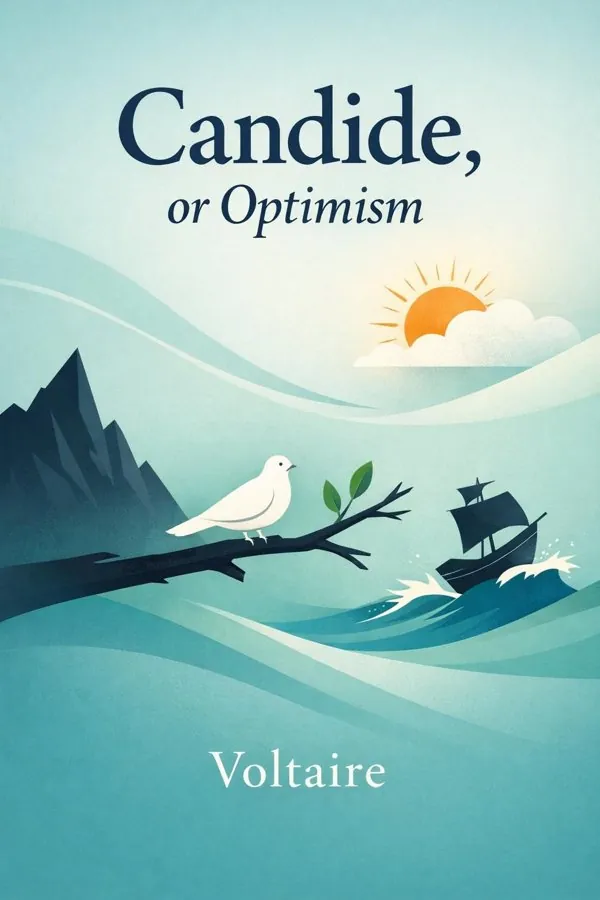
Candide, or Optimism
Candide, or Optimism is Voltaire’s brilliant 1759 satirical novella about innocence colliding with reality. The story begins with Candide, a sheltered young man raised in a noble household and taught by his tutor, Pangloss, that this is “the best of all possible worlds.” Life quickly proves otherwise. Expelled from his home and separated from the beloved Cunégonde, Candide is hurled across Europe and the Americas, where he witnesses war, earthquake, religious persecution, greed, slavery, corruption, and betrayal. Each disaster tests the cheerful philosophical system he has been taught to trust. What makes Candide enduring is not only its speed, humor, and shock, but its intellectual sharpness. Voltaire uses exaggeration, irony, and relentless misfortune to attack blind optimism, empty metaphysics, and social hypocrisy. He asks a question that still feels urgent: how should people live in a world full of suffering they cannot explain away? Voltaire was one of the central voices of the Enlightenment, famous for his wit, skepticism, and defense of reason and civil liberty. In Candide, he turns philosophy into narrative and satire into moral inquiry, creating a classic that is both entertaining and deeply unsettling.
Read SummaryKey Insights from Voltaire
Innocence Shatters Against a Violent World
A protected mind often mistakes comfort for truth. At the beginning of Candide, the hero lives in a small, ordered world where hierarchy seems natural, love seems simple, and philosophy seems reassuring. In the Baron’s castle, he learns from Pangloss that everything is arranged for the best. That id...
From Candide, or Optimism
Pangloss and the Folly of Blind Optimism
An idea becomes dangerous when it survives every contradiction untouched. Pangloss, Candide’s tutor, insists that all events, no matter how horrifying, are necessary parts of the best possible world. His optimism is not hopeful resilience; it is intellectual stubbornness. Even after witnessing bruta...
From Candide, or Optimism
War Reveals Civilization’s Hidden Brutality
Society often gives violence a noble vocabulary before it gives it a moral justification. One of the earliest shocks in Candide is war. Candide is impressed at first by military order, uniforms, and ceremony, but Voltaire quickly tears away the spectacle. What follows is not glory but slaughter: vil...
From Candide, or Optimism
Disaster Exposes the Limits of Explanation
When catastrophe arrives, explanation can become a form of evasion. The Lisbon earthquake episode is one of the most famous parts of Candide because it compresses Voltaire’s philosophical attack into a single event. Nature destroys a city without regard for innocence, virtue, or theory. In the after...
From Candide, or Optimism
Religion Without Compassion Becomes Hypocrisy
Moral language loses authority when it is severed from moral behavior. Throughout Candide, Voltaire repeatedly attacks religious hypocrisy, not spirituality itself. Priests, inquisitors, and self-proclaimed moral guardians often appear less concerned with mercy than with power, punishment, status, o...
From Candide, or Optimism
Wealth Promises Freedom but Rarely Peace
People often imagine that money solves suffering, but Voltaire shows that wealth removes only some problems while creating others. Candide’s visit to El Dorado and his later experiences with riches expose a central illusion: abundance can transform circumstances, yet it cannot automatically produce ...
From Candide, or Optimism
About Voltaire
Voltaire (1694–1778), born François-Marie Arouet, was a French writer, philosopher, and leading figure of the Enlightenment. Renowned for his wit and advocacy of civil liberties, he wrote extensively on philosophy, history, and politics, influencing Western thought through his criticism of intoleran...
Read more
Voltaire (1694–1778), born François-Marie Arouet, was a French writer, philosopher, and leading figure of the Enlightenment. Renowned for his wit and advocacy of civil liberties, he wrote extensively on philosophy, history, and politics, influencing Western thought through his criticism of intoleran...
Voltaire (1694–1778), born François-Marie Arouet, was a French writer, philosopher, and leading figure of the Enlightenment. Renowned for his wit and advocacy of civil liberties, he wrote extensively on philosophy, history, and politics, influencing Western thought through his criticism of intolerance and dogma.





Frequently Asked Questions
Voltaire (1694–1778), born François-Marie Arouet, was a French writer, philosopher, and leading figure of the Enlightenment. Renowned for his wit and advocacy of civil liberties, he wrote extensively on philosophy, history, and politics, influencing Western thought through his criticism of intolerance and dogma.
Read Voltaire's books in 15 minutes
Get AI-powered summaries with key insights from 1 book by Voltaire.