
Umberto Eco Books
Umberto Eco (1932–2016) was an Italian semiotician, philosopher, essayist, and novelist. A professor of semiotics at the University of Bologna, he was known for his studies on communication and for internationally acclaimed novels such as 'The Name of the Rose' and 'Foucault's Pendulum'.
Known for: The Name of the Rose
Books by Umberto Eco
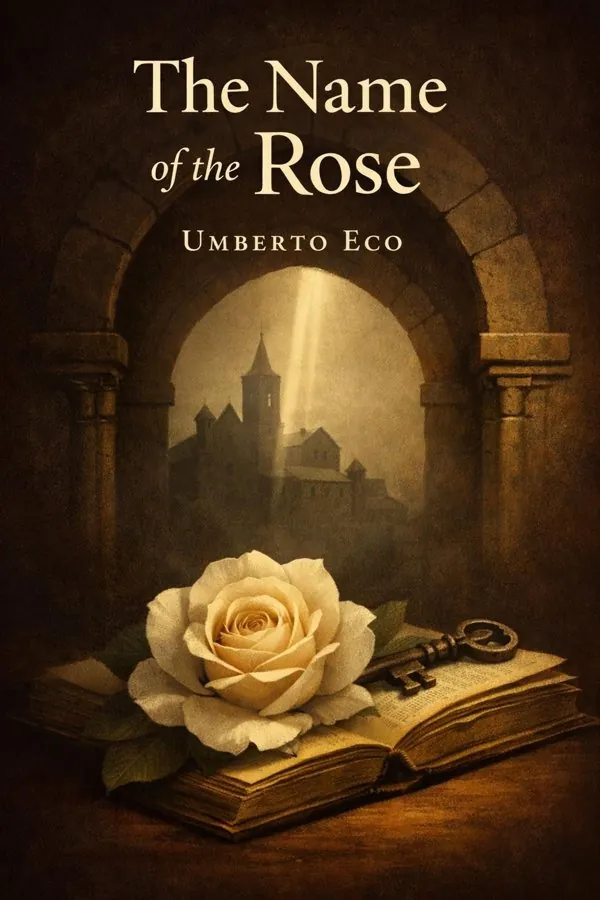
The Name of the Rose
Set in an isolated Benedictine abbey in northern Italy in 1327, The Name of the Rose begins as a murder mystery and unfolds into something far richer: a meditation on truth, power, interpretation, and the dangerous allure of forbidden knowledge. The novel follows the sharp-minded Franciscan friar William of Baskerville and his young novice, Adso of Melk, as they arrive at the monastery for a theological dispute and are drawn into a chain of eerie deaths. What appears to be a criminal investigation soon becomes an exploration of how institutions control ideas, how fear distorts belief, and how human beings search for meaning in a world of signs. What makes the book enduring is its extraordinary range. Umberto Eco combines the suspense of a detective story with philosophy, medieval theology, semiotics, and historical debate, creating a novel that rewards both casual readers and serious thinkers. Eco was not only a novelist but one of the twentieth century’s leading scholars of signs, language, and interpretation. That intellectual depth gives the story unusual authority. The Name of the Rose matters because it asks timeless questions: who gets to define truth, what is the cost of suppressing knowledge, and can reason survive in a culture ruled by fear?
Read SummaryKey Insights from Umberto Eco
Adso’s Memory Frames the Mystery
Memory is never a neutral archive; it is a reconstruction shaped by age, longing, and loss. The Name of the Rose begins with an old Adso of Melk looking back on the extraordinary days of his youth, when he traveled with William of Baskerville to a remote abbey and witnessed a sequence of murders, de...
From The Name of the Rose
Reason in a World of Fear
In an atmosphere ruled by superstition and panic, careful observation becomes a moral act. William of Baskerville stands out in the abbey because he refuses to explain mystery through hysteria, prophecy, or demonic fantasy. Instead, he studies clues: footprints in snow, stains on manuscripts, the be...
From The Name of the Rose
The Library as Power and Temptation
Knowledge is never merely stored; it is organized, restricted, guarded, and used. The abbey’s library is one of the most memorable settings in modern fiction because it is more than a collection of books. It is a labyrinth, a fortress, and a symbol of the human desire to possess truth while controll...
From The Name of the Rose
Adso’s Awakening to Desire and Complexity
Coming of age often begins when inherited certainty collides with lived experience. Amid the murders and theological disputes, Adso undergoes a deeply personal initiation. His encounter with a nameless peasant girl introduces him to desire, tenderness, shame, and confusion all at once. For a young n...
From The Name of the Rose
Faith, Poverty, and Institutional Power
Religious conflict in the novel is never only spiritual; it is also political, economic, and institutional. William and Adso arrive at the abbey partly because it is hosting a dispute over apostolic poverty, a heated controversy in the medieval Church. At stake is a deceptively simple question: shou...
From The Name of the Rose
Laughter, Heresy, and the Fear of Freedom
What a culture forbids often reveals what it fears most. One of the novel’s most famous and provocative ideas concerns laughter. At the center of the mystery lies a lost book associated with Aristotle’s reflections on comedy, and the possibility of that text’s circulation terrifies those who believe...
From The Name of the Rose
About Umberto Eco
Umberto Eco (1932–2016) was an Italian semiotician, philosopher, essayist, and novelist. A professor of semiotics at the University of Bologna, he was known for his studies on communication and for internationally acclaimed novels such as 'The Name of the Rose' and 'Foucault's Pendulum'.




Frequently Asked Questions
Umberto Eco (1932–2016) was an Italian semiotician, philosopher, essayist, and novelist. A professor of semiotics at the University of Bologna, he was known for his studies on communication and for internationally acclaimed novels such as 'The Name of the Rose' and 'Foucault's Pendulum'.
Read Umberto Eco's books in 15 minutes
Get AI-powered summaries with key insights from 1 book by Umberto Eco.