
Tony Hoagland Books
Tony Hoagland (1953–2018) was an American poet and essayist known for his sharp wit, emotional clarity, and accessible style. He authored several acclaimed poetry collections, including 'What Narcissism Means to Me' and 'Application for Release from the Dream'.
Known for: The Art of Voice: Poetic Principles and Practice
Books by Tony Hoagland
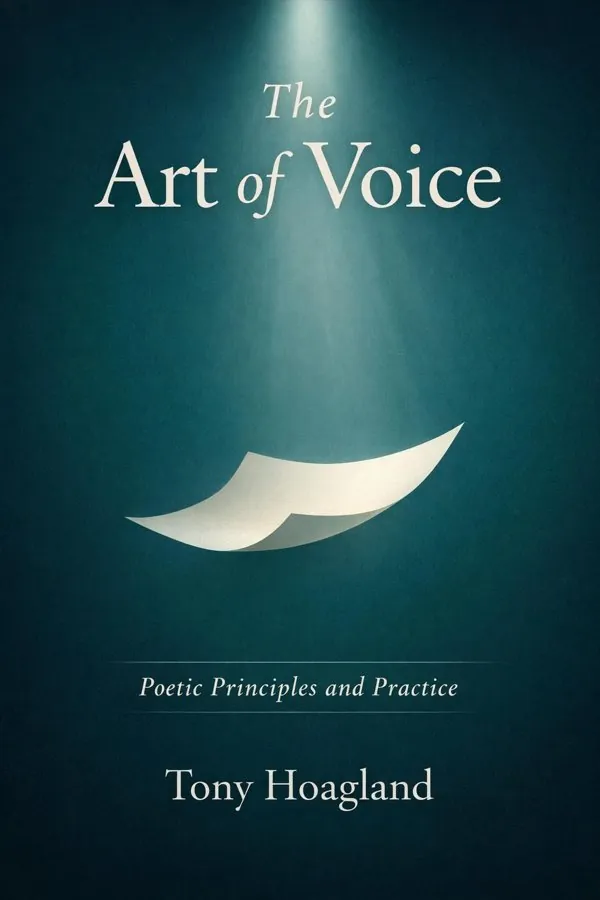
The Art of Voice: Poetic Principles and Practice
What makes a poem feel alive is rarely just its subject or imagery. More often, it is the presence behind the words: the sense that an actual mind, temperament, and consciousness are speaking. In The Art of Voice: Poetic Principles and Practice, poet and teacher Tony Hoagland takes up this notoriously difficult subject and makes it concrete, teachable, and deeply engaging. Across a series of compact but rich reflections, he explores how poetic voice emerges through diction, rhythm, attitude, emotional honesty, and the writer’s relationship to experience. Hoagland’s great strength is that he never treats voice as mystical vapor. Instead, he shows how it is built through choices: whether a poet leans into vernacular speech, how authority is established, how irony is managed, and how revision sharpens tone. The result is both a practical craft guide and a philosophical meditation on what it means to sound like oneself on the page. Because Hoagland was an acclaimed poet, essayist, and beloved teacher known for his wit and clarity, he writes with rare authority. This is a valuable book for poets, students, teachers, and any reader interested in how language becomes personal, memorable, and unmistakably human.
Read SummaryKey Insights from Tony Hoagland
Vernacular Language Makes Poems Breathe
Many weak poems fail not because they lack intelligence, but because they are trying too hard to sound like poetry. Hoagland begins from a liberating premise: the more a poet reaches for an idealized “poetic” voice, the further that poet may drift from authentic speech. Readers respond not only to b...
From The Art of Voice: Poetic Principles and Practice
Authority Comes From Emotional Congruence
A commanding tone does not automatically create authority; in poetry, authority is felt when tone, diction, and emotion align. Hoagland argues that readers trust a speaker whose language seems proportionate to what is being experienced. If the subject is grief and the tone feels glib, the poem loses...
From The Art of Voice: Poetic Principles and Practice
Material Imagination Grounds Abstract Feeling
Voice becomes persuasive when it has something to touch. Hoagland emphasizes the importance of what he calls material imagination: the capacity to think and feel through objects, sensory details, and the physical world. Poets often begin with themes such as loneliness, memory, shame, or desire, but ...
From The Art of Voice: Poetic Principles and Practice
Voice Is Always A Relationship
No poem speaks into a vacuum. One of Hoagland’s most useful ideas is that voice is relational: every poem implies a speaker, a listener, and a situation between them. Even when a poem appears solitary, it is still directed toward someone—an intimate, a stranger, the self, the dead, God, society, or ...
From The Art of Voice: Poetic Principles and Practice
A Poet Can Contain Many Voices
One of the myths that traps developing writers is the belief that authenticity requires a single consistent sound. Hoagland pushes against this simplification. A mature poet often contains multiple voices: comic and solemn, intimate and performative, meditative and argumentative. Variety does not we...
From The Art of Voice: Poetic Principles and Practice
Identity Shapes Voice Without Limiting It
Every voice comes from somewhere. Hoagland recognizes that biography, class, region, gender, race, education, and temperament all influence how a poem sounds. The vocabulary we inherit, the speech rhythms we hear growing up, and the cultural positions we occupy leave marks on syntax, humor, confiden...
From The Art of Voice: Poetic Principles and Practice
About Tony Hoagland
Tony Hoagland (1953–2018) was an American poet and essayist known for his sharp wit, emotional clarity, and accessible style. He authored several acclaimed poetry collections, including 'What Narcissism Means to Me' and 'Application for Release from the Dream'. Hoagland taught at the University of H...
Read more
Tony Hoagland (1953–2018) was an American poet and essayist known for his sharp wit, emotional clarity, and accessible style. He authored several acclaimed poetry collections, including 'What Narcissism Means to Me' and 'Application for Release from the Dream'. Hoagland taught at the University of H...
Tony Hoagland (1953–2018) was an American poet and essayist known for his sharp wit, emotional clarity, and accessible style. He authored several acclaimed poetry collections, including 'What Narcissism Means to Me' and 'Application for Release from the Dream'. Hoagland taught at the University of Houston and was celebrated for his contributions to contemporary American poetry.


Frequently Asked Questions
Tony Hoagland (1953–2018) was an American poet and essayist known for his sharp wit, emotional clarity, and accessible style. He authored several acclaimed poetry collections, including 'What Narcissism Means to Me' and 'Application for Release from the Dream'.
Read Tony Hoagland's books in 15 minutes
Get AI-powered summaries with key insights from 1 book by Tony Hoagland.