
Seymour Martin Lipset Books
Seymour Martin Lipset (1922–2006) was an American sociologist and political scientist known for his influential work on democracy, social stratification, and political behavior. He taught at Columbia University, Harvard University, Stanford University, and George Mason University, and was a leading figure in the study of comparative politics and American exceptionalism.
Known for: Political Man: The Social Bases of Politics
Books by Seymour Martin Lipset
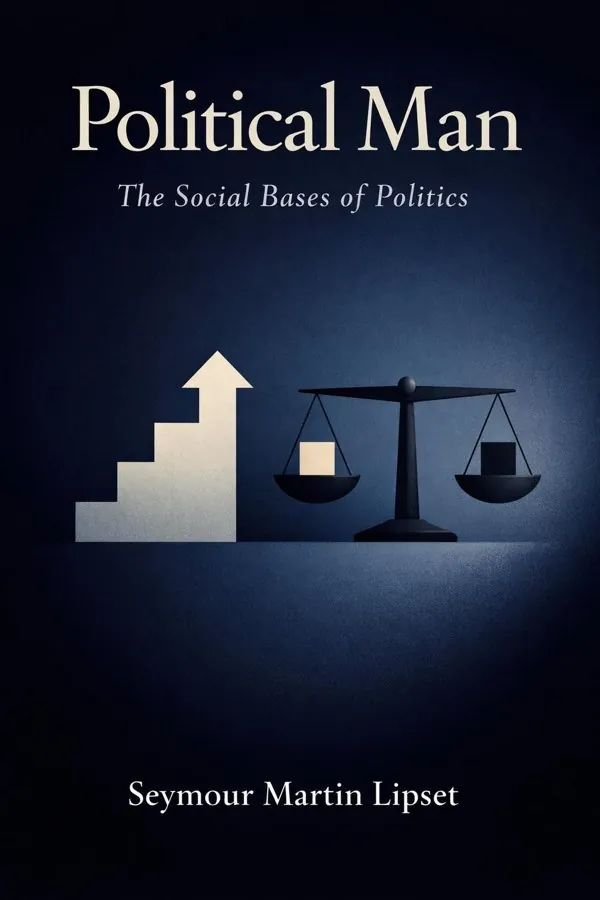
Political Man: The Social Bases of Politics
Political Man: The Social Bases of Politics is one of the defining works of modern political sociology because it asks a deceptively simple question: why do some societies sustain democracy while others fall into extremism, instability, or authoritarian rule? Seymour Martin Lipset answers by looking beneath constitutions, leaders, and party slogans to the social structure itself. He argues that political life is rooted in class divisions, religious traditions, education levels, patterns of social mobility, economic development, and the legitimacy citizens grant to institutions. In other words, politics is never just about ideas; it is also about the social conditions that make certain ideas attractive, credible, or dangerous. What makes the book so enduring is its comparative method and broad ambition. Lipset moves across countries, regimes, and historical moments to show recurring patterns in democratic stability and political conflict. As a leading sociologist and political scientist, Lipset brought together empirical evidence and big theory in a way few scholars have matched. The result is a foundational book for anyone who wants to understand not only how politics works, but why democracy succeeds in some places and struggles in others.
Read SummaryKey Insights from Seymour Martin Lipset
Politics Begins in Social Structure
Political conflict rarely starts in parliament; it starts in society. Lipset’s central insight is that political behavior is deeply shaped by the social divisions that organize everyday life. Class, religion, region, ethnicity, occupation, and status do not merely describe people; they help determin...
From Political Man: The Social Bases of Politics
Economic Development Supports Democracy
Prosperity does not automatically create freedom, but Lipset argues that economic development strongly improves the chances that democracy will endure. His famous thesis links wealth, industrialization, urbanization, and education to democratic stability. As societies grow richer, they typically dev...
From Political Man: The Social Bases of Politics
Democracy Needs Legitimacy and Effectiveness
A democracy survives not only because it is legal, but because it is believed to be rightful. Lipset argues that stable political systems depend on two connected qualities: legitimacy and effectiveness. Effectiveness refers to a regime’s ability to solve problems, maintain order, and deliver accepta...
From Political Man: The Social Bases of Politics
Class Conflict Shapes Political Cleavages
Much of modern politics is the organized expression of social inequality. Lipset treats class as one of the most important foundations of political behavior because differences in income, occupation, prestige, and life chances produce distinct political interests and worldviews. Workers, employers, ...
From Political Man: The Social Bases of Politics
Religion Organizes Political Loyalty
Religious belief is personal, but religious politics is profoundly social. Lipset shows that religion influences politics not merely through doctrine but through institutions, communities, moral authority, and collective identity. Churches, denominations, and religious networks create patterns of be...
From Political Man: The Social Bases of Politics
Education Expands Democratic Participation
Democracy depends on more than the right to vote; it depends on citizens who can navigate public life. Lipset emphasizes education as one of the strongest social supports for democratic participation and tolerance. More educated citizens are generally better able to follow political debates, evaluat...
From Political Man: The Social Bases of Politics
About Seymour Martin Lipset
Seymour Martin Lipset (1922–2006) was an American sociologist and political scientist known for his influential work on democracy, social stratification, and political behavior. He taught at Columbia University, Harvard University, Stanford University, and George Mason University, and was a leading ...
Read more
Seymour Martin Lipset (1922–2006) was an American sociologist and political scientist known for his influential work on democracy, social stratification, and political behavior. He taught at Columbia University, Harvard University, Stanford University, and George Mason University, and was a leading ...
Seymour Martin Lipset (1922–2006) was an American sociologist and political scientist known for his influential work on democracy, social stratification, and political behavior. He taught at Columbia University, Harvard University, Stanford University, and George Mason University, and was a leading figure in the study of comparative politics and American exceptionalism.

Frequently Asked Questions
Seymour Martin Lipset (1922–2006) was an American sociologist and political scientist known for his influential work on democracy, social stratification, and political behavior. He taught at Columbia University, Harvard University, Stanford University, and George Mason University, and was a leading figure in the study of comparative politics and American exceptionalism.
Read Seymour Martin Lipset's books in 15 minutes
Get AI-powered summaries with key insights from 1 book by Seymour Martin Lipset.