
Scott Rogers Books
Scott Rogers is an American video game designer known for his work on titles such as Pac-Man World, Maximo, and God of War. He has extensive experience in the gaming industry and is recognized for his contributions to game design education through writing and teaching.
Known for: Level Up! The Guide to Great Video Game Design
Books by Scott Rogers
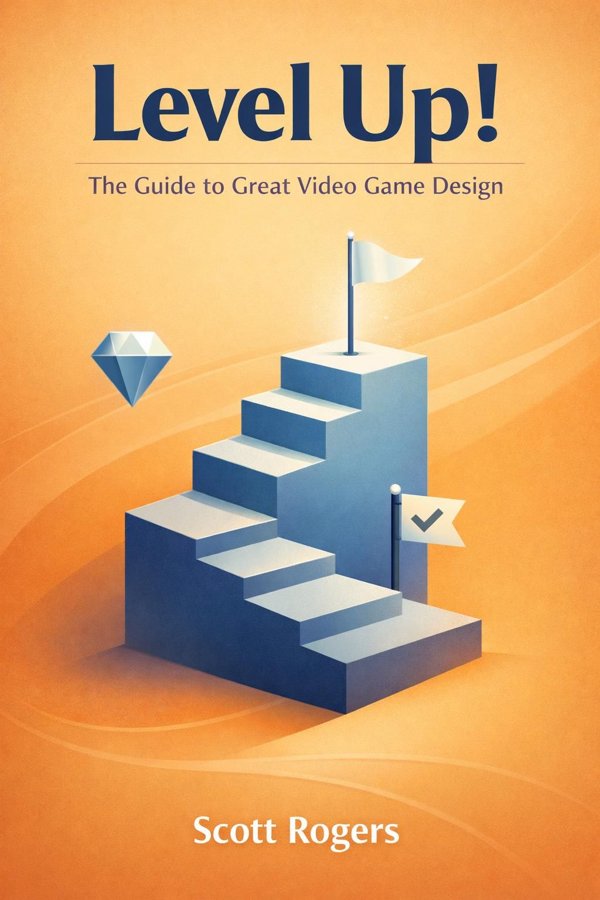
Level Up! The Guide to Great Video Game Design
Level Up! The Guide to Great Video Game Design is a practical, energetic, and deeply accessible handbook for anyone who wants to understand how memorable games are made. Drawing on years of industry experience, Scott Rogers breaks game design down into its essential parts: mechanics, genre, character, story, level structure, feedback, playtesting, and the collaborative realities of production. Rather than treating design as abstract theory, he presents it as a craft built through clear thinking, observation, iteration, and empathy for players. What makes this book matter is its balance. It is broad enough to introduce the full design pipeline, yet concrete enough to help readers make better decisions immediately. Rogers explains not just what good games contain, but why those elements work and how they support player engagement. His examples are rooted in commercial game development, giving the book practical weight for students, indie creators, and professionals alike. As a designer who worked on titles such as Pac-Man World, Maximo, and God of War, Rogers writes with credibility and clarity. The result is a book that helps readers move from loving games to understanding how to build them well.
Read SummaryKey Insights from Scott Rogers
Core Mechanics Define the Player Experience
Every great game begins with a deceptively simple question: what does the player actually do, again and again, and why does it stay interesting? Scott Rogers treats mechanics as the true language of game design. They are the verbs of the medium: jump, aim, trade, hide, build, dodge, solve, explore. ...
From Level Up! The Guide to Great Video Game Design
Genres Create Expectations You Must Manage
The moment players hear a genre label, they begin forming assumptions about pace, controls, goals, and rewards. Rogers argues that genre is not just a marketing category; it is a design contract. Calling a game a first-person shooter, role-playing game, survival horror title, or platformer tells pla...
From Level Up! The Guide to Great Video Game Design
Characters and Story Give Mechanics Meaning
Players may come for systems, but they often stay because those systems are attached to a world worth caring about. Rogers shows that character and story in games are not merely decorative layers placed on top of mechanics. At their best, they give context, emotional stakes, and identity to everythi...
From Level Up! The Guide to Great Video Game Design
Level Design Teaches Through Space
A level is never just a place where gameplay happens; it is often the silent teacher of the entire experience. Rogers treats level design as the art of shaping challenge, discovery, pacing, and emotion through space. Good levels do more than hold enemies and objectives. They guide attention, suggest...
From Level Up! The Guide to Great Video Game Design
Playtesting Reveals the Real Game
Designers rarely experience their games the way players do, and that gap is where many problems hide. Rogers stresses that playtesting is not a late-stage quality check but a central design tool. The purpose of testing is to expose what players actually understand, feel, and do, not what the designe...
From Level Up! The Guide to Great Video Game Design
Clear Documentation Supports Better Collaboration
Many aspiring designers imagine their job as generating ideas, but Rogers makes clear that professional design depends just as much on communication. A game is built by teams, not by isolated imagination. Artists, programmers, animators, audio specialists, producers, and testers all need to understa...
From Level Up! The Guide to Great Video Game Design
About Scott Rogers
Scott Rogers is an American video game designer known for his work on titles such as Pac-Man World, Maximo, and God of War. He has extensive experience in the gaming industry and is recognized for his contributions to game design education through writing and teaching.

Frequently Asked Questions
Scott Rogers is an American video game designer known for his work on titles such as Pac-Man World, Maximo, and God of War. He has extensive experience in the gaming industry and is recognized for his contributions to game design education through writing and teaching.
Read Scott Rogers's books in 15 minutes
Get AI-powered summaries with key insights from 1 book by Scott Rogers.