
Samir S. Sarnat Books
Sarnat is an environmental health scientist specializing in exposure assessment and public health impacts of built environments.
Known for: Healthy Building Handbook: Indoor Environmental Quality and Occupant Wellness
Books by Samir S. Sarnat
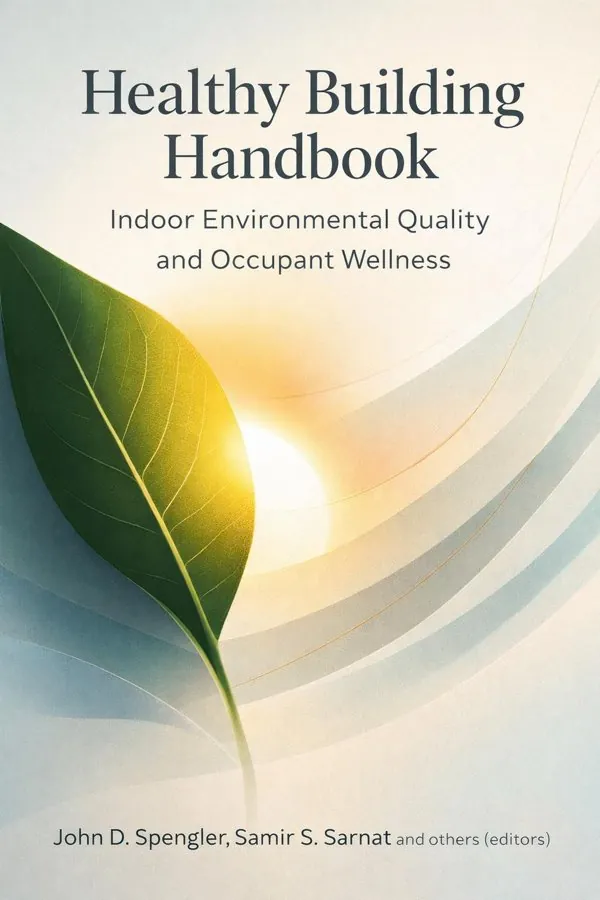
Healthy Building Handbook: Indoor Environmental Quality and Occupant Wellness
Most people think of buildings as passive containers for life and work. This handbook argues the opposite: buildings actively shape human health, cognition, comfort, and performance every hour of the day. Healthy Building Handbook: Indoor Environmental Quality and Occupant Wellness brings together scientific research, design principles, and operational guidance to show how indoor spaces influence breathing, sleep, stress, concentration, mood, and long-term well-being. Its focus is indoor environmental quality, or IEQ, the combined effect of air quality, thermal conditions, lighting, acoustics, moisture control, and materials on occupants. What makes this volume especially valuable is its interdisciplinary approach. Rather than treating architecture, engineering, public health, and facility management as separate domains, it connects them into a single framework for healthier buildings. Edited by leading environmental health scholars John D. Spengler and Samir S. Sarnat, along with expert contributors, the book carries strong scientific authority while remaining practical. For architects, engineers, employers, school leaders, healthcare planners, and anyone responsible for occupied spaces, it offers a clear message: better buildings are not only more sustainable, they are a frontline tool for protecting human wellness.
Read SummaryKey Insights from Samir S. Sarnat
Indoor Environments Shape Human Health
A building is never just a backdrop; it is an active participant in human biology. The central insight of the handbook is that indoor environmental quality affects nearly every dimension of daily life, from respiratory health and sleep quality to cognitive performance, stress levels, and social beha...
From Healthy Building Handbook: Indoor Environmental Quality and Occupant Wellness
Air Quality Is a Daily Exposure
Every breath is a building test. Indoor air quality is one of the handbook’s most urgent themes because occupants continuously inhale whatever a building contains and circulates. Pollutants can come from outdoor traffic, cooking, cleaning products, furniture, carpets, office equipment, combustion ap...
From Healthy Building Handbook: Indoor Environmental Quality and Occupant Wellness
Thermal Comfort Influences Performance and Mood
Temperature is often treated as a facilities issue, but the handbook shows it is really a human performance issue. Thermal comfort affects concentration, sleep, emotional stability, and perceived fairness in shared spaces. People notice discomfort quickly, yet the science is more subtle than simply ...
From Healthy Building Handbook: Indoor Environmental Quality and Occupant Wellness
Light Regulates More Than Vision
Light does not only help people see; it helps regulate when they sleep, how alert they feel, and how well their bodies synchronize with the day. One of the handbook’s most compelling contributions is its treatment of lighting as a biological input rather than merely a visual requirement. Exposure to...
From Healthy Building Handbook: Indoor Environmental Quality and Occupant Wellness
Soundscapes Affect Stress and Attention
Noise is more than an annoyance; it is a health exposure with cognitive and emotional consequences. The handbook broadens the discussion of acoustics beyond decibel reduction to include privacy, intelligibility, concentration, recovery, and psychological comfort. In many buildings, sound problems ar...
From Healthy Building Handbook: Indoor Environmental Quality and Occupant Wellness
Moisture Control Prevents Hidden Harm
Water is essential to life, but inside buildings it can become the starting point for widespread harm. The handbook makes a strong case that moisture management is one of the most underappreciated foundations of indoor environmental quality. When water intrusion, condensation, or persistently high h...
From Healthy Building Handbook: Indoor Environmental Quality and Occupant Wellness
About Samir S. Sarnat
Sarnat is an environmental health scientist specializing in exposure assessment and public health impacts of built environments.


Frequently Asked Questions
Sarnat is an environmental health scientist specializing in exposure assessment and public health impacts of built environments.
Read Samir S. Sarnat's books in 15 minutes
Get AI-powered summaries with key insights from 1 book by Samir S. Sarnat.