
Ryszard Kapuściński Books
Ryszard Kapuściński (1932–2007) was a Polish journalist, writer, and foreign correspondent renowned for his literary reportage. His works, including The Emperor, Ebony, and Travels with Herodotus, blend journalistic precision with literary style, earning him recognition as one of the most influential reporters of the twentieth century.
Known for: Shah of Shahs
Books by Ryszard Kapuściński
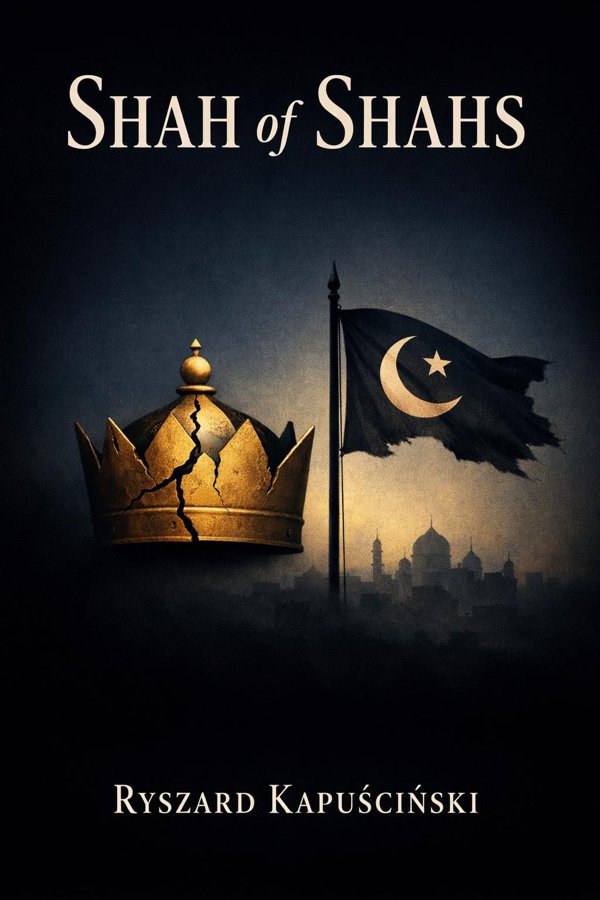
Shah of Shahs
Shah of Shahs is Ryszard Kapuściński’s haunting account of the fall of Mohammad Reza Pahlavi and the Iranian Revolution of 1979, but it is far more than a political chronicle. Written in Kapuściński’s signature style of literary reportage, the book studies how absolute power is built, staged, feared, and finally destroyed. Moving through Tehran’s charged atmosphere, official photographs, fragments of testimony, and historical memory, he shows how a regime that appeared all-powerful could suddenly become fragile once its myths stopped working. The result is a portrait of revolution from the inside: unstable, emotional, contradictory, and deeply human. What makes the book enduring is its relevance beyond Iran. Kapuściński is interested not only in one ruler’s downfall, but in the anatomy of tyranny itself: propaganda, surveillance, isolation, flattery, violence, and the blindness of leaders who mistake obedience for loyalty. As a seasoned foreign correspondent who reported on coups, revolutions, and decolonization across the world, Kapuściński brings unusual authority and moral seriousness to the subject. Shah of Shahs matters because it helps readers understand how regimes collapse, why revolutions gather force, and what power looks like when it begins to rot from within.
Read SummaryKey Insights from Ryszard Kapuściński
Photographs Reveal the Logic of Power
Sometimes the quickest way to understand a regime is to study the images it leaves behind. In Shah of Shahs, Kapuściński begins with a pile of photographs from the Shah’s abandoned propaganda archive. These images are not decorative details; they are clues. A ruler shaking hands with generals, revie...
From Shah of Shahs
The Shah’s Rise Was Historically Fragile
Many rulers seem permanent only because people forget how contingent their rise actually was. Kapuściński reminds readers that Mohammad Reza Pahlavi did not emerge as an unquestioned national savior. He inherited the throne under extraordinary circumstances after his father, Reza Shah, was forced in...
From Shah of Shahs
Oil Wealth Can Distort Modernization
Money can accelerate change, but it cannot create legitimacy on its own. One of Kapuściński’s central insights is that oil transformed Iran materially while also intensifying political imbalance. Under the Shah, oil revenues financed grand modernization projects, military expansion, urban developmen...
From Shah of Shahs
Repression Creates Obedience, Not Loyalty
Fear can silence a population, but it cannot win its heart. Kapuściński’s depiction of the Shah’s security apparatus shows how authoritarian systems rely on surveillance, intimidation, censorship, imprisonment, and torture to maintain control. The secret police, SAVAK, became one of the most feared ...
From Shah of Shahs
Personality Cults Isolate the Ruler
The more a ruler is worshipped, the less he understands the world he governs. Kapuściński portrays the Shah as a man enclosed by ceremony, flattery, and official adoration. Portraits, slogans, public rituals, and state-controlled narratives elevated him above ordinary life. He was not simply a polit...
From Shah of Shahs
Revolutions Grow from Moral and Social Rupture
A revolution is not only a political event; it is often a moral verdict. Kapuściński shows that opposition to the Shah did not come from a single source. It emerged from workers, students, intellectuals, the urban poor, bazaar merchants, and religious networks that translated diffuse anger into coll...
From Shah of Shahs
About Ryszard Kapuściński
Ryszard Kapuściński (1932–2007) was a Polish journalist, writer, and foreign correspondent renowned for his literary reportage. His works, including The Emperor, Ebony, and Travels with Herodotus, blend journalistic precision with literary style, earning him recognition as one of the most influentia...
Read more
Ryszard Kapuściński (1932–2007) was a Polish journalist, writer, and foreign correspondent renowned for his literary reportage. His works, including The Emperor, Ebony, and Travels with Herodotus, blend journalistic precision with literary style, earning him recognition as one of the most influentia...
Ryszard Kapuściński (1932–2007) was a Polish journalist, writer, and foreign correspondent renowned for his literary reportage. His works, including The Emperor, Ebony, and Travels with Herodotus, blend journalistic precision with literary style, earning him recognition as one of the most influential reporters of the twentieth century.


Frequently Asked Questions
Ryszard Kapuściński (1932–2007) was a Polish journalist, writer, and foreign correspondent renowned for his literary reportage. His works, including The Emperor, Ebony, and Travels with Herodotus, blend journalistic precision with literary style, earning him recognition as one of the most influential reporters of the twentieth century.
Read Ryszard Kapuściński's books in 15 minutes
Get AI-powered summaries with key insights from 1 book by Ryszard Kapuściński.