
Rudyard Kipling Books
Rudyard Kipling (1865–1936) was an English author and poet, best known for his works of fiction set in British India, including The Jungle Book, Kim, and the Just So Stories. He was awarded the Nobel Prize in Literature in 1907.
Known for: The Jungle Book
Books by Rudyard Kipling
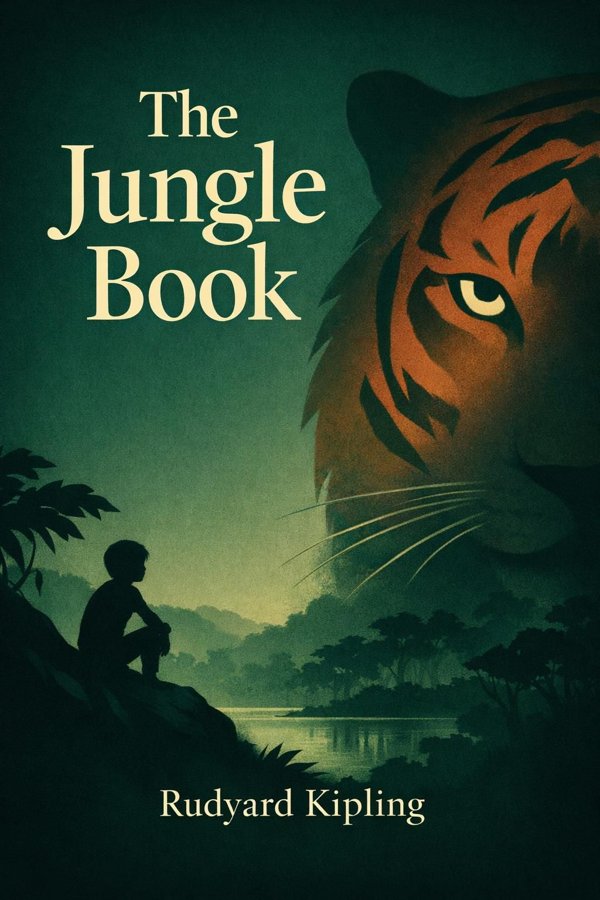
The Jungle Book
What if growing up meant learning not only who you are, but also which laws, loyalties, and instincts deserve your trust? Rudyard Kipling’s The Jungle Book is far more than a children’s adventure classic. First published in 1894, it is a rich collection of interlinked stories set in the Indian jungle, where animals speak, communities enforce ancient codes, and survival depends on courage, intelligence, and self-mastery. The most famous tales follow Mowgli, a boy raised by wolves, as he navigates belonging, danger, and the tension between the wild and the human world. Yet the book also includes memorable stories of Rikki-Tikki-Tavi, Kotick the White Seal, and Toomai of the Elephants, each exploring bravery, duty, and discovery from a different angle. Kipling writes with vivid imagery, rhythmic language, and a sharp understanding of hierarchy, discipline, and character. His lasting authority comes from his gift for turning fables into living worlds. The Jungle Book still matters because it speaks to timeless questions: How do we earn respect, where do we belong, and what kind of strength helps us endure?
Read SummaryKey Insights from Rudyard Kipling
Belonging Is Learned, Not Given
A powerful truth runs through The Jungle Book: belonging is never automatic, even when a community saves you. Mowgli is adopted by the wolf pack, protected by Baloo the bear and Bagheera the panther, and permitted to live according to the Law of the Jungle. Yet he is never simply absorbed without qu...
From The Jungle Book
Law Creates Freedom in Wild Places
One of Kipling’s most striking insights is that true freedom depends on structure. The jungle may seem like a place of instinct and chaos, but it is governed by the Law of the Jungle, a code that regulates hunting, territory, leadership, and conduct. Baloo teaches this law to the young, not as empty...
From The Jungle Book
Courage Requires Intelligence, Not Just Strength
The Jungle Book repeatedly shows that bravery without judgment is little more than recklessness. Mowgli survives not because he is the strongest creature in the jungle, but because he learns when to observe, when to speak, and when to act. Bagheera’s stealth, Baloo’s instruction, and Kaa’s hypnotic ...
From The Jungle Book
Mentors Shape Survival and Character
Behind every memorable act of growth in The Jungle Book stands a teacher. Mowgli’s journey is not a story of isolated genius; it is a story of guidance. Baloo teaches him the Law of the Jungle and the languages of the forest. Bagheera teaches discernment, caution, and the realities of power. Even st...
From The Jungle Book
Power Without Responsibility Becomes Threatening
Kipling’s jungle is full of powerful creatures, but the most dangerous figures are often those who misuse power rather than those who merely possess it. Shere Khan is fearsome not only because he is a tiger, but because he is driven by pride, resentment, and appetite unchecked by principle. The Band...
From The Jungle Book
The Wild Mirrors Human Society
Although The Jungle Book is set among animals, it is deeply concerned with human life. Kipling uses the jungle as a mirror that makes social truths easier to see. The pack, the council, the law, the outcasts, the teachers, the boastful imitators, and the disciplined workers all reflect recognizable ...
From The Jungle Book
About Rudyard Kipling
Rudyard Kipling (1865–1936) was an English author and poet, best known for his works of fiction set in British India, including The Jungle Book, Kim, and the Just So Stories. He was awarded the Nobel Prize in Literature in 1907.





Frequently Asked Questions
Rudyard Kipling (1865–1936) was an English author and poet, best known for his works of fiction set in British India, including The Jungle Book, Kim, and the Just So Stories. He was awarded the Nobel Prize in Literature in 1907.
Read Rudyard Kipling's books in 15 minutes
Get AI-powered summaries with key insights from 1 book by Rudyard Kipling.