
Ramon J. Sender Books
Ramón J. Sender (1901–1982) was a Spanish novelist and journalist.
Known for: Requiem for a Spanish Peasant
Books by Ramon J. Sender
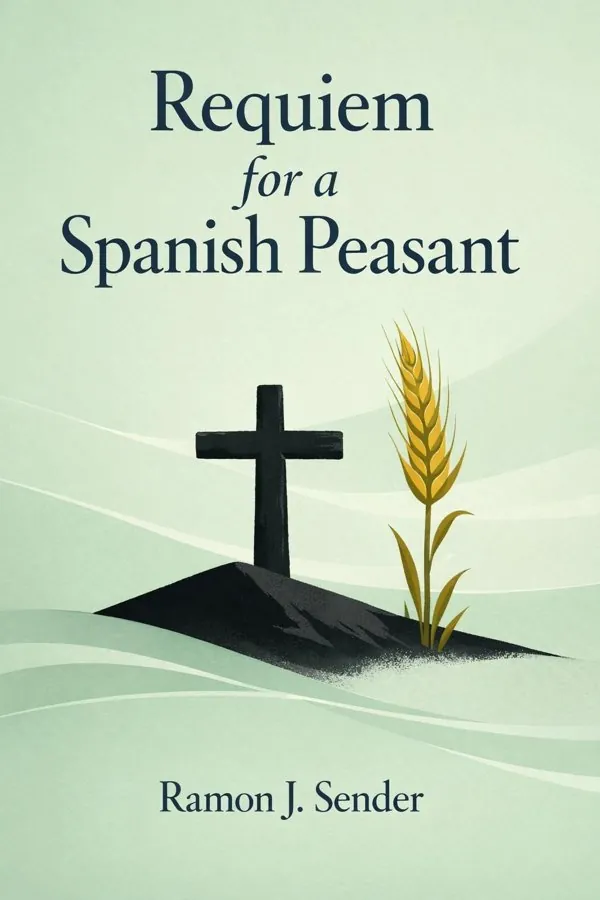
Requiem for a Spanish Peasant
Originally published in 1953, Requiem for a Spanish Peasant is one of the most powerful short novels to emerge from the trauma of the Spanish Civil War. Ramón J. Sender condenses an entire social order, a political catastrophe, and a moral indictment into the story of one village peasant, Paco the Miller, whose life and death are recalled by the priest Mosén Millán as he prepares to say a requiem mass for him. What begins as a quiet vigil inside a church becomes a devastating reckoning with injustice, betrayal, and the way institutions can fail the people they claim to serve. Sender’s achievement lies in his precision: through spare language, shifting memories, and symbolic detail, he reveals how personal relationships are shaped by class hierarchy, religious authority, and fear. The novel matters because it transforms one local tragedy into a universal meditation on complicity and remembrance. Sender wrote from experience as a Spanish journalist, novelist, and exile deeply marked by war and repression, and that lived historical authority gives the book its enduring emotional and political force.
Read SummaryKey Insights from Ramon J. Sender
Mosén Millán’s Vigil and Burdened Memory
A man can perform a sacred ritual and still be unable to escape what he has done. That tension defines the opening of Requiem for a Spanish Peasant. Mosén Millán sits in the sacristy preparing for Paco’s funeral mass, waiting for villagers who never seem to arrive. Outwardly, he is carrying out his ...
From Requiem for a Spanish Peasant
The Boy from the Mill
In unjust societies, innocence is rarely protection. Paco’s early life is rooted in the ordinary world of rural labor: the mill, the fields, the river, animals, family, and the close rhythms of village existence. Sender presents him first as a boy shaped by work, curiosity, and compassion rather tha...
From Requiem for a Spanish Peasant
Awakening from Faith to Social Conscience
The most unsettling transformations begin when private morality becomes public action. Paco’s growth is not a rejection of faith in any simplistic sense. Instead, it is an expansion of conscience. As he matures, he starts to understand that charity alone cannot solve structural injustice. The suffer...
From Requiem for a Spanish Peasant
Marriage, Hope, and Gathering Tension
Moments of joy in tragic novels are never merely decorative; they show what is truly at stake. Paco’s courtship and marriage bring warmth and tenderness into the narrative, but they also highlight how fragile ordinary happiness becomes in a community organized by inequality and fear. Love here is no...
From Requiem for a Spanish Peasant
Civil War and the Logic of Betrayal
Communities do not collapse all at once; they collapse when fear teaches neighbors to abandon one another. As the Spanish Civil War reaches the village, the tensions long embedded in daily life become deadly. Sender shows that the violence does not emerge from nowhere. The war acts as an accelerant,...
From Requiem for a Spanish Peasant
The Requiem as Moral Reckoning
A funeral mass can honor the dead, but it can also expose the emptiness of the living. In the final movement of the novel, the requiem becomes more than a religious ceremony. It is a test of sincerity, memory, and communal truth. Mosén Millán performs the rite, yet the sparse attendance and emotiona...
From Requiem for a Spanish Peasant
About Ramon J. Sender
Ramón J. Sender (1901–1982) was a Spanish novelist and journalist. Active in the political and cultural life of the Second Republic, he went into exile after the Spanish Civil War. His work, much of it written in exile, deals with themes of social justice, historical memory, and the human condition....
Read more
Ramón J. Sender (1901–1982) was a Spanish novelist and journalist. Active in the political and cultural life of the Second Republic, he went into exile after the Spanish Civil War. His work, much of it written in exile, deals with themes of social justice, historical memory, and the human condition....
Ramón J. Sender (1901–1982) was a Spanish novelist and journalist. Active in the political and cultural life of the Second Republic, he went into exile after the Spanish Civil War. His work, much of it written in exile, deals with themes of social justice, historical memory, and the human condition. Among his best-known titles are 'Requiem for a Spanish Peasant' and 'Chronicle of Dawn'.




Frequently Asked Questions
Ramón J. Sender (1901–1982) was a Spanish novelist and journalist.
Read Ramon J. Sender's books in 15 minutes
Get AI-powered summaries with key insights from 1 book by Ramon J. Sender.