
Mikhail Bulgakov Books
Mikhail Bulgakov (1891–1940) was a Russian writer, playwright, and physician best known for his novel The Master and Margarita, as well as The White Guard and the play The Days of the Turbins. His works are noted for their philosophical depth, satirical portrayal of society, and exploration of moral and spiritual dilemmas.
Known for: The Master and Margarita
Books by Mikhail Bulgakov
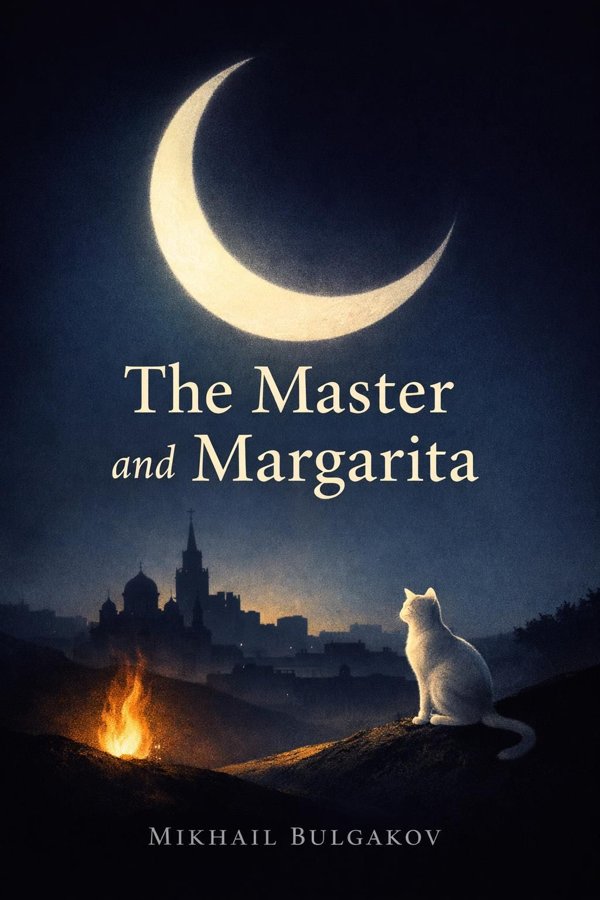
The Master and Margarita
What happens when the Devil arrives in a city that insists he cannot exist? Mikhail Bulgakov’s The Master and Margarita answers that question with astonishing wit, chaos, and emotional force. Set in Stalin-era Moscow, the novel begins as a darkly comic satire of literary bureaucrats, petty officials, and ideological certainty. But it quickly becomes something far larger: a philosophical fantasy, a love story, a spiritual parable, and a meditation on truth under oppression. Interwoven with the Moscow plot is the haunting story of Pontius Pilate and Yeshua, which gives the novel its moral and metaphysical depth. The book matters because it exposes how fear, conformity, and power can deform human life—while also defending imagination, mercy, and inner freedom. Bulgakov wrote under intense censorship, and that struggle gives the novel unusual authority. He understood firsthand what it meant for art to be attacked, distorted, or silenced. Yet instead of producing a grim political tract, he created a dazzling, genre-defying masterpiece. The Master and Margarita remains one of the most original novels of the twentieth century because it shows that even in a corrupt world, truth and love can still outlast terror.
Read SummaryKey Insights from Mikhail Bulgakov
When the Devil Comes to Moscow
A society becomes most vulnerable to evil when it is convinced evil is impossible. Bulgakov opens the novel at Patriarch’s Ponds, where Berlioz, a literary official, and Ivan Bezdomny, a poet, discuss religion with smug confidence. Their secular certainty is interrupted by the arrival of Woland, a m...
From The Master and Margarita
Satire as a Weapon Against Falsehood
Laughter can sometimes tell the truth more effectively than argument. One of Bulgakov’s greatest achievements is his use of satire to dismantle Soviet Moscow’s pretensions. Through scenes of comic confusion, disappearing bureaucrats, magical money, public scandals, and theatrical humiliation, he rev...
From The Master and Margarita
The Master’s Confession and Artistic Courage
The most dangerous prison is not censorship alone, but the moment a creator begins to doubt the value of truth. After Ivan’s frantic pursuit of Woland lands him in a psychiatric clinic, he meets the Master, a writer broken by rejection. The Master tells the story of his novel about Pontius Pilate, h...
From The Master and Margarita
Pilate, Yeshua, and the Burden of Conscience
Evil often begins not in cruelty, but in cowardice. Running through the Moscow narrative is the Master’s novel about Pontius Pilate and Yeshua Ha-Notsri. These chapters are written in a different tone—solemn, lucid, deeply psychological—and they provide the book’s moral center. Pilate recognizes tha...
From The Master and Margarita
Margarita’s Freedom Through Love and Defiance
Love becomes transformative when it rejects fear. Margarita enters the novel fully in the second half, and with her arrival the emotional stakes deepen. She is not merely the beloved of the Master. She is one of Bulgakov’s boldest creations: a woman trapped in a comfortable but spiritually empty lif...
From The Master and Margarita
Woland’s Justice and Moral Ambiguity
Not all justice arrives in comforting forms. Woland is the Devil, but Bulgakov does not present him as a simple embodiment of evil. Instead, he functions as a dark agent of exposure, irony, and retribution. He punishes greed, hypocrisy, cowardice, and fraud, yet he is not a moral teacher in any conv...
From The Master and Margarita
About Mikhail Bulgakov
Mikhail Bulgakov (1891–1940) was a Russian writer, playwright, and physician best known for his novel The Master and Margarita, as well as The White Guard and the play The Days of the Turbins. His works are noted for their philosophical depth, satirical portrayal of society, and exploration of moral...
Read more
Mikhail Bulgakov (1891–1940) was a Russian writer, playwright, and physician best known for his novel The Master and Margarita, as well as The White Guard and the play The Days of the Turbins. His works are noted for their philosophical depth, satirical portrayal of society, and exploration of moral...
Mikhail Bulgakov (1891–1940) was a Russian writer, playwright, and physician best known for his novel The Master and Margarita, as well as The White Guard and the play The Days of the Turbins. His works are noted for their philosophical depth, satirical portrayal of society, and exploration of moral and spiritual dilemmas.




Frequently Asked Questions
Mikhail Bulgakov (1891–1940) was a Russian writer, playwright, and physician best known for his novel The Master and Margarita, as well as The White Guard and the play The Days of the Turbins. His works are noted for their philosophical depth, satirical portrayal of society, and exploration of moral and spiritual dilemmas.
Read Mikhail Bulgakov's books in 15 minutes
Get AI-powered summaries with key insights from 1 book by Mikhail Bulgakov.