
Miguel De Cervantes Saavedra Books
Miguel de Cervantes Saavedra (1547–1616) was a Spanish novelist, poet, and playwright, considered one of the most important figures in world literature. His masterpiece, Don Quixote, is often cited as the first modern novel and remains a cornerstone of Western literary tradition.
Known for: Don Quixote: The Ingenious Gentleman Don Quixote of La Mancha
Books by Miguel De Cervantes Saavedra
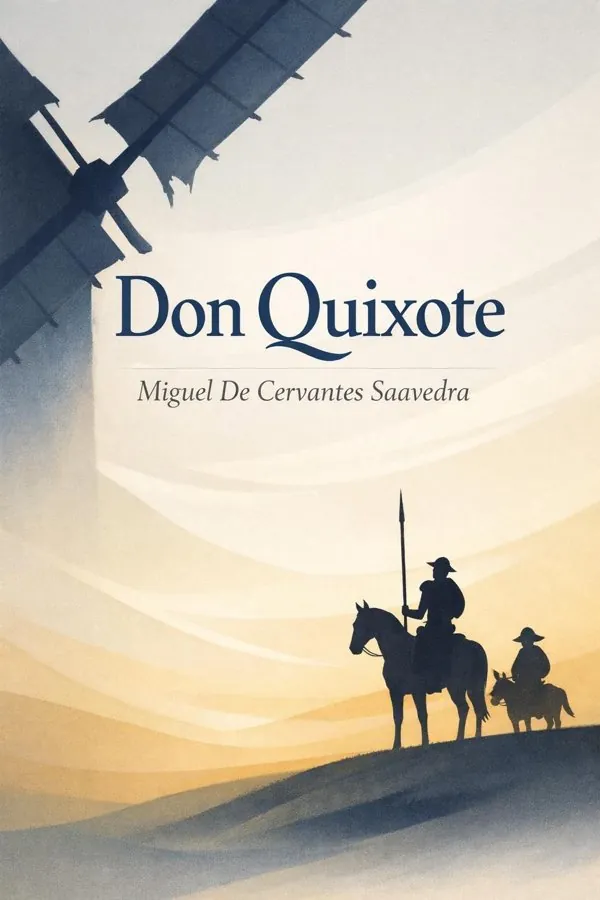
Don Quixote: The Ingenious Gentleman Don Quixote of La Mancha
Don Quixote by Miguel de Cervantes Saavedra is one of the foundational works of world literature: a comic adventure, a sharp satire, and a profound meditation on how human beings shape reality through stories. First published in two parts in 1605 and 1615, the novel follows Alonso Quixano, a country gentleman who reads so many romances of chivalry that he reinvents himself as Don Quixote, a knight-errant determined to restore honor, justice, and noble ideals to a disenchanted world. Accompanied by the practical and lovable Sancho Panza, he rides out in search of glory, only to collide repeatedly with ordinary reality. What makes Don Quixote endure is not just its humor or its famous episodes, but its emotional and intellectual depth. Cervantes turns parody into something larger: an exploration of imagination, identity, friendship, performance, and the fragile border between wisdom and madness. Widely regarded as the first modern novel, it changed what fiction could do by blending voices, perspectives, irony, and psychological complexity. Cervantes writes with unusual authority because he understood hardship, illusion, and resilience firsthand, and his masterpiece continues to speak to anyone who has ever struggled between the world as it is and the world as it should be.
Read SummaryKey Insights from Miguel De Cervantes Saavedra
From Alonso Quixano to Don Quixote
A person can change his life simply by changing the story he tells about himself. That is the radical beginning of Don Quixote. Alonso Quixano is an aging minor nobleman in La Mancha, unremarkable, solitary, and consumed by books of chivalry. Those stories do more than entertain him; they reorganize...
From Don Quixote: The Ingenious Gentleman Don Quixote of La Mancha
Sancho Panza and Grounded Companionship
Even the wildest dream needs a companion who can translate it into daily life. When Don Quixote rides out again, he does not go alone. He recruits his neighbor Sancho Panza, a farmer drawn less by glory than by the practical promise of reward: Quixote tells him that faithful service may earn him an ...
From Don Quixote: The Ingenious Gentleman Don Quixote of La Mancha
Reality Resists the Stories We Prefer
Human beings rarely see the world as it is; we see it through the stories we need. The road adventures of Don Quixote dramatize this truth again and again. The most famous example is his attack on windmills, which he perceives as giant enemies. But the novel is full of similar collisions between ima...
From Don Quixote: The Ingenious Gentleman Don Quixote of La Mancha
Dulcinea and the Power of Idealization
Sometimes the person we love most powerfully exists mainly in our imagination. Don Quixote’s devotion to Dulcinea del Toboso is one of the novel’s clearest examples of how desire transforms reality. Dulcinea is not an active romantic partner in the story; she is a peasant woman, Aldonza Lorenzo, who...
From Don Quixote: The Ingenious Gentleman Don Quixote of La Mancha
Stories Inside Stories Shape Reality
One reason Don Quixote feels so modern is that it understands people as creatures made of narratives. The novel is not just a single adventure tale; it contains embedded stories, competing perspectives, false documents, reported conversations, and characters who interpret one another through their o...
From Don Quixote: The Ingenious Gentleman Don Quixote of La Mancha
Laughter Can Carry Serious Truth
Comedy is often dismissed as light entertainment, but Cervantes proves that laughter can be one of the sharpest tools for examining human weakness. Don Quixote is full of beatings, misunderstandings, inflated speeches, and ridiculous reversals. Readers laugh because Quixote’s certainty is so out of ...
From Don Quixote: The Ingenious Gentleman Don Quixote of La Mancha
About Miguel De Cervantes Saavedra
Miguel de Cervantes Saavedra (1547–1616) was a Spanish novelist, poet, and playwright, considered one of the most important figures in world literature. His masterpiece, Don Quixote, is often cited as the first modern novel and remains a cornerstone of Western literary tradition.




Frequently Asked Questions
Miguel de Cervantes Saavedra (1547–1616) was a Spanish novelist, poet, and playwright, considered one of the most important figures in world literature. His masterpiece, Don Quixote, is often cited as the first modern novel and remains a cornerstone of Western literary tradition.
Read Miguel De Cervantes Saavedra's books in 15 minutes
Get AI-powered summaries with key insights from 1 book by Miguel De Cervantes Saavedra.