
Mark Forsyth Books
Mark Forsyth is a British writer, blogger, and etymologist known for his humorous and erudite works on language, including 'The Etymologicon' and 'The Horologicon'. He specializes in exploring the quirks and history of English words and rhetoric.
Known for: The Elements Of Eloquence: How To Turn The Perfect English Phrase
Books by Mark Forsyth
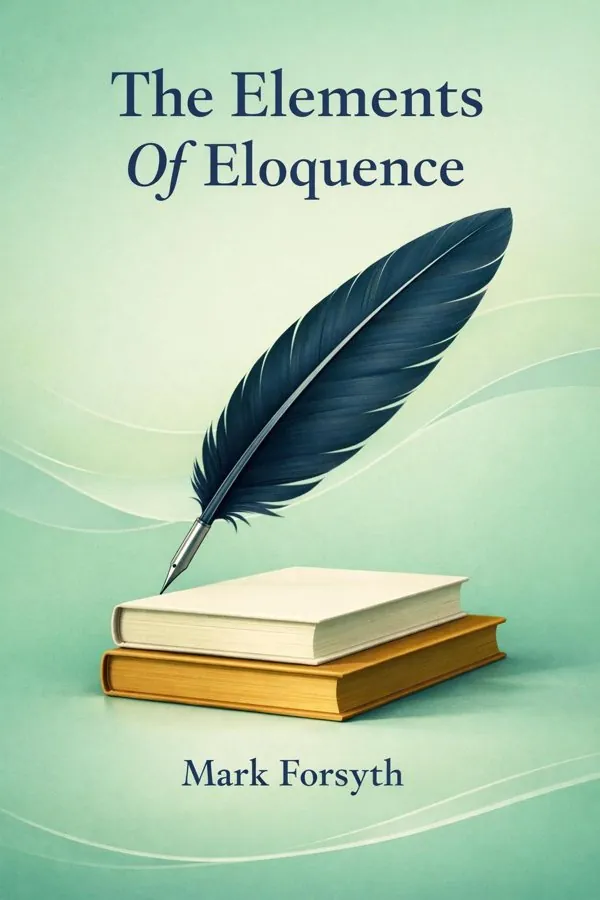
The Elements Of Eloquence: How To Turn The Perfect English Phrase
Why do some sentences lodge in the mind while others vanish the moment they are spoken? In The Elements Of Eloquence, Mark Forsyth answers that question by uncovering the hidden devices that make language memorable, persuasive, funny, and beautiful. Rather than treating rhetoric as a dusty school subject, Forsyth turns it into a lively tour of the tricks used by Shakespeare, Churchill, the Bible, advertising slogans, and everyday speech. He shows that great phrasing is not magic. It is built from patterns anyone can learn to recognize and use. This book matters because clear writing is rarely enough in a world full of noise. To stand out, language must have rhythm, contrast, surprise, and shape. Forsyth, a witty writer and passionate lover of words, makes classical rhetoric feel practical, modern, and entertaining. His gift lies in explaining complex literary techniques with humor and memorable examples, so readers can immediately hear how eloquence works. Whether you are a writer, speaker, marketer, student, or simply someone who loves language, this book reveals how English achieves its most powerful effects.
Read SummaryKey Insights from Mark Forsyth
Eloquence Is Built From Patterns
The most memorable lines in English often feel spontaneous, but they are usually built on repeatable patterns. That is the first liberating insight of The Elements Of Eloquence: eloquence is not a mysterious talent possessed by a gifted few. It is a craft made from structures that can be identified,...
From The Elements Of Eloquence: How To Turn The Perfect English Phrase
Rhetoric Gives Language Emotional Force
People often assume that rhetoric means manipulation, ornament, or empty style. Forsyth turns that assumption upside down. Rhetoric, in his account, is what gives language emotional force. It is the means by which words move beyond information and begin to persuade, stir, delight, or haunt. Facts ma...
From The Elements Of Eloquence: How To Turn The Perfect English Phrase
Repetition Makes Ideas Memorable
A repeated word or structure can turn an ordinary sentence into something unforgettable. One of Forsyth’s central lessons is that repetition is not laziness. Used artfully, it is one of the oldest and most powerful tools in eloquence. Repetition works because the mind responds to pattern. It creates...
From The Elements Of Eloquence: How To Turn The Perfect English Phrase
Antithesis Sharpens Thought Through Contrast
Nothing clarifies an idea faster than setting it against its opposite. Forsyth highlights antithesis as one of the most effective rhetorical figures because contrast sharpens both meaning and memory. When two opposing ideas are placed in parallel form, the mind grasps the distinction immediately. Th...
From The Elements Of Eloquence: How To Turn The Perfect English Phrase
Word Order Changes Power And Meaning
We often think meaning lies in the words themselves, but Forsyth reminds us that arrangement matters just as much. Word order can create suspense, emphasis, elegance, or surprise. The same vocabulary, rearranged, may lose all impact or suddenly become memorable. Eloquence depends not only on what is...
From The Elements Of Eloquence: How To Turn The Perfect English Phrase
Sound Matters As Much As Sense
A sentence can be true, intelligent, and clear, yet still fail because it sounds dead. Forsyth insists that eloquence lives in the ear as much as in the intellect. Devices such as alliteration, assonance, consonance, and rhythm make language pleasurable to hear, and pleasure increases attention. Sou...
From The Elements Of Eloquence: How To Turn The Perfect English Phrase
About Mark Forsyth
Mark Forsyth is a British writer, blogger, and etymologist known for his humorous and erudite works on language, including 'The Etymologicon' and 'The Horologicon'. He specializes in exploring the quirks and history of English words and rhetoric.


Frequently Asked Questions
Mark Forsyth is a British writer, blogger, and etymologist known for his humorous and erudite works on language, including 'The Etymologicon' and 'The Horologicon'. He specializes in exploring the quirks and history of English words and rhetoric.
Read Mark Forsyth's books in 15 minutes
Get AI-powered summaries with key insights from 1 book by Mark Forsyth.