
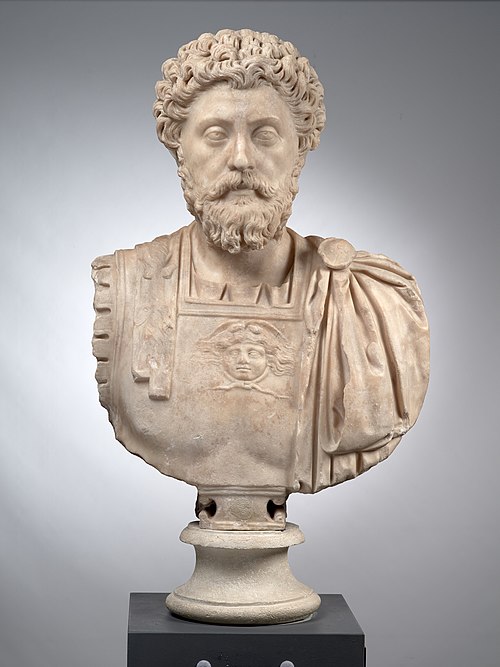
Marcus Aurelius Books
Marcus Aurelius (121–180 CE) was a Roman emperor and Stoic philosopher. His reign was marked by military campaigns and philosophical reflection.
Known for: Meditations
Books by Marcus Aurelius

Meditations
What does it mean to stay calm, just, and fully human in a world full of pressure, conflict, ego, and loss? That is the enduring question at the heart of Meditations, the private journal of Roman emperor Marcus Aurelius. Written in Greek and never intended for publication, these reflections are not polished philosophy lectures. They are personal reminders from one of the most powerful men in the world trying to govern not only an empire, but also his own mind. That tension is exactly why this book still matters. Meditations remains one of the clearest guides to Stoic philosophy because it speaks directly to everyday struggles: dealing with difficult people, accepting change, resisting vanity, and acting with integrity when no one is watching. Marcus Aurelius is remembered as both a Roman emperor and a Stoic philosopher, a rare figure often described as a philosopher-king. His reflections on virtue, discipline, mortality, and inner peace have influenced readers for centuries. If you want practical wisdom rather than abstract theory, Meditations offers a deeply human blueprint for living with clarity, resilience, and moral purpose.
Read SummaryKey Insights from Marcus Aurelius
Book I: Lessons from Those Who Shaped Me
The opening book of Meditations is an extraordinary act of gratitude. Instead of launching into abstract arguments, Marcus Aurelius begins by naming the people who formed his character and the virtues he learned from each one. This matters because it reveals a core Stoic truth: character is built th...
From Meditations
Book II: Accepting Fate and Living Rationally
Book II opens with one of the most quoted passages in Stoic philosophy: a morning reminder that we will meet interfering, ungrateful, arrogant, dishonest, jealous, and surly people. Marcus does not write this to become cynical. He writes it to become prepared. If difficult people are inevitable, the...
From Meditations
Book III: Integrity Beyond Fame
In Book III, Marcus Aurelius turns his attention to time, mortality, and the danger of living for approval. He reminds himself that life is short and that every delay in living well is a kind of self-betrayal. Stoicism here becomes intensely practical: do not postpone moral clarity. Speak truthfully...
From Meditations
Book IV: Unity with the Rational Universe
Book IV expands Marcus Aurelius’s vision beyond the individual self and places human life inside a larger rational order. Again and again, he reminds himself that everything is interconnected, that nature wastes nothing, and that events unfold as parts of a larger whole. This cosmic perspective is n...
From Meditations
Book V: The Discipline of Daily Action
Book V is where Marcus Aurelius confronts inertia, comfort, and resistance to duty. Some of the book’s most energizing reflections appear here, especially his insistence that when you wake up reluctant to work, you should remember what you were made for. Human beings are not born merely to stay warm...
From Meditations
Book VI: The Rational Soul and Justice
Book VI deepens one of the central Stoic claims of Meditations: the human soul is distinguished by reason, and reason reaches its highest form in justice. Marcus Aurelius insists that a rational person should not be ruled by impulse, bitterness, or vanity, but by clear judgment and moral consistency...
From Meditations
About Marcus Aurelius
Marcus Aurelius (121–180 CE) was a Roman emperor and Stoic philosopher. His reign was marked by military campaigns and philosophical reflection. He is regarded as one of history’s most important philosopher-kings, known for his personal writings that explore virtue, discipline, and inner peace.





Frequently Asked Questions
Marcus Aurelius (121–180 CE) was a Roman emperor and Stoic philosopher. His reign was marked by military campaigns and philosophical reflection.
Read Marcus Aurelius's books in 15 minutes
Get AI-powered summaries with key insights from 1 book by Marcus Aurelius.