
Josef Müller-Brockmann Books
Josef Müller-Brockmann (1914–1996) was a Swiss graphic designer and educator, recognized as a leading figure of the International Typographic Style. Based in Zurich, he influenced modern visual communication through his rational, grid-based design principles.
Known for: Grid Systems in Graphic Design: A Visual Communication Manual for Graphic Designers, Typographers and Three Dimensional Designers
Books by Josef Müller-Brockmann
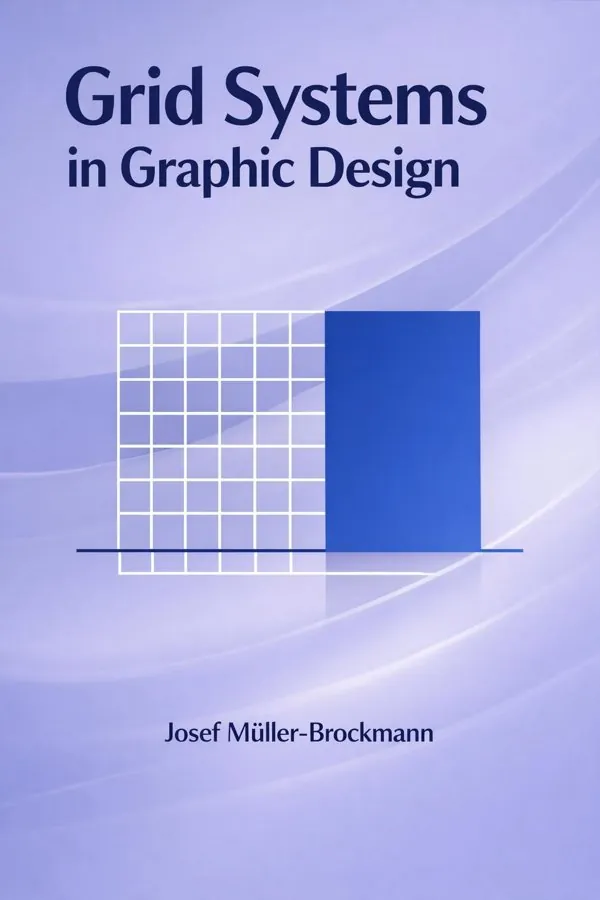
Grid Systems in Graphic Design: A Visual Communication Manual for Graphic Designers, Typographers and Three Dimensional Designers
Josef Müller-Brockmann’s Grid Systems in Graphic Design is one of the most influential books ever written on visual organization. More than a style guide, it is a practical and philosophical manual on how order can improve communication. The book explains how grids help designers structure information, create harmony, and make complex content easier to read and understand. Rather than treating design as decoration, Müller-Brockmann presents it as a disciplined craft grounded in clarity, proportion, rhythm, and logic. What makes this book endure is its ability to speak to both beginners and experienced professionals. It offers concrete systems for laying out text, images, and white space across posters, books, magazines, signage, and even three-dimensional design applications. At the same time, it argues for a deeper principle: design should serve content and audience before ego. Müller-Brockmann was a leading figure of the Swiss Style, known for his rigorous typography, poster design, and teaching. His authority comes not only from theory but from years of practice and experimentation. This book matters because it gives designers a timeless framework for making work that is clear, elegant, and useful in any medium.
Read SummaryKey Insights from Josef Müller-Brockmann
Order Creates Freedom, Not Restriction
At first glance, a grid can seem like a cage. Müller-Brockmann turns that assumption upside down by showing that a well-built structure actually expands creative possibilities. When basic decisions about alignment, spacing, and proportion are solved through a system, the designer gains more energy f...
From Grid Systems in Graphic Design: A Visual Communication Manual for Graphic Designers, Typographers and Three Dimensional Designers
The Grid Serves Communication First
Design fails when it asks viewers to admire form before they can understand content. One of Müller-Brockmann’s strongest convictions is that the grid is not an aesthetic gimmick; it is a tool for communication. Its purpose is to guide the eye, clarify relationships, and help people find information ...
From Grid Systems in Graphic Design: A Visual Communication Manual for Graphic Designers, Typographers and Three Dimensional Designers
Typography Gains Power Through Structure
Type is not merely text placed on a page; it is visual form shaped by proportion, spacing, and rhythm. Müller-Brockmann shows that typography becomes more precise and expressive when it is organized through a grid. This is one of the book’s most lasting contributions: it connects the discipline of t...
From Grid Systems in Graphic Design: A Visual Communication Manual for Graphic Designers, Typographers and Three Dimensional Designers
Proportion Shapes Visual Harmony
Good layouts rarely depend on instinct alone; they often rest on proportion. Müller-Brockmann treats proportion as a foundational design principle, showing how grids help translate mathematical relationships into visible harmony. The point is not to worship numbers for their own sake, but to use pro...
From Grid Systems in Graphic Design: A Visual Communication Manual for Graphic Designers, Typographers and Three Dimensional Designers
White Space Is Active Structure
Many inexperienced designers treat empty space as leftover space. Müller-Brockmann makes clear that white space is an active part of communication. In a grid system, space is not what remains after placing content; it is one of the core materials of design. It separates, groups, emphasizes, and give...
From Grid Systems in Graphic Design: A Visual Communication Manual for Graphic Designers, Typographers and Three Dimensional Designers
Consistency Builds Systems Across Pages
A single beautiful page is not enough when a project unfolds over dozens of spreads, signs, or screens. Müller-Brockmann emphasizes that the grid is especially powerful because it enables continuity across a series. It helps designers create systems rather than isolated compositions, and that system...
From Grid Systems in Graphic Design: A Visual Communication Manual for Graphic Designers, Typographers and Three Dimensional Designers
About Josef Müller-Brockmann
Josef Müller-Brockmann (1914–1996) was a Swiss graphic designer and educator, recognized as a leading figure of the International Typographic Style. Based in Zurich, he influenced modern visual communication through his rational, grid-based design principles.

Frequently Asked Questions
Josef Müller-Brockmann (1914–1996) was a Swiss graphic designer and educator, recognized as a leading figure of the International Typographic Style. Based in Zurich, he influenced modern visual communication through his rational, grid-based design principles.
Read Josef Müller-Brockmann's books in 15 minutes
Get AI-powered summaries with key insights from 1 book by Josef Müller-Brockmann.