
John D. Preston Books
Preston, Psy.
Known for: Getting It Done When You're Depressed: 50 Strategies for Keeping Your Life on Track
Books by John D. Preston
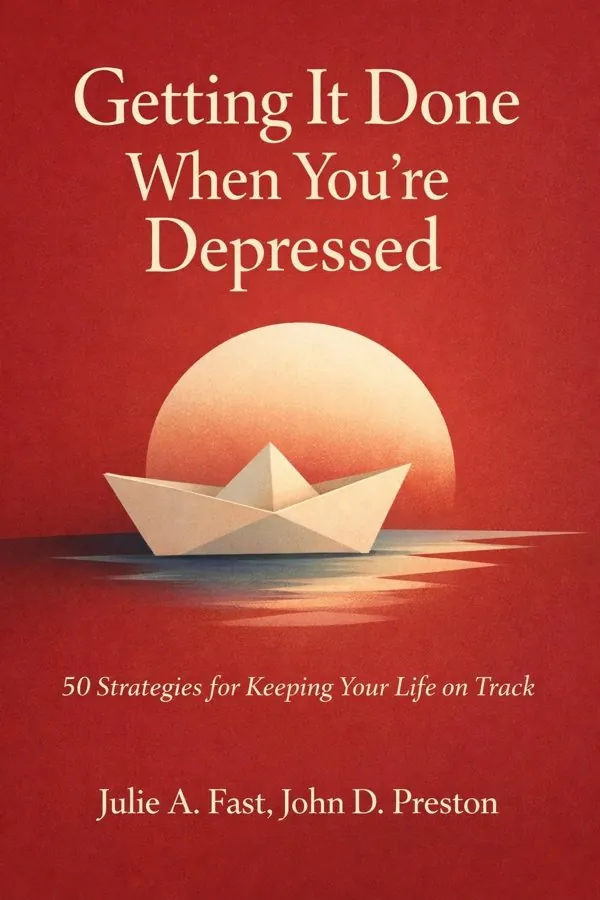
Getting It Done When You're Depressed: 50 Strategies for Keeping Your Life on Track
Depression does not only affect mood; it disrupts the ordinary machinery of life. Tasks that once felt automatic—answering email, paying bills, making meals, showering, showing up to work—can suddenly seem impossibly heavy. In Getting It Done When You're Depressed, Julie A. Fast and psychologist John D. Preston address this often-overlooked reality with unusual clarity and compassion. Rather than offering abstract encouragement, they provide fifty concrete strategies designed to help people function even when energy, concentration, and motivation have collapsed. What makes this book so valuable is its practical realism. Fast writes from lived experience with mood disorders, while Preston brings clinical expertise in depression and treatment. Together, they reject the idea that productivity during depression is a matter of willpower or character. Instead, they show how depression alters thinking, behavior, and daily rhythms—and how small, structured adjustments can reduce the damage. The result is a guide that feels less like a lecture and more like a survival manual. For readers who feel ashamed of falling behind, or for loved ones trying to help, this book offers something powerful: workable tools, honest understanding, and a path toward stability one manageable step at a time.
Read SummaryKey Insights from John D. Preston
Depression Disrupts More Than Mood
One of the most damaging myths about depression is that it is simply sadness intensified. Fast and Preston challenge that idea immediately by showing that depression is also a disorder of functioning. It attacks attention, memory, decision-making, problem-solving, and the capacity to initiate action...
From Getting It Done When You're Depressed: 50 Strategies for Keeping Your Life on Track
Recognize Your Personal Depression Pattern
A powerful insight in the book is that depression is predictable in highly personal ways. Many people experience their struggles as random failure: some days they collapse, some days they cope, and the inconsistency feels confusing and shameful. Fast and Preston argue that there is usually a pattern...
From Getting It Done When You're Depressed: 50 Strategies for Keeping Your Life on Track
Start Smaller Than Your Mind Allows
When depression makes motivation vanish, the biggest barrier is often not the task itself but the size of the task in your head. Fast and Preston emphasize that depressed thinking turns ordinary responsibilities into total systems failures. Laundry becomes all the laundry. Cleaning the kitchen becom...
From Getting It Done When You're Depressed: 50 Strategies for Keeping Your Life on Track
Use Structure When Motivation Fails
A common mistake during depression is relying on motivation to dictate the day. Fast and Preston show why that rarely works. Depression weakens internal drive, so if you wait until you feel like acting, much of life remains undone. Structure becomes a substitute for motivation: routines, lists, exte...
From Getting It Done When You're Depressed: 50 Strategies for Keeping Your Life on Track
Challenge Thoughts That Freeze Action
Depression speaks in convincing absolutes. It says, "If I can’t do it well, I shouldn’t do it at all," or "I’m already so behind that one step won’t matter." Fast and Preston explain that these thoughts do more than reflect mood—they directly interfere with functioning. They turn tasks into verdicts...
From Getting It Done When You're Depressed: 50 Strategies for Keeping Your Life on Track
Borrow Strength From Other People
Depression thrives in isolation, partly because isolation removes the external cues that keep life moving. Fast and Preston make a compelling case that support is not optional for many people with depression—it is part of treatment. When memory, motivation, and self-trust are compromised, other peop...
From Getting It Done When You're Depressed: 50 Strategies for Keeping Your Life on Track
About John D. Preston
Preston, Psy.




Frequently Asked Questions
Preston, Psy.
Read John D. Preston's books in 15 minutes
Get AI-powered summaries with key insights from 1 book by John D. Preston.