
Guillermo Cabrera Infante Books
Guillermo Cabrera Infante (1929–2005) was a Cuban novelist, essayist, and screenwriter known for his witty linguistic style and exploration of Havana’s culture. A central figure of the Latin American Boom, he lived in exile in London after breaking with the Castro regime and received the Cervantes Prize in 1997.
Known for: Three Trapped Tigers
Books by Guillermo Cabrera Infante
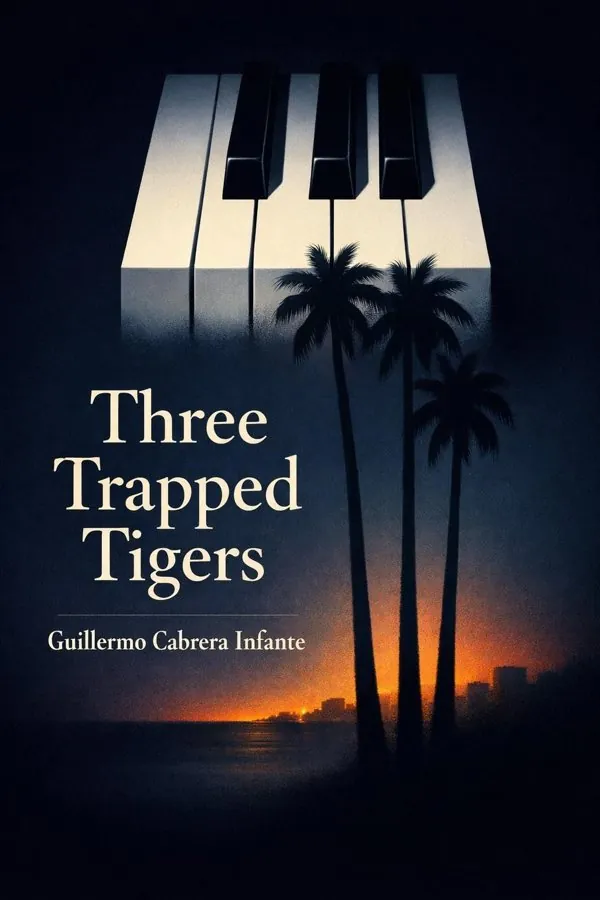
Three Trapped Tigers
Guillermo Cabrera Infante’s Three Trapped Tigers is less a conventional novel than an explosion of voices, rhythms, jokes, memories, songs, and verbal performances set in Havana on the eve of the Cuban Revolution. First published in 1967, the book follows writers, performers, talkers, drifters, and nightclub habitués as they move through bars, cabarets, studios, taxis, and conversations that seem to create the city even as they describe it. Plot matters less here than sound, style, and atmosphere. The novel turns speech into action and nightlife into literature. What makes Three Trapped Tigers so important is its radical belief that language is not simply a tool for telling a story but the story itself. Cabrera Infante captures Havana as a living orchestra of slang, wit, music, gossip, and improvisation, preserving a vanished cultural world while also reinventing the novel form. A major figure of the Latin American Boom, he brought to fiction the sensibility of a film critic, humorist, and linguistic virtuoso. The result is one of twentieth-century literature’s boldest experiments: dazzling, difficult, funny, and unforgettable.
Read SummaryKey Insights from Guillermo Cabrera Infante
Havana Becomes the Central Character
Some novels use setting as background; Three Trapped Tigers makes the city itself the main event. Havana in the 1950s is not merely where the characters happen to live. It shapes the pace of their thoughts, the form of their friendships, the texture of their speech, and the emotional weather of the ...
From Three Trapped Tigers
Silvestre, Cué, and Códac as Types
A powerful way to understand Three Trapped Tigers is to see its central figures not only as individuals but as different responses to art, performance, and modern life. Silvestre, Arsenio Cué, and Códac form a loose trio through whom Cabrera Infante explores writing, improvisation, observation, vani...
From Three Trapped Tigers
Cabaret Culture as Social Theatre
Nightlife in Three Trapped Tigers is not decorative excess; it is a system for understanding society. The cabarets, especially glamorous spaces associated with performance culture, reveal a world built on spectacle, improvisation, desire, hierarchy, and illusion. In these settings, people become vis...
From Three Trapped Tigers
Language Performs Before It Describes
The novel’s boldest claim is that language does not merely report reality; it creates it. Three Trapped Tigers is famous for puns, verbal riffs, multilingual echoes, parody, alliteration, mishearings, and elaborate word games. These are not ornaments added to a stable story. They are the substance o...
From Three Trapped Tigers
Fragmentation Mirrors Memory and Modernity
A fragmented novel can feel disorienting, but in Three Trapped Tigers fragmentation is not a flaw to be overcome. It is the form best suited to a world of unstable memory, overlapping stories, and urban overstimulation. The book shifts among voices, scenes, textual experiments, anecdotal digressions...
From Three Trapped Tigers
Humor Protects Against Loss and Collapse
One of the most striking things about Three Trapped Tigers is how funny it is, especially given the melancholy that shadows it. Humor in this novel is not superficial entertainment. It is a survival strategy, a creative instinct, and a way of confronting impermanence. Jokes, puns, exaggerations, and...
From Three Trapped Tigers
About Guillermo Cabrera Infante
Guillermo Cabrera Infante (1929–2005) was a Cuban novelist, essayist, and screenwriter known for his witty linguistic style and exploration of Havana’s culture. A central figure of the Latin American Boom, he lived in exile in London after breaking with the Castro regime and received the Cervantes P...
Read more
Guillermo Cabrera Infante (1929–2005) was a Cuban novelist, essayist, and screenwriter known for his witty linguistic style and exploration of Havana’s culture. A central figure of the Latin American Boom, he lived in exile in London after breaking with the Castro regime and received the Cervantes P...
Guillermo Cabrera Infante (1929–2005) was a Cuban novelist, essayist, and screenwriter known for his witty linguistic style and exploration of Havana’s culture. A central figure of the Latin American Boom, he lived in exile in London after breaking with the Castro regime and received the Cervantes Prize in 1997.





Frequently Asked Questions
Guillermo Cabrera Infante (1929–2005) was a Cuban novelist, essayist, and screenwriter known for his witty linguistic style and exploration of Havana’s culture. A central figure of the Latin American Boom, he lived in exile in London after breaking with the Castro regime and received the Cervantes Prize in 1997.
Read Guillermo Cabrera Infante's books in 15 minutes
Get AI-powered summaries with key insights from 1 book by Guillermo Cabrera Infante.