
Gilles Deleuze Books
Gilles Deleuze (1925–1995) was a French philosopher known for his influential works on metaphysics, language, and cinema theory. He taught at the University of Paris VIII and collaborated with Félix Guattari on several major texts, including 'A Thousand Plateaus.
Known for: A Thousand Plateaus: Capitalism and Schizophrenia, Difference And Repetition
Books by Gilles Deleuze
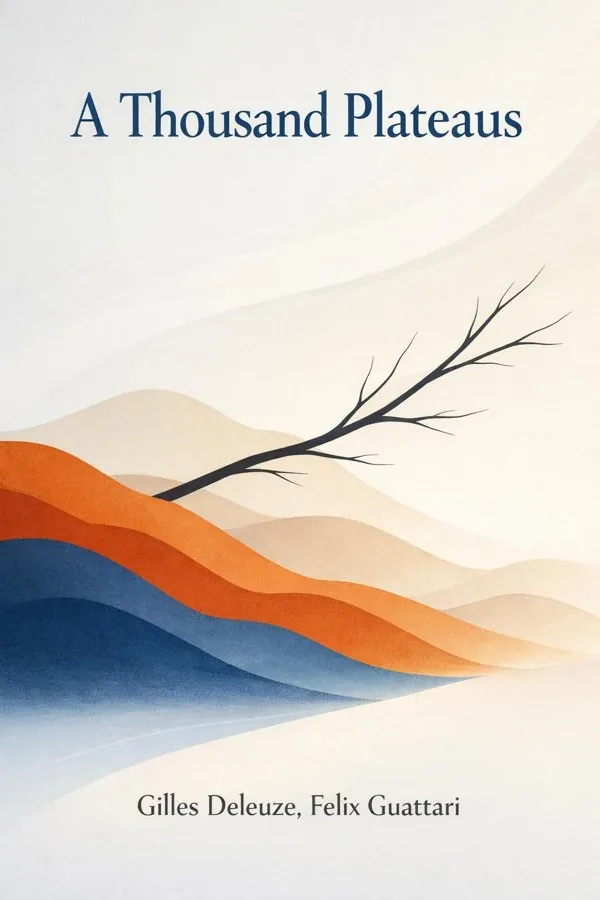
A Thousand Plateaus: Capitalism and Schizophrenia
A Thousand Plateaus is one of the most challenging and influential works of twentieth-century philosophy. Written by Gilles Deleuze and Félix Guattari as the second volume of Capitalism and Schizophre...
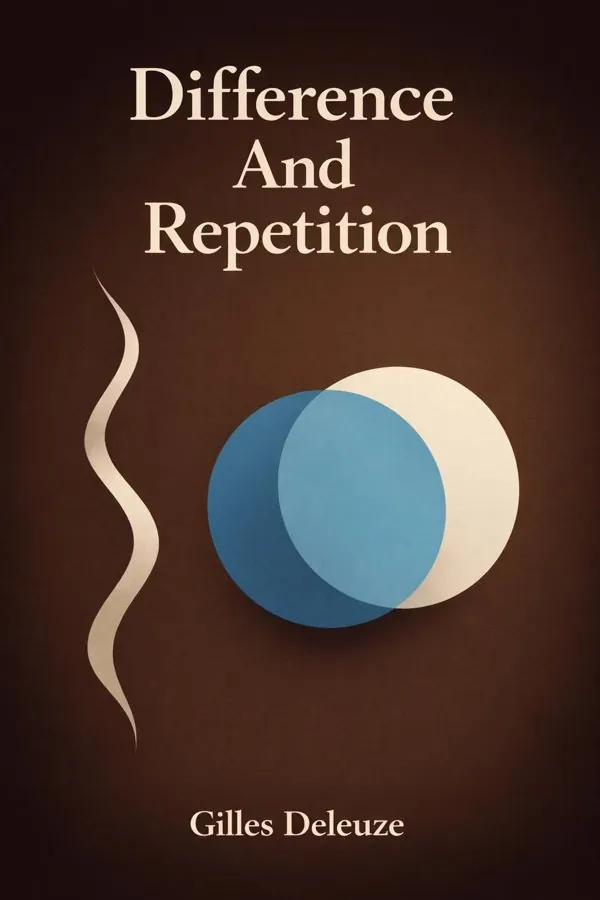
Difference And Repetition
Difference And Repetition is Gilles Deleuze’s bold attempt to rethink some of philosophy’s oldest assumptions. First published in 1968, the book argues that Western thought has too often treated diffe...
Key Insights from Gilles Deleuze
Rhizome Instead of the Tree
What if knowledge does not grow from a single root, but spreads through unpredictable connections? That is the startling opening move of A Thousand Plateaus. Deleuze and Guattari oppose the traditional “tree” model of thought, which organizes ideas hierarchically, with origins, branches, and clear l...
From A Thousand Plateaus: Capitalism and Schizophrenia
Multiplicity Beyond Individual Identity
We are less like isolated individuals than like moving bundles of relations. In “One or Several Wolves?” Deleuze and Guattari challenge psychoanalysis, especially Freud’s tendency to interpret desire through the family triangle of father, mother, and child. Their point is not simply that Freud was w...
From A Thousand Plateaus: Capitalism and Schizophrenia
Strata, Layers, and Geology of Morals
Reality is not fixed substance but layered organization. In “The Geology of Morals,” Deleuze and Guattari describe the world through strata: sedimented layers that stabilize matter, life, language, and social order. Geological language allows them to show how forms emerge through processes of coding...
From A Thousand Plateaus: Capitalism and Schizophrenia
The Body Without Organs
Behind the identities and functions imposed on us lies a more fluid field of intensity. This is the provocative idea of the “body without organs,” one of Deleuze and Guattari’s most famous and misunderstood concepts. The body without organs is not a literal body stripped of organs. It names a limit ...
From A Thousand Plateaus: Capitalism and Schizophrenia
Assemblages Make the Social World
Things rarely act alone; they operate in combinations. One of the most useful ideas in A Thousand Plateaus is the assemblage: a temporary arrangement of bodies, tools, habits, institutions, signs, and desires that functions together. An assemblage is not a fixed essence. It is a composition that hol...
From A Thousand Plateaus: Capitalism and Schizophrenia
Nomads, States, and the War Machine
Power does not only rule from above; it also captures forces that arise outside it. In “Treatise on Nomadology – The War Machine,” Deleuze and Guattari distinguish between the State apparatus and the war machine. The State organizes space, territory, law, measurement, and hierarchy. It seeks legibil...
From A Thousand Plateaus: Capitalism and Schizophrenia
About Gilles Deleuze
Gilles Deleuze (1925–1995) was a French philosopher known for his influential works on metaphysics, language, and cinema theory. He taught at the University of Paris VIII and collaborated with Félix Guattari on several major texts, including 'A Thousand Plateaus.' Deleuze’s philosophy emphasizes cre...
Read more
Gilles Deleuze (1925–1995) was a French philosopher known for his influential works on metaphysics, language, and cinema theory. He taught at the University of Paris VIII and collaborated with Félix Guattari on several major texts, including 'A Thousand Plateaus.' Deleuze’s philosophy emphasizes cre...
Gilles Deleuze (1925–1995) was a French philosopher known for his influential works on metaphysics, language, and cinema theory. He taught at the University of Paris VIII and collaborated with Félix Guattari on several major texts, including 'A Thousand Plateaus.' Deleuze’s philosophy emphasizes creativity, multiplicity, and the rejection of traditional dualisms.


Frequently Asked Questions
Gilles Deleuze (1925–1995) was a French philosopher known for his influential works on metaphysics, language, and cinema theory. He taught at the University of Paris VIII and collaborated with Félix Guattari on several major texts, including 'A Thousand Plateaus.
Read Gilles Deleuze's books in 15 minutes
Get AI-powered summaries with key insights from 2 books by Gilles Deleuze.