
Gabriel Garcia Marquez Books
Gabriel Garcia Marquez (1927–2014) was a Colombian novelist, short-story writer, screenwriter, and journalist, awarded the Nobel Prize in Literature in 1982. He is widely regarded as one of the most significant authors of the 20th century and a leading figure of magical realism.
Known for: Of Love And Other Demons
Books by Gabriel Garcia Marquez
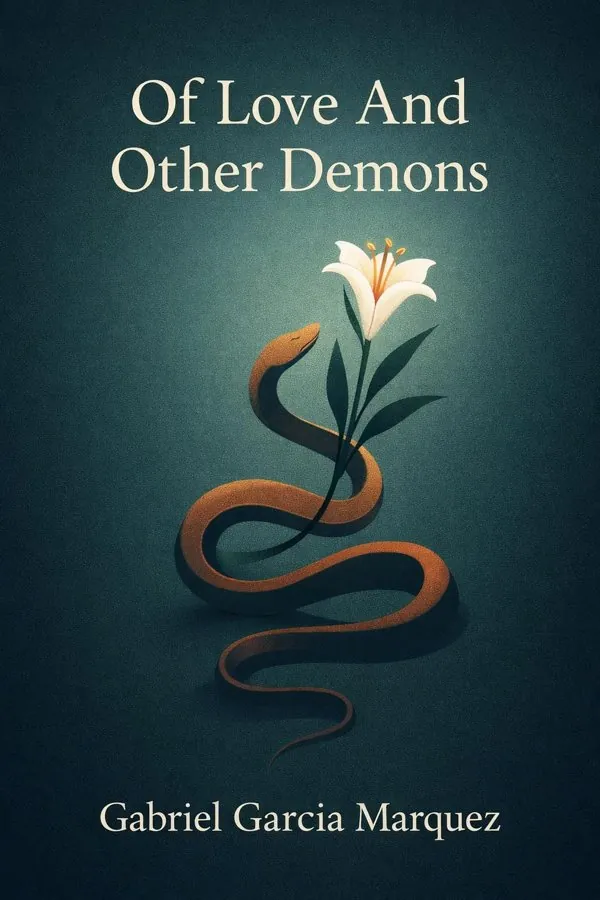
Of Love And Other Demons
Set in 18th-century colonial Cartagena, Of Love And Other Demons is a haunting novel about fear, desire, and the stories societies tell to explain what they cannot understand. At its center is Sierva María de Todos los Ángeles, the neglected daughter of a marquis, who is bitten by a dog and gradually becomes the object of panic, superstition, and religious obsession. When Father Cayetano Delaura is assigned to evaluate whether she is possessed, what begins as spiritual inquiry turns into a dangerous and transformative love. Through their tragic bond, Gabriel Garcia Marquez examines how institutions—family, church, medicine, and empire—can distort human experience when they are ruled by prejudice and certainty rather than compassion. The novel matters because it speaks far beyond its historical setting: it asks how often difference is mistaken for madness, how often love is condemned by power, and how often fear masquerades as faith. Marquez, the Nobel Prize-winning Colombian master of lyrical prose and magical realism, brings extraordinary authority to this story, blending historical texture, emotional intensity, and symbolic richness into one of his most piercing short novels.
Read SummaryKey Insights from Gabriel Garcia Marquez
The Convent and the Lost Girl
Sometimes the dead survive more vividly in stories than the living do in their own time. Of Love And Other Demons begins with an image of excavation: the unearthing of a colonial convent and the discovery of a girl’s long copper-colored hair flowing from a grave. That startling image frames the enti...
From Of Love And Other Demons
Faith, Desire, and the Forbidden Encounter
The most dangerous passions are often the ones that begin under the guise of duty. Father Cayetano Delaura enters the novel as a learned priest entrusted with Sierva María’s case. He is expected to diagnose, guide, and perhaps exorcise her. Instead, he becomes emotionally and spiritually entangled w...
From Of Love And Other Demons
Death, Memory, and Love’s Persistence
Some loves endure not because they triumph, but because they are denied any ordinary life. The final movement of Of Love And Other Demons is steeped in death, but it is not death alone that gives the novel its lasting force. What remains after Sierva María’s destruction is memory—the charged afterli...
From Of Love And Other Demons
Superstition Thrives Where Fear Rules
Fear rarely stays empty for long; if knowledge does not fill the gap, superstition will. The plot of the novel turns on a dog bite and the suspicion of rabies, but what truly drives events is not medical diagnosis alone. It is the social terror attached to uncertainty. Sierva María’s behavior, appea...
From Of Love And Other Demons
Colonial Society Produces Beautiful Cruelty
A society can be refined in manners and brutal in spirit at the same time. One of the great achievements of Of Love And Other Demons is its portrait of colonial Cartagena as a world of ceremony, hierarchy, decay, and violence. Marquez fills the novel with marquises, bishops, convents, servants, slav...
From Of Love And Other Demons
Isolation Distorts Every Human Bond
People do not become monstrous only through evil; often they become destructive through loneliness, repression, and emotional hunger. Nearly every major figure in Of Love And Other Demons is isolated in a different way. Sierva María is abandoned within privilege. Her mother withdraws into addiction,...
From Of Love And Other Demons
About Gabriel Garcia Marquez
Gabriel Garcia Marquez (1927–2014) was a Colombian novelist, short-story writer, screenwriter, and journalist, awarded the Nobel Prize in Literature in 1982. He is widely regarded as one of the most significant authors of the 20th century and a leading figure of magical realism. His most acclaimed w...
Read more
Gabriel Garcia Marquez (1927–2014) was a Colombian novelist, short-story writer, screenwriter, and journalist, awarded the Nobel Prize in Literature in 1982. He is widely regarded as one of the most significant authors of the 20th century and a leading figure of magical realism. His most acclaimed w...
Gabriel Garcia Marquez (1927–2014) was a Colombian novelist, short-story writer, screenwriter, and journalist, awarded the Nobel Prize in Literature in 1982. He is widely regarded as one of the most significant authors of the 20th century and a leading figure of magical realism. His most acclaimed works include 'One Hundred Years of Solitude,' 'Love in the Time of Cholera,' and 'Chronicle of a Death Foretold.'





Frequently Asked Questions
Gabriel Garcia Marquez (1927–2014) was a Colombian novelist, short-story writer, screenwriter, and journalist, awarded the Nobel Prize in Literature in 1982. He is widely regarded as one of the most significant authors of the 20th century and a leading figure of magical realism.
Read Gabriel Garcia Marquez's books in 15 minutes
Get AI-powered summaries with key insights from 1 book by Gabriel Garcia Marquez.