
Fyodor Dostoyevsky Books
Fyodor Dostoyevsky (1821–1881) was a Russian novelist, philosopher, and journalist, regarded as one of the greatest writers in world literature. His works delve into human psychology, moral dilemmas, and spiritual struggles.
Known for: The Devils
Books by Fyodor Dostoyevsky
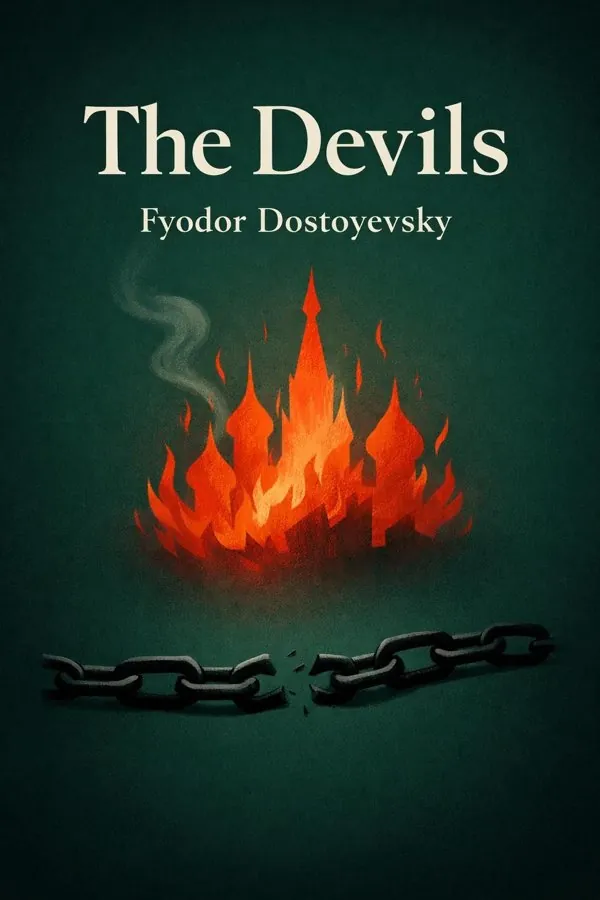
The Devils
The Devils, also translated as Demons or The Possessed, is Fyodor Dostoyevsky’s fierce and unsettling portrait of a society infected by ideas it no longer knows how to control. Set in provincial Russia but charged with national significance, the novel follows a circle of intellectuals, agitators, idealists, and moral weaklings as radical doctrines turn from conversation into conspiracy, humiliation, murder, and collapse. At its center stands a haunting question: what happens when people reject moral responsibility, spiritual truth, and human dignity in the name of abstract freedom or political necessity? What makes this novel endure is not only its historical relevance to 19th-century Russia, but its astonishing ability to anticipate modern extremism, ideological cults, and the psychology of social breakdown. Dostoyevsky does not merely criticize revolutionary politics; he exposes the emotional hunger, vanity, resentment, and spiritual emptiness that make destructive movements attractive in the first place. Few novelists have examined the inner life of fanaticism with such intensity. Dostoyevsky wrote with unusual authority. Having endured imprisonment, exile, political suspicion, and profound spiritual crisis, he understood both the seduction of radical ideas and the human cost of living without moral limits. The Devils remains one of literature’s most penetrating studies of chaos, belief, and the dark uses of freedom.
Read SummaryKey Insights from Fyodor Dostoyevsky
Stepan Verkhovensky and Hollow Liberal Vanity
A society can begin to decay long before violence appears, and Dostoyevsky suggests that decay often starts in the vanity of people who mistake performance for conviction. Stepan Trofimovich Verkhovensky is introduced as an aging intellectual who imagines himself a guardian of culture, progress, and...
From The Devils
Stavrogin and the Charisma of Emptiness
Some of the most dangerous people are not driven by clear conviction but by spiritual emptiness that draws others into orbit. Nikolai Stavrogin returns to the provincial town as a figure of fascination, scandal, and dread. He is handsome, controlled, intelligent, and magnetically self-possessed. Yet...
From The Devils
Pyotr Verkhovensky and Manipulative Revolution
Revolutions are not always led by philosophers; sometimes they are driven by organizers who understand resentment better than truth. Pyotr Verkhovensky, Stepan’s son, arrives as the novel’s most energetic political force. Unlike his father, he has little interest in elegant posturing. He is practica...
From The Devils
How Radical Circles Manufacture Belonging
People seldom join destructive movements because they have carefully reasoned their way into evil; more often, they are seduced by belonging, momentum, and the fear of exclusion. In The Devils, the formation of the revolutionary circle shows how ordinary weaknesses become political fuel. The group t...
From The Devils
Ideas Without God Become Moral Weapons
The most explosive debates in The Devils are not merely political; they are spiritual arguments about what remains when transcendence disappears. Dostoyevsky stages ideological confrontations through characters who embody competing visions of freedom, equality, reason, and human destiny. The novel a...
From The Devils
Stavrogin’s Confession and Buried Guilt
The soul does not become free by denying guilt; it becomes more haunted. One of the darkest dimensions of The Devils lies in Stavrogin’s confession, which reveals the moral abyss beneath his poise. Here Dostoyevsky examines what happens when a person commits evil, refuses genuine repentance, and con...
From The Devils
About Fyodor Dostoyevsky
Fyodor Dostoyevsky (1821–1881) was a Russian novelist, philosopher, and journalist, regarded as one of the greatest writers in world literature. His works delve into human psychology, moral dilemmas, and spiritual struggles. Among his most famous novels are Crime and Punishment, The Idiot, The Broth...
Read more
Fyodor Dostoyevsky (1821–1881) was a Russian novelist, philosopher, and journalist, regarded as one of the greatest writers in world literature. His works delve into human psychology, moral dilemmas, and spiritual struggles. Among his most famous novels are Crime and Punishment, The Idiot, The Broth...
Fyodor Dostoyevsky (1821–1881) was a Russian novelist, philosopher, and journalist, regarded as one of the greatest writers in world literature. His works delve into human psychology, moral dilemmas, and spiritual struggles. Among his most famous novels are Crime and Punishment, The Idiot, The Brothers Karamazov, and The Devils.





Frequently Asked Questions
Fyodor Dostoyevsky (1821–1881) was a Russian novelist, philosopher, and journalist, regarded as one of the greatest writers in world literature. His works delve into human psychology, moral dilemmas, and spiritual struggles.
Read Fyodor Dostoyevsky's books in 15 minutes
Get AI-powered summaries with key insights from 1 book by Fyodor Dostoyevsky.