
Clay Shirky Books
Clay Shirky is an American writer, consultant, and teacher on the social and economic effects of Internet technologies. He has taught at New York University and written influential works on the impact of digital media on society and collaboration.
Known for: Cognitive Surplus: Creativity and Generosity in a Connected Age, Here Comes Everybody: The Power of Organizing Without Organizations
Books by Clay Shirky
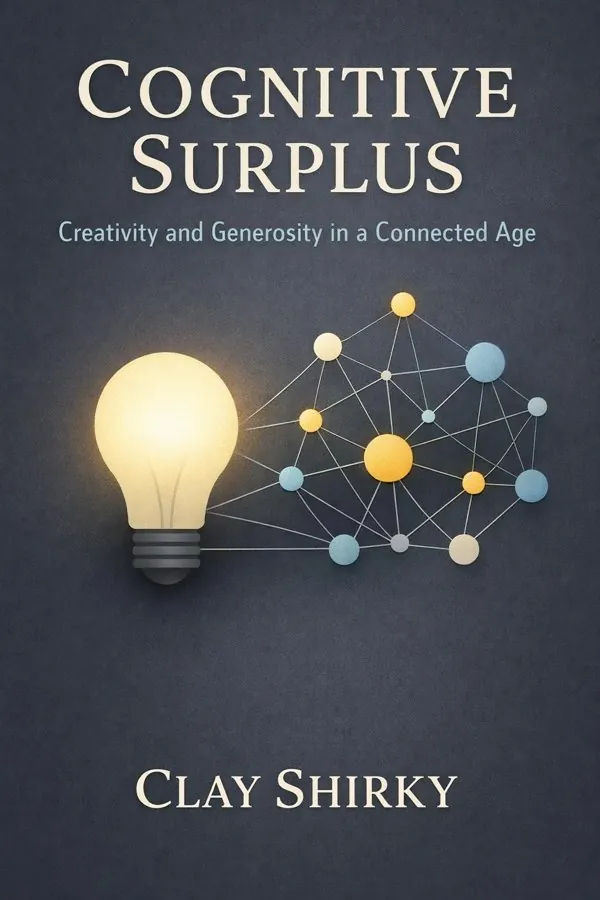
Cognitive Surplus: Creativity and Generosity in a Connected Age
Cognitive Surplus explores one of the most important shifts of the digital era: the movement from a culture built around passive media consumption to one shaped by participation, collaboration, and sh...
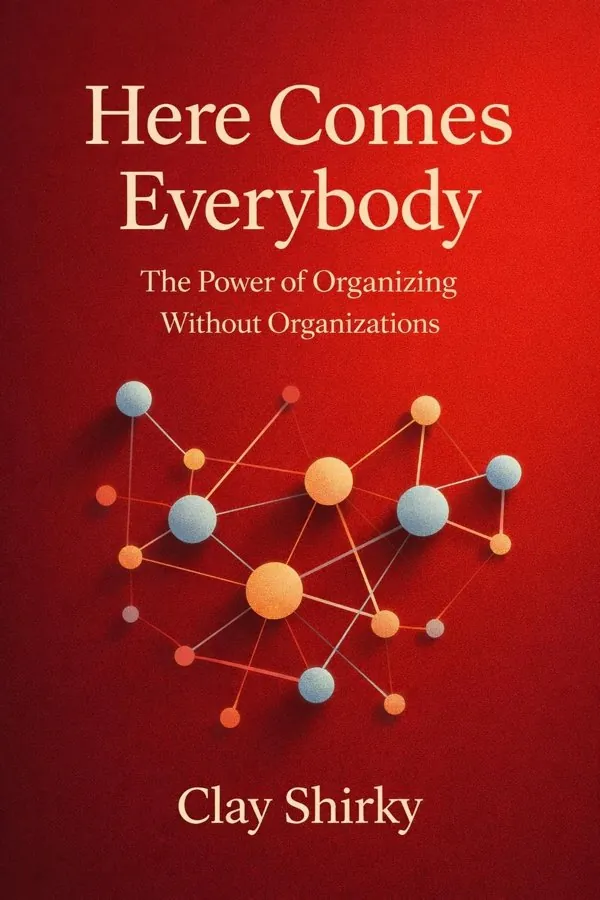
Here Comes Everybody: The Power of Organizing Without Organizations
Here Comes Everybody is Clay Shirky’s influential exploration of what happens when communication becomes cheap, fast, and global. The book argues that the internet did more than improve communication;...
Key Insights from Clay Shirky
From Television Time to Shared Creation
A revolution often begins not with new talent, but with old habits being redirected. Shirky’s central insight is that modern societies have long possessed enormous stores of free time and human ability, yet much of that energy was historically funneled into passive entertainment. After World War II,...
From Cognitive Surplus: Creativity and Generosity in a Connected Age
Participation Is the Defining Digital Shift
The most powerful change brought by connected technology is not faster information, but broader participation. Shirky argues that the digital age is defined by the transition from a world where media was produced by a few and consumed by many to one where the many can also produce, respond, remix, a...
From Cognitive Surplus: Creativity and Generosity in a Connected Age
Why People Contribute Without Being Paid
Not all meaningful work is driven by money. One of Shirky’s most important contributions is his explanation of why people voluntarily give time and effort to shared projects. Traditional economics often assumes that incentives must be financial, yet digital communities repeatedly show that people co...
From Cognitive Surplus: Creativity and Generosity in a Connected Age
Small Contributions Can Create Massive Value
The genius of networked collaboration is that it does not require heroic effort from every participant. Shirky shows that large-scale collective projects often emerge from many small, uneven contributions rather than from uniform commitment. In digital environments, people can participate at differe...
From Cognitive Surplus: Creativity and Generosity in a Connected Age
Generosity Is a Practical Social Force
Modern culture often treats generosity as admirable but secondary, as if serious systems must run on profit, authority, or competition. Shirky challenges that assumption. He argues that generosity is not just a moral extra; it is a practical engine of digital collaboration. People regularly share kn...
From Cognitive Surplus: Creativity and Generosity in a Connected Age
Good Platforms Invite Better Participation
Technology alone does not create collaboration; design determines whether people can participate meaningfully. Shirky emphasizes that the structure of a platform shapes the behavior it attracts. If contribution is confusing, invisible, or risky, most people will not bother. If it is simple, rewardin...
From Cognitive Surplus: Creativity and Generosity in a Connected Age
About Clay Shirky
Clay Shirky is an American writer, consultant, and teacher on the social and economic effects of Internet technologies. He has taught at New York University and written influential works on the impact of digital media on society and collaboration.
Frequently Asked Questions
Clay Shirky is an American writer, consultant, and teacher on the social and economic effects of Internet technologies. He has taught at New York University and written influential works on the impact of digital media on society and collaboration.
Read Clay Shirky's books in 15 minutes
Get AI-powered summaries with key insights from 2 books by Clay Shirky.