
Christina Stead Books
Christina Stead (1902–1983) was an Australian novelist and short story writer known for her psychological insight and social realism. Her works often explore family relationships, politics, and gender roles.
Known for: The Man Who Loved Children
Books by Christina Stead
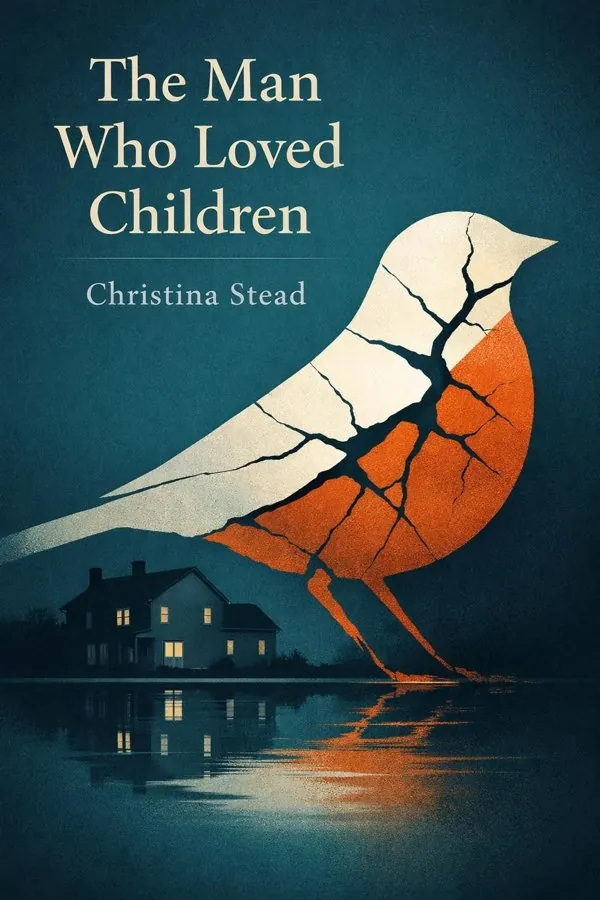
The Man Who Loved Children
What happens when love becomes a form of control? Christina Stead’s The Man Who Loved Children is a devastating, darkly comic, and psychologically precise portrait of family life that follows the Pollits, an eccentric household in Washington, D.C., dominated by the endlessly talkative, self-dramatizing Sam Pollit and his embittered wife, Henny. On the surface, Sam appears affectionate, imaginative, and devoted to his children. But as the novel unfolds, his sentimental idealism reveals a more troubling reality: his love suffocates, manipulates, and distorts everyone around him. Henny, trapped in resentment and poverty, wages her own war inside the home, while the children—especially Louie—absorb the damage and struggle toward self-understanding. First published in 1940, the novel is now widely regarded as a classic of domestic fiction and psychological realism. Stead writes with astonishing emotional intelligence, exposing the hidden economies of power, humiliation, fantasy, and survival inside family life. Her authority comes not from abstract theory but from her unmatched ability to render people as contradictory, vulnerable, and terrifyingly real. This is not just a novel about one unhappy household; it is a profound study of how personality becomes fate inside the family.
Read SummaryKey Insights from Christina Stead
The Pollit Family and the Idealistic Patriarch
Some of the most damaging people are convinced they are doing good. At the center of The Man Who Loved Children stands Sam Pollit, a father who sees himself as generous, visionary, playful, and morally superior. He fills the home with songs, jokes, pet names, speeches, fantasies, and endless proclam...
From The Man Who Loved Children
Henny’s Despair and the War Within
Domestic conflict is rarely just about arguments; it is often about accumulated humiliation. Opposite Sam stands Henny Pollit, one of the most unforgettable figures in twentieth-century fiction. Fierce, intelligent, sarcastic, and emotionally exhausted, Henny has been ground down by years of financi...
From The Man Who Loved Children
Louie’s Awakening and the Mirror of Childhood
Children do not merely witness family drama; they become its interpreters, carriers, and often its casualties. Louie Pollit, the adolescent daughter at the emotional center of the novel, embodies this truth. Sensitive, imaginative, awkward, and intellectually hungry, Louie grows up in the shadow of ...
From The Man Who Loved Children
Collapse and Aftermath of Idealism
Every family myth eventually meets reality. One of the novel’s deepest achievements is its portrayal of collapse: not just the breakdown of a marriage, but the disintegration of the stories people tell to justify how they live. Sam’s dream of himself as a benevolent father-philosopher cannot survive...
From The Man Who Loved Children
Love Can Mask Possession and Ego
Affection is not always evidence of generosity. One of Christina Stead’s sharpest insights is that love, especially parental love, can become a mask for vanity, need, and possession. Sam genuinely delights in children, language, play, and emotional intimacy. Yet his version of love often centers him...
From The Man Who Loved Children
Language as Power Inside the Home
Families are built not only through behavior but through recurring speech. In The Man Who Loved Children, language is one of the main instruments of power. Sam’s household is flooded with nicknames, jokes, invented phrases, teasing rituals, lectures, and dramatic performances. This verbal abundance ...
From The Man Who Loved Children
About Christina Stead
Christina Stead (1902–1983) was an Australian novelist and short story writer known for her psychological insight and social realism. Her works often explore family relationships, politics, and gender roles. She is best known for 'The Man Who Loved Children' and 'Letty Fox: Her Luck'.




Frequently Asked Questions
Christina Stead (1902–1983) was an Australian novelist and short story writer known for her psychological insight and social realism. Her works often explore family relationships, politics, and gender roles.
Read Christina Stead's books in 15 minutes
Get AI-powered summaries with key insights from 1 book by Christina Stead.