
Cathy Sherry Books
Cathy Sherry is an Associate Professor at the University of New South Wales specializing in urban planning and property law.
Known for: Urban Green Spaces and Health: Practical Design and Programming
Books by Cathy Sherry
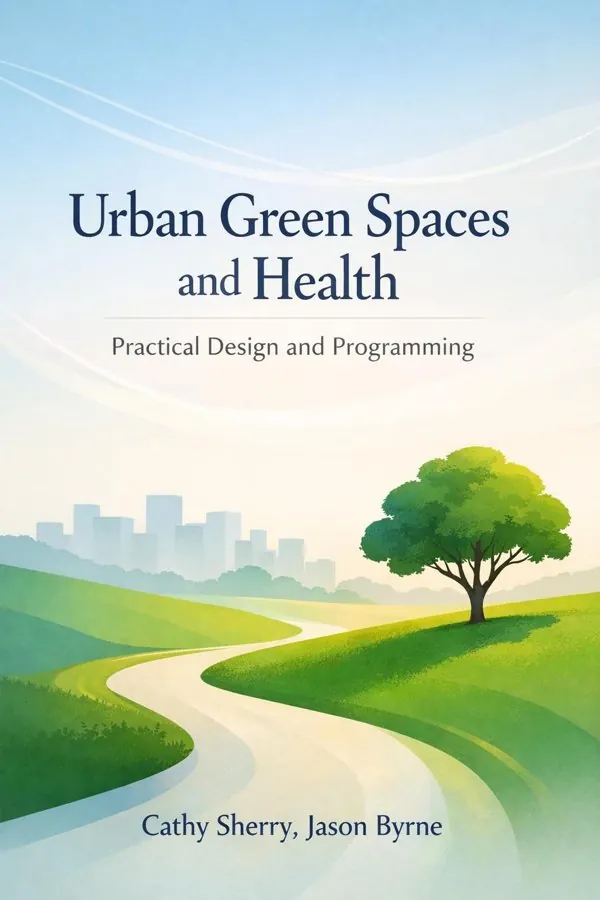
Urban Green Spaces and Health: Practical Design and Programming
Cities shape health as surely as hospitals do. In Urban Green Spaces and Health: Practical Design and Programming, Cathy Sherry and Jason Byrne bring together research, policy thinking, and real-world design practice to show how parks, street trees, community gardens, green corridors, and open spaces can improve everyday life. This is not a sentimental argument for “more nature.” It is a practical, evidence-based case that urban green space is essential infrastructure for healthier, fairer, and more resilient cities. The book matters because urban populations are growing while stress, chronic disease, social isolation, and climate pressures are intensifying. In that context, green space becomes more than an amenity: it is a public health intervention. The authors and contributors explore how access to nature supports physical activity, mental restoration, social connection, and environmental quality, while also confronting difficult questions of inequality, governance, and measurement. Sherry’s expertise in urban planning and property law, combined with Byrne’s work in human geography, sustainability, and environmental justice, gives the book unusual depth. Their interdisciplinary perspective makes this a valuable guide for planners, designers, public health professionals, policymakers, and anyone interested in building cities that help people thrive.
Read SummaryKey Insights from Cathy Sherry
Green Space Has Deep Public Health Roots
Modern urban parks were born from crisis, not luxury. To understand why green space matters today, the book begins by looking backward to the industrial city: overcrowded housing, polluted air, unsafe water, and widespread disease. In that setting, reformers argued that parks, boulevards, and public...
From Urban Green Spaces and Health: Practical Design and Programming
Health Depends On Design And Equity
A park is never just a park. Its location, quality, safety, rules, and accessibility determine whether it supports health or merely exists on a map. One of the book’s strongest theoretical contributions is its use of ecological health models and environmental justice to explain why green space outco...
From Urban Green Spaces and Health: Practical Design and Programming
Movement Flourishes In Supportive Green Environments
People are more active when activity feels natural, enjoyable, and socially supported. The book shows that urban green spaces can help reduce sedentary living by making walking, play, cycling, and informal exercise easier and more attractive. This is one of the clearest pathways through which green ...
From Urban Green Spaces and Health: Practical Design and Programming
Nature Restores Minds Under Urban Pressure
Mental fatigue often feels personal, but cities can intensify it. Constant noise, visual clutter, traffic danger, crowding, and digital overload place heavy demands on attention and emotional regulation. The book explains that green spaces can counter this pressure by offering restorative settings t...
From Urban Green Spaces and Health: Practical Design and Programming
Shared Green Spaces Build Social Connection
Loneliness can exist in crowded cities. One of the book’s most important arguments is that green spaces strengthen public life by creating settings where people can gather, observe one another, interact casually, and build trust over time. These social functions are central to health, even though th...
From Urban Green Spaces and Health: Practical Design and Programming
Good Design Must Serve Diverse Users
There is no universal park user. A space that works for one group may fail another, and the book repeatedly stresses the need for inclusive, context-sensitive design. Practical design for health means understanding how age, gender, culture, ability, income, and daily routines shape the way people ex...
From Urban Green Spaces and Health: Practical Design and Programming
About Cathy Sherry
Cathy Sherry is an Associate Professor at the University of New South Wales specializing in urban planning and property law.


Frequently Asked Questions
Cathy Sherry is an Associate Professor at the University of New South Wales specializing in urban planning and property law.
Read Cathy Sherry's books in 15 minutes
Get AI-powered summaries with key insights from 1 book by Cathy Sherry.