
Carl Phillips Books
Carl Phillips is an American poet and professor known for his lyrical and introspective poetry. Born in 1959, he has published numerous acclaimed collections and received major literary awards, including the Kingsley Tufts Poetry Award and the Pulitzer Prize for Poetry.
Known for: The Art of Daring: Risk, Restlessness, Imagination
Books by Carl Phillips
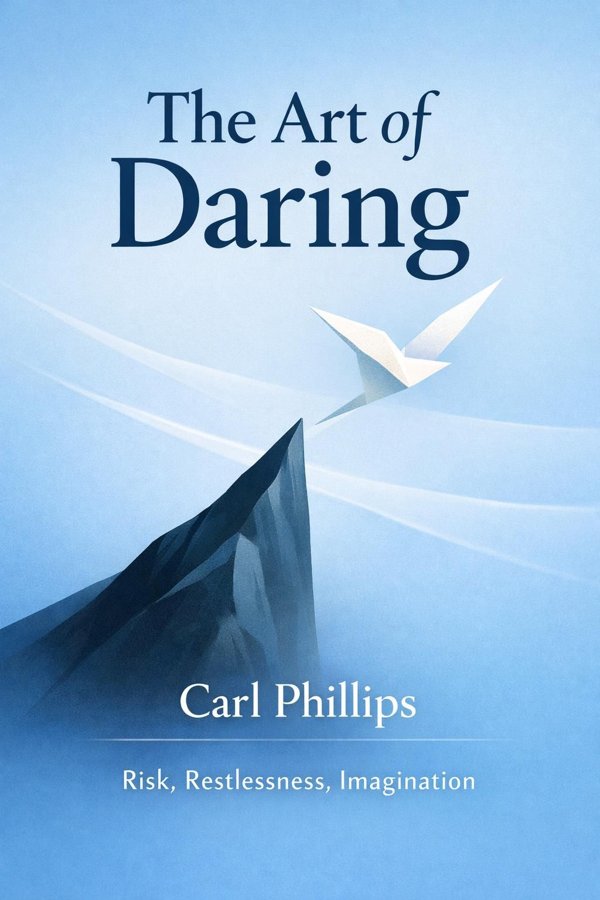
The Art of Daring: Risk, Restlessness, Imagination
In The Art of Daring: Risk, Restlessness, Imagination, acclaimed poet Carl Phillips reflects on what it means to create honestly in a world that often rewards certainty, polish, and control. Across a series of elegant, probing essays, he examines the inner conditions that make art possible: vulnerability, discipline, uncertainty, desire, and the willingness to keep questioning one’s own habits. For Phillips, daring is not spectacle or rebellion for its own sake. It is the quiet courage to remain open to what we do not yet understand, and to let that openness reshape language, form, and self. What makes this book especially valuable is that Phillips writes not only as a gifted thinker, but as a practicing poet and teacher who has spent decades wrestling with the demands of craft. He understands that artistic risk must be balanced by rigor, and that imagination thrives not in chaos alone but in tension with restraint. The result is a book about writing that also speaks to anyone trying to live more truthfully. It shows that restlessness, far from being a flaw, can become a force for renewal, discovery, and deeper creative integrity.
Read SummaryKey Insights from Carl Phillips
Restraint and Freedom in Creative Balance
The strongest art often comes from a paradox: the more seriously we engage limits, the more meaningful our freedom becomes. Phillips argues that creativity is not a choice between wild expression and strict control. Instead, art happens in the tension between the urge to say everything and the disci...
From The Art of Daring: Risk, Restlessness, Imagination
Imagination Begins Where Certainty Ends
Imagination is most necessary precisely when we do not know what comes next. Phillips treats imagination not as decoration or fantasy, but as a serious mode of inquiry. It allows artists to move beyond what is obvious, inherited, or already verified. To imagine is to risk entering a space without gu...
From The Art of Daring: Risk, Restlessness, Imagination
Vulnerability Makes Art More Alive
What readers often recognize as honesty in art is usually a form of risk. Phillips shows that vulnerability is not simply self-disclosure or confession. It is the willingness to approach what feels emotionally unstable, morally complicated, or personally unresolved without rushing to make it neat. I...
From The Art of Daring: Risk, Restlessness, Imagination
Risk Has an Ethical Dimension
Not all risk is equal, and Phillips is careful to distinguish meaningful daring from empty provocation. The artist’s job is not simply to break rules, shock audiences, or pursue novelty at any cost. Risk matters because it can deepen truth, enlarge perception, and challenge dead habits of feeling or...
From The Art of Daring: Risk, Restlessness, Imagination
Restlessness Fuels Artistic Evolution
Creative restlessness is often treated as a problem, but Phillips sees it as a sign of life. The artist who remains dissatisfied is not necessarily failing; he may be responding to the fact that no single form, style, or solution can fully contain experience. Restlessness, in this sense, is what kee...
From The Art of Daring: Risk, Restlessness, Imagination
Tradition Can Liberate and Challenge
Tradition is often misunderstood as something that restricts originality, but Phillips treats it as both inheritance and provocation. Writers do not create in isolation. They enter ongoing conversations with earlier voices, forms, assumptions, and possibilities. Tradition can feel constraining becau...
From The Art of Daring: Risk, Restlessness, Imagination
About Carl Phillips
Carl Phillips is an American poet and professor known for his lyrical and introspective poetry. Born in 1959, he has published numerous acclaimed collections and received major literary awards, including the Kingsley Tufts Poetry Award and the Pulitzer Prize for Poetry. He teaches at Washington Univ...
Read more
Carl Phillips is an American poet and professor known for his lyrical and introspective poetry. Born in 1959, he has published numerous acclaimed collections and received major literary awards, including the Kingsley Tufts Poetry Award and the Pulitzer Prize for Poetry. He teaches at Washington Univ...
Carl Phillips is an American poet and professor known for his lyrical and introspective poetry. Born in 1959, he has published numerous acclaimed collections and received major literary awards, including the Kingsley Tufts Poetry Award and the Pulitzer Prize for Poetry. He teaches at Washington University in St. Louis.


Frequently Asked Questions
Carl Phillips is an American poet and professor known for his lyrical and introspective poetry. Born in 1959, he has published numerous acclaimed collections and received major literary awards, including the Kingsley Tufts Poetry Award and the Pulitzer Prize for Poetry.
Read Carl Phillips's books in 15 minutes
Get AI-powered summaries with key insights from 1 book by Carl Phillips.