
Bruce Hood Books
Bruce Hood is a British experimental psychologist and professor of developmental psychology in society at the University of Bristol. His research focuses on the cognitive processes underlying self-identity, social behavior, and the development of belief systems.
Known for: The Self Illusion: How the Social Brain Creates Identity
Books by Bruce Hood
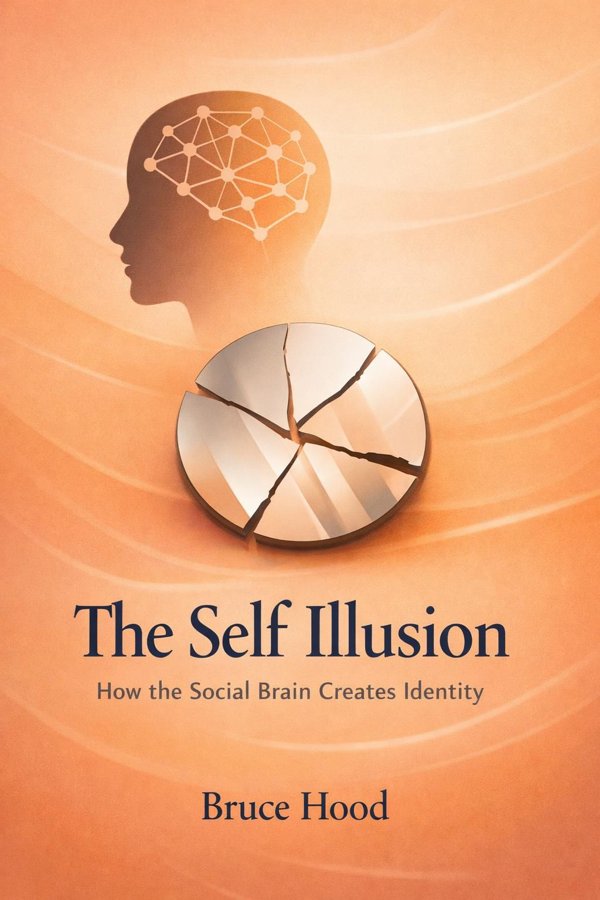
The Self Illusion: How the Social Brain Creates Identity
What if the person you call “me” is not a fixed inner core, but a remarkably persuasive construction? In The Self Illusion, cognitive neuroscientist Bruce Hood challenges one of our deepest assumptions: that somewhere inside us there exists a stable, independent self directing thought and action. Drawing on neuroscience, developmental psychology, philosophy, and behavioral research, Hood argues that identity is not discovered but assembled. The brain continuously interprets sensations, memories, and social feedback to generate the feeling of being a unified person. This idea matters because it reshapes how we think about responsibility, relationships, childhood development, mental health, and even consumer behavior. If the self is flexible rather than permanent, then many of our habits, beliefs, and loyalties become easier to understand—and possibly easier to change. Hood is especially well placed to make this case. As an experimental psychologist known for his work on developmental cognition, belief, and social behavior, he combines scientific rigor with accessible storytelling. The result is a provocative, humane book that does not reduce us to machinery, but instead reveals how deeply our identity depends on the minds of others.
Read SummaryKey Insights from Bruce Hood
The Self Is a Useful Fiction
One of the book’s most provocative claims is that the self feels real not because it is a single inner entity, but because the brain is designed to create coherence. We experience ourselves as unified, continuous, and separate from others, yet this impression is less like discovering a hidden essenc...
From The Self Illusion: How the Social Brain Creates Identity
Your Brain Builds Experienced Reality
We like to imagine that perception is straightforward: the world exists, our senses capture it, and the brain records it. Hood shows that this is deeply misleading. The brain does not passively receive reality like a camera. It actively predicts, filters, edits, and interprets incoming information. ...
From The Self Illusion: How the Social Brain Creates Identity
Children Grow Into a Self
A powerful way to understand the self is to watch it develop. Hood shows that infants are not born with a fully formed sense of personal identity. Instead, selfhood emerges gradually through bodily awareness, memory, emotional regulation, and interaction with caregivers. The child learns not only th...
From The Self Illusion: How the Social Brain Creates Identity
Memory Creates the Story of You
Most people treat memory as proof of a stable self. After all, if you can remember your past, doesn’t that show that the same person has persisted through time? Hood turns this assumption inside out. Memory does help create continuity, but it does so imperfectly, selectively, and reconstructively. R...
From The Self Illusion: How the Social Brain Creates Identity
Other People Shape Who You Are
One of Hood’s central insights is that the self is fundamentally social. We often think identity is private, something that exists deep inside and only later gets expressed outwardly. But much of who we become depends on how others perceive us, respond to us, and signal what counts as acceptable, ad...
From The Self Illusion: How the Social Brain Creates Identity
Empathy Links Minds and Selves
If the self is socially constructed, then understanding other minds is not optional—it is central to identity itself. Hood explores empathy and theory of mind, the human capacities that allow us to infer what others feel, believe, intend, and know. These abilities let us coordinate, teach, deceive, ...
From The Self Illusion: How the Social Brain Creates Identity
About Bruce Hood
Bruce Hood is a British experimental psychologist and professor of developmental psychology in society at the University of Bristol. His research focuses on the cognitive processes underlying self-identity, social behavior, and the development of belief systems.


Frequently Asked Questions
Bruce Hood is a British experimental psychologist and professor of developmental psychology in society at the University of Bristol. His research focuses on the cognitive processes underlying self-identity, social behavior, and the development of belief systems.
Read Bruce Hood's books in 15 minutes
Get AI-powered summaries with key insights from 1 book by Bruce Hood.