
Arthur Plotnik Books
Arthur Plotnik was an American author, editor, and publishing executive known for his works on writing and language. He served as associate editor for the American Library Association and wrote several acclaimed books on expressive writing and style.
Known for: The Elements of Expression: Putting Thoughts into Words
Books by Arthur Plotnik
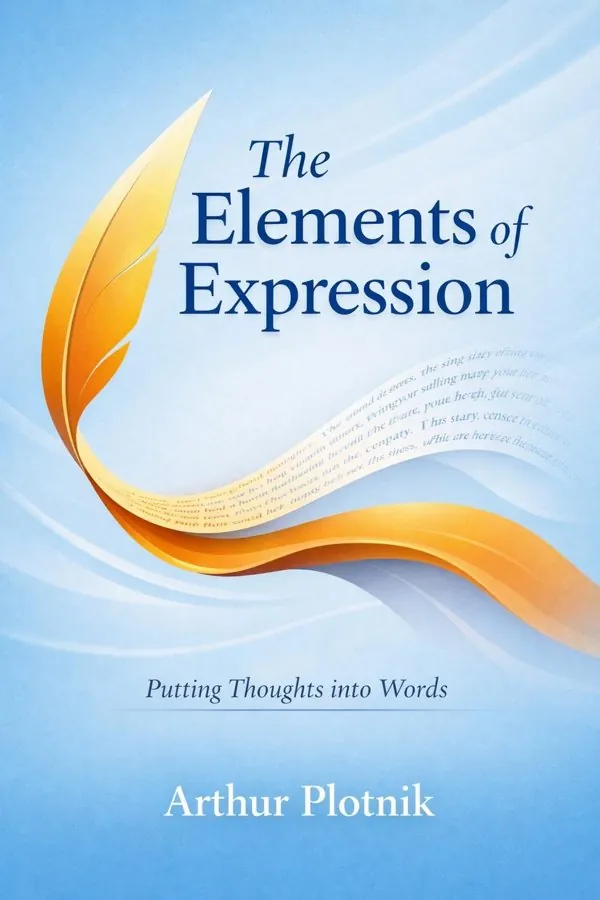
The Elements of Expression: Putting Thoughts into Words
What makes one sentence merely correct and another unforgettable? In The Elements of Expression: Putting Thoughts into Words, Arthur Plotnik argues that strong communication depends on far more than grammar or clarity alone. Language comes alive when writers and speakers choose vivid words, shape rhythm, control tone, and develop a distinct voice that carries thought with energy and precision. This book is a practical guide to making prose more memorable, persuasive, and human. Plotnik’s central insight is that expression is not decoration added after the fact. It is the very force that helps ideas land. Whether you are writing essays, speeches, business communication, creative nonfiction, or everyday emails, expressive language can turn flat statements into communication that moves people. Plotnik writes with the authority of an editor, language expert, and publishing professional who spent years helping others sharpen their style. He combines literary sensitivity with practical instruction, showing readers how to improve not by sounding fancier, but by sounding more alive. The result is a book for anyone who wants their words to do more than inform. It is for those who want their words to connect, persuade, and endure.
Read SummaryKey Insights from Arthur Plotnik
Expression Begins With Alert Attention
Before language becomes expressive, the writer must first notice life more sharply. Plotnik suggests that dull writing often comes not from limited vocabulary but from limited awareness. If you do not hear the cadence of speech, notice emotional nuance, or sense the texture of an experience, your se...
From The Elements of Expression: Putting Thoughts into Words
Choose Words That Carry Energy
Words do not simply denote; they radiate. Plotnik treats vocabulary as a toolkit of shades, textures, and temperatures. Two words may share a dictionary meaning while producing entirely different effects on the reader. To call someone “thin,” “lean,” “gaunt,” or “skeletal” is to make not just a desc...
From The Elements of Expression: Putting Thoughts into Words
Rhythm Makes Prose Speak
A sentence is not only read with the eye; it is heard with the inner ear. Plotnik emphasizes that rhythm and sound are central to expression because language affects us physically as well as intellectually. The rise and fall of syllables, the length of clauses, the repetition of sounds, and the plac...
From The Elements of Expression: Putting Thoughts into Words
Images Turn Ideas Into Experience
People remember what they can picture. Plotnik shows that imagery and figurative language make writing more expressive because they convert abstract thought into felt experience. Rather than merely naming an emotion, a process, or a problem, effective writers embody it. A metaphor, comparison, or se...
From The Elements of Expression: Putting Thoughts into Words
Voice Emerges From Consistent Choices
Voice is the fingerprint of language. Plotnik treats it not as a mysterious gift but as the cumulative effect of many decisions: word choice, sentence length, tone, pacing, humor, formality, and point of view. Readers sense voice when they feel a human presence behind the prose, someone with a recog...
From The Elements of Expression: Putting Thoughts into Words
Structure Shapes Meaning And Emphasis
How you arrange words, clauses, and sentences can be as expressive as the words themselves. Plotnik highlights syntax and structure as tools for emphasis, surprise, clarity, and emotional pacing. A sentence can accelerate, hesitate, reveal, conceal, or deliver a punch depending on its architecture. ...
From The Elements of Expression: Putting Thoughts into Words
About Arthur Plotnik
Arthur Plotnik was an American author, editor, and publishing executive known for his works on writing and language. He served as associate editor for the American Library Association and wrote several acclaimed books on expressive writing and style.


Frequently Asked Questions
Arthur Plotnik was an American author, editor, and publishing executive known for his works on writing and language. He served as associate editor for the American Library Association and wrote several acclaimed books on expressive writing and style.
Read Arthur Plotnik's books in 15 minutes
Get AI-powered summaries with key insights from 1 book by Arthur Plotnik.