
Andrew Smart Books
Andrew Smart is a cognitive and neuroscientist who has worked at New York University and the Max Planck Institute for Human Cognitive and Brain Sciences. His research focuses on consciousness, brain networks, and the role of rest in cognitive function.
Known for: The Brain at Rest
Books by Andrew Smart
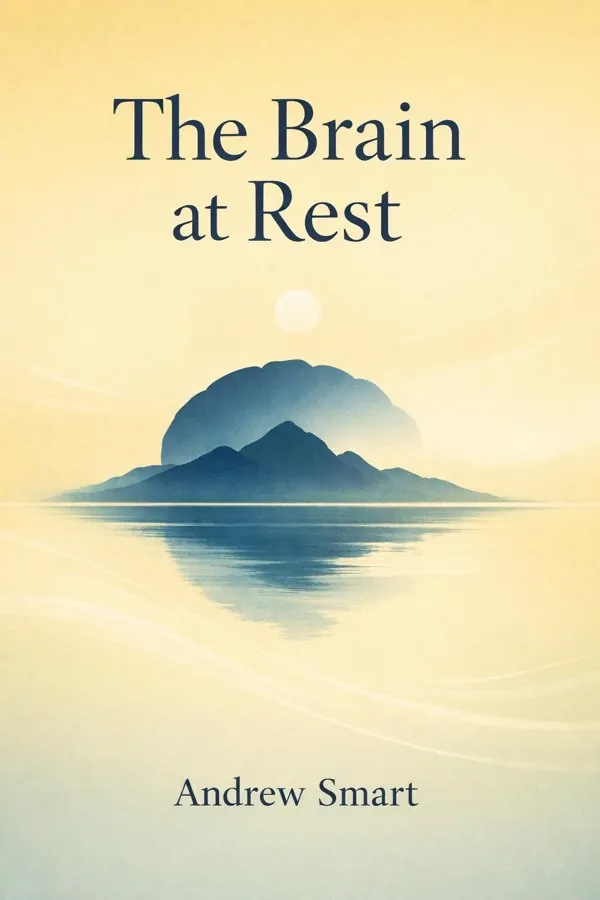
The Brain at Rest
In The Brain at Rest, cognitive scientist Andrew Smart challenges one of modern life’s most unquestioned assumptions: that constant activity is the highest form of intelligence. Drawing on neuroscience, psychology, and philosophy, he argues that idleness is not laziness, wasted time, or mental decline. It is a vital state in which the brain performs some of its most important work. When we stop forcing attention outward, the mind turns inward, linking memories, imagining possibilities, regulating emotion, and generating insight. At the center of Smart’s argument is the brain’s default mode network, a system that becomes active when we are not focused on a specific external task. Rather than going offline, the resting brain becomes deeply engaged in self-reflection, creativity, and long-range thinking. Smart uses research on consciousness, mind-wandering, and mental health to show why rest is essential for both individual well-being and intellectual performance. The book matters because it speaks directly to a culture obsessed with productivity, speed, and distraction. With scientific authority and a provocative voice, Smart offers a powerful defense of downtime as a condition for clearer thinking, emotional balance, and a more human way of living.
Read SummaryKey Insights from Andrew Smart
The Brain Never Truly Goes Quiet
One of the book’s most surprising claims is that rest is not the absence of mental activity but a different kind of intelligence at work. For a long time, scientists assumed that the brain became relatively idle when it was not solving problems, reading, or responding to the outside world. Modern im...
From The Brain at Rest
Boredom Opens the Door to Thought
Boredom feels uncomfortable because it removes the usual scaffolding of stimulation, but Smart argues that this discomfort is often the beginning of deeper thinking. When novelty disappears and tasks no longer grip our attention, the mind starts generating its own material. Memories rise, future sce...
From The Brain at Rest
Culture Mistakes Busyness for Worth
A powerful theme in The Brain at Rest is that our resistance to idleness is not purely personal; it is cultural. Modern societies, especially those shaped by industrial discipline and knowledge-economy pressure, tend to moralize busyness. We admire overloaded schedules, celebrate multitasking, and o...
From The Brain at Rest
Science Strongly Supports the Need for Rest
Smart’s defense of idleness is not sentimental. It is grounded in a growing body of scientific evidence showing that the brain needs downtime to function well. Studies using functional MRI and related methods have revealed stable patterns of resting activity, while psychological research links perio...
From The Brain at Rest
Technology Colonizes Every Empty Moment
One of Smart’s sharpest warnings is that modern technology has made idleness harder than ever to experience. Smartphones, social media, constant notifications, and endless streams of content fill spaces that once invited reflection. Waiting, commuting, walking, and even brief pauses in conversation ...
From The Brain at Rest
Rest Fuels Creativity and Insight
Great ideas often arrive sideways. Smart emphasizes that creativity is not only the product of intense concentration but also of release. After the mind gathers material through study, work, and observation, rest allows hidden processing to continue in the background. This is why breakthroughs often...
From The Brain at Rest
About Andrew Smart
Andrew Smart is a cognitive and neuroscientist who has worked at New York University and the Max Planck Institute for Human Cognitive and Brain Sciences. His research focuses on consciousness, brain networks, and the role of rest in cognitive function.


Frequently Asked Questions
Andrew Smart is a cognitive and neuroscientist who has worked at New York University and the Max Planck Institute for Human Cognitive and Brain Sciences. His research focuses on consciousness, brain networks, and the role of rest in cognitive function.
Read Andrew Smart's books in 15 minutes
Get AI-powered summaries with key insights from 1 book by Andrew Smart.