
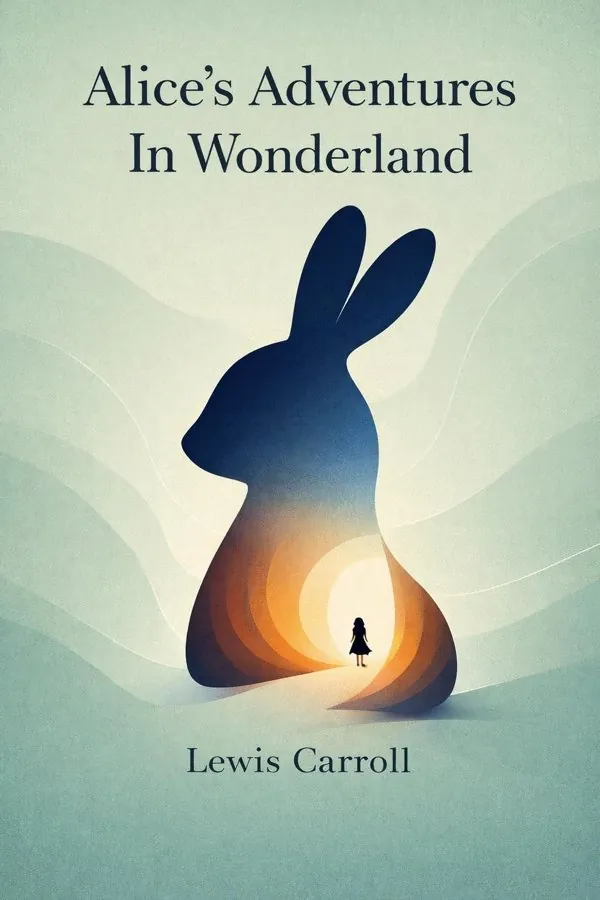
Alice's Adventures In Wonderland: Summary & Key Insights
 10 min7 chaptersAudio available
What Is Alice's Adventures In Wonderland About?
Alice's Adventures In Wonderland by Lewis Carroll is a classics book spanning 7 pages. Alice's Adventures in Wonderland is a classic English children's novel written by Lewis Carroll. It tells the story of a young girl named Alice who falls through a rabbit hole into a fantastical world populated by peculiar creatures and whimsical logic. The book is celebrated for its imaginative narrative, wordplay, and satirical commentary on Victorian society.
This FizzRead summary covers all 7 key chapters of Alice's Adventures In Wonderland in approximately 10 minutes, distilling the most important ideas, arguments, and takeaways from Lewis Carroll's work. Also available as an audio summary and Key Quotes Podcast.
Alice's Adventures In Wonderland
Alice's Adventures in Wonderland is a classic English children's novel written by Lewis Carroll. It tells the story of a young girl named Alice who falls through a rabbit hole into a fantastical world populated by peculiar creatures and whimsical logic. The book is celebrated for its imaginative narrative, wordplay, and satirical commentary on Victorian society.
Who Should Read Alice's Adventures In Wonderland?
This book is perfect for anyone interested in classics and looking to gain actionable insights in a short read. Whether you're a student, professional, or lifelong learner, the key ideas from Alice's Adventures In Wonderland by Lewis Carroll will help you think differently.
- ✓Readers who enjoy classics and want practical takeaways
- ✓Professionals looking to apply new ideas to their work and life
- ✓Anyone who wants the core insights of Alice's Adventures In Wonderland in just 10 minutes
Want the full summary?
Get instant access to this book summary and 100K+ more with Fizz Moment.
Get Free SummaryAvailable on App Store • Free to download
Key Chapters
Alice’s journey begins on a summer afternoon, in a scene that perfectly captures the stillness before adventure. She sits beside her sister, bored, watching as the world around her seems to have nothing new to offer. Then, suddenly, imagination takes form—a White Rabbit hurries by, muttering to himself about being late. That simple sight, so peculiar and yet so urgent, triggers the first leap of faith: curiosity triumphs over complacency.
As Alice tumbles down the rabbit hole, time and space unravel. The descent is long and strange, filled with fluttering jars of marmalade and thoughts that spiral just as freely as her fall. This moment—her plunge into the unknown—is not merely a physical act but the symbolic beginning of wonder itself. In following the Rabbit, she chooses imagination over indifference, adventure over safety. Every reader who steps into that hole with her begins their own metaphorical fall, leaving the rational world behind.
I wanted this opening to capture what it feels like when we abandon sense for curiosity. The Rabbit’s cry, “Oh dear! Oh dear! I shall be late!” could as easily be our own inner summons—an invitation from the imagination urging us to follow, to chase the impossible. Wonderland thus opens as a world made from questions: Where am I going? What will I see? Who will I become once I’ve fallen far enough? The wonder begins with not knowing, and the courage to find out.
When Alice lands at last, she finds herself in a vast hall lined with doors—each locked, each holding a mystery. Here the fantasy becomes deeply philosophical. She is surrounded by possibilities that she cannot access, and the key she discovers fits only the smallest door. The lesson is simple but essential: not every opportunity opens easily, and sometimes, to enter the world of insight, one must change oneself.
The bottle labeled “Drink Me” and the cake that says “Eat Me” are not mere props; they embody the theme of transformation. Growth and reduction become metaphors for learning itself—for adaptation, expansion, and the shrinking of ignorance. Alice’s alternating sizes are symbolic of the constant self-adjustment we all perform in the face of changing situations. She learns quickly that control is not gained through strength but through understanding herself.
Yet these transformations carry confusion. When she grows too large, the world itself becomes inconvenient—she cannot reach what she wants; when she shrinks too small, she loses power and significance. This struggle mirrors the tension of identity. Who is Alice now? A giant in a tiny world? A powerless child in a vast one? Her tears of frustration form a pool so enormous that she nearly drowns in her own emotion. Out of those tears comes a truth: the journey through wonder is also a journey through uncertainty, and even confusion can be creative. Wonder and sorrow are twins, both born from the same realization that reality shifts beneath us as we seek to understand it.
+ 5 more chapters — available in the FizzRead app
All Chapters in Alice's Adventures In Wonderland
About the Author
Lewis Carroll, born Charles Lutwidge Dodgson (1832–1898), was an English writer, mathematician, and logician. He is best known for his children's classics Alice's Adventures in Wonderland and Through the Looking-Glass. Carroll's works are noted for their playful use of language, logic puzzles, and imaginative storytelling.
Get This Summary in Your Preferred Format
Read or listen to the Alice's Adventures In Wonderland summary by Lewis Carroll anytime, anywhere. FizzRead offers multiple formats so you can learn on your terms — all free.
Available formats: App · Audio · PDF · EPUB — All included free with FizzRead
Download Alice's Adventures In Wonderland PDF and EPUB Summary
Key Quotes from Alice's Adventures In Wonderland
“Alice’s journey begins on a summer afternoon, in a scene that perfectly captures the stillness before adventure.”
“When Alice lands at last, she finds herself in a vast hall lined with doors—each locked, each holding a mystery.”
Frequently Asked Questions about Alice's Adventures In Wonderland
Alice's Adventures In Wonderland by Lewis Carroll is a classics book that explores key ideas across 7 chapters. Alice's Adventures in Wonderland is a classic English children's novel written by Lewis Carroll. It tells the story of a young girl named Alice who falls through a rabbit hole into a fantastical world populated by peculiar creatures and whimsical logic. The book is celebrated for its imaginative narrative, wordplay, and satirical commentary on Victorian society.
You Might Also Like






Browse by Category
Ready to read Alice's Adventures In Wonderland?
Get the full summary and 100K+ more books with Fizz Moment.