
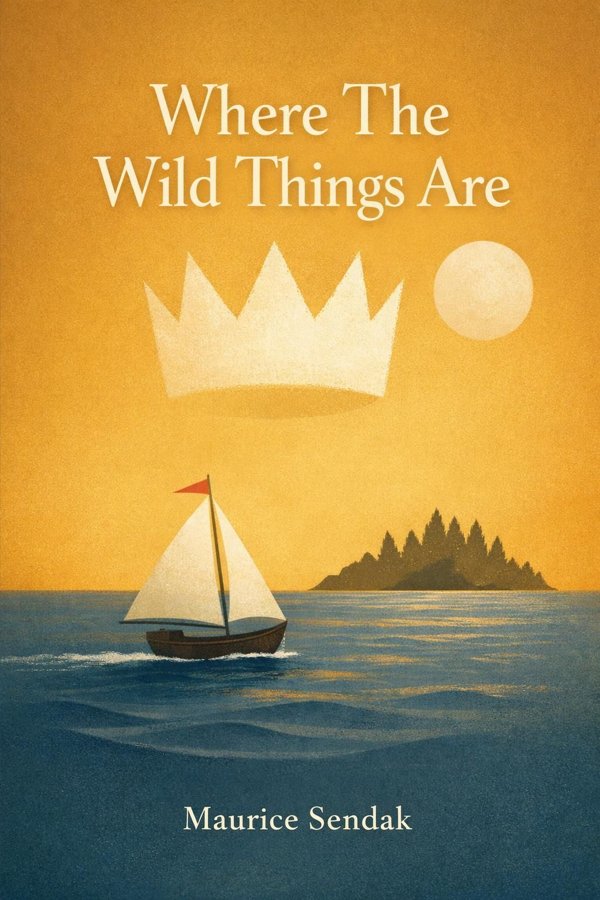
Where The Wild Things Are: Summary & Key Insights
 10 min8 chaptersAudio available
Key Takeaways from Where The Wild Things Are
Children often experience emotions before they can explain them, and that is one reason Where The Wild Things Are feels so enduring.
One of the boldest things about Where The Wild Things Are is that it does not pretend childhood anger is mild, cute, or easily solved.
At the heart of Max’s adventure lies a striking psychological truth: when people feel small, they often imagine being large.
Few endings in children’s literature are as quietly reassuring as Max returning home to find his supper waiting for him, still hot.
What makes Max compelling is not that he defeats wildness, but that he encounters it as part of himself.
What Is Where The Wild Things Are About?
Where The Wild Things Are by Maurice Sendak is a general book. Maurice Sendak’s Where The Wild Things Are is a short picture book with an astonishing emotional reach. On the surface, it tells the story of Max, a mischievous boy who is sent to his room without supper after causing trouble at home. In his bedroom, imagination transforms the ordinary into the extraordinary: walls dissolve into a forest, a private island appears, and Max sails to a land inhabited by fearsome Wild Things. Yet beneath this simple adventure lies a profound exploration of childhood anger, loneliness, fantasy, power, and the deep need to return to love and safety. The book matters because it treats children’s emotions seriously. Rather than moralizing or simplifying, Sendak gives shape to feelings many children cannot yet name. First published in 1963, it changed children’s literature by showing that stories for young readers could be psychologically rich, visually daring, and emotionally honest. Sendak, one of the most influential picture-book creators of the twentieth century, understood the intensity of childhood from the inside. His masterpiece endures because it offers both children and adults a compassionate map of emotional life.
This FizzRead summary covers all 8 key chapters of Where The Wild Things Are in approximately 10 minutes, distilling the most important ideas, arguments, and takeaways from Maurice Sendak's work. Also available as an audio summary and Key Quotes Podcast.
Where The Wild Things Are
Maurice Sendak’s Where The Wild Things Are is a short picture book with an astonishing emotional reach. On the surface, it tells the story of Max, a mischievous boy who is sent to his room without supper after causing trouble at home. In his bedroom, imagination transforms the ordinary into the extraordinary: walls dissolve into a forest, a private island appears, and Max sails to a land inhabited by fearsome Wild Things. Yet beneath this simple adventure lies a profound exploration of childhood anger, loneliness, fantasy, power, and the deep need to return to love and safety. The book matters because it treats children’s emotions seriously. Rather than moralizing or simplifying, Sendak gives shape to feelings many children cannot yet name. First published in 1963, it changed children’s literature by showing that stories for young readers could be psychologically rich, visually daring, and emotionally honest. Sendak, one of the most influential picture-book creators of the twentieth century, understood the intensity of childhood from the inside. His masterpiece endures because it offers both children and adults a compassionate map of emotional life.
Who Should Read Where The Wild Things Are?
This book is perfect for anyone interested in general and looking to gain actionable insights in a short read. Whether you're a student, professional, or lifelong learner, the key ideas from Where The Wild Things Are by Maurice Sendak will help you think differently.
- ✓Readers who enjoy general and want practical takeaways
- ✓Professionals looking to apply new ideas to their work and life
- ✓Anyone who wants the core insights of Where The Wild Things Are in just 10 minutes
Want the full summary?
Get instant access to this book summary and 100K+ more with Fizz Moment.
Get Free SummaryAvailable on App Store • Free to download
Key Chapters
Children often experience emotions before they can explain them, and that is one reason Where The Wild Things Are feels so enduring. Max’s journey is not just an adventure to a magical island; it is an imaginative expression of rage, defiance, loneliness, and the wish to be powerful. The forest growing in his room and the ocean appearing before him show how inner emotional life can transform the outer world. Sendak suggests that imagination is not an escape from reality so much as a language for processing it.
This idea matters because children are frequently told to calm down, behave, or stop overreacting without being given tools to understand what they feel. Max’s fantasy creates a safe stage on which overwhelming emotions can be acted out. In his real home, he is a child who has been punished. In the fantasy world, he becomes a king who can stare down monsters and command them. That transformation does not erase the original feeling, but it makes it manageable.
Adults can apply this insight by recognizing that imaginative play is often emotional work. A child pretending to be a dragon, a superhero, or a wild animal may be exploring fear, power, or frustration. Rather than dismissing fantasy as silly, parents and educators can ask open questions like, “What is happening in your story?” or “How does your character feel?” The same principle applies to adults as well: journaling, art, music, and storytelling can help give shape to emotions that feel chaotic when left unnamed.
The practical lesson is simple: when feelings become too big for direct language, imagination can become a bridge to understanding. Instead of shutting fantasy down, use it as a doorway into emotional truth. Actionable takeaway: the next time a child acts out through pretend play, respond with curiosity and invite them to tell the story behind the feeling.
One of the boldest things about Where The Wild Things Are is that it does not pretend childhood anger is mild, cute, or easily solved. Max is furious, unruly, and disruptive. He wears his wolf suit, chases the dog with a fork, and is called a “wild thing,” to which he replies, “I’ll eat you up!” Sendak refuses to soften the reality that children can feel primitive, explosive emotions. By acknowledging that truth, the book offers something more honest than a lesson in obedience.
This is thought-provoking because many adults instinctively try to suppress anger, especially in children. Yet denied anger rarely disappears; it often resurfaces as shame, anxiety, withdrawal, or more intense acting out. Max’s trip to the Wild Things can be read as a symbolic encounter with the untamed parts of himself. The monsters represent what is fierce, messy, and difficult to control. Instead of being destroyed by them, Max faces them and eventually rules them. The story implies that anger becomes less frightening when it is recognized and held within a meaningful framework.
In everyday life, this can change how adults respond to conflict. If a child slams a door or shouts, the immediate goal does not have to be emotional elimination. It can begin with acknowledgment: “You seem really angry.” That does not excuse hurtful behavior, but it separates the feeling from the action. The same approach helps adults too. Naming anger clearly can reduce its intensity and create room for wiser responses.
The deeper point is that emotional maturity does not mean never feeling wild; it means learning how to move through wildness without losing oneself or harming others. Actionable takeaway: when anger appears, start by naming the feeling without judgment, then guide behavior rather than pretending the emotion should not exist.
At the heart of Max’s adventure lies a striking psychological truth: when people feel small, they often imagine being large. Max begins the story as a child under authority, punished and confined to his room. In the world of the Wild Things, he becomes the most powerful figure of all, their king. This dramatic reversal suggests that fantasies of control are often responses to experiences of helplessness.
That insight matters far beyond the book. Children regularly live in systems they do not control. Adults decide meal times, bedtimes, rules, punishments, school schedules, and social boundaries. Even when these structures are necessary, they can leave children longing for agency. Max’s crowning as king does not merely flatter his ego; it compensates for the vulnerability he feels at home. His command of the “wild rumpus” becomes a symbolic restoration of power.
We see versions of this everywhere. A child who insists on choosing every detail of a game may not be difficult so much as hungry for influence. A student who daydreams about being a ruler, celebrity, or superhero may be exploring what it feels like to matter. Adults do this too: ambition, status-seeking, or fantasies of total independence can sometimes mask deeper needs for dignity, competence, or freedom.
The practical application is not to mock power fantasies, but to listen to what they reveal. When someone overreaches, ask what experience of powerlessness may sit underneath. Parents can offer limited choices, such as letting a child choose between two outfits or decide the order of bedtime routines. Teachers can invite students into classroom decision-making. Small forms of agency often reduce the need for dramatic bids for control.
The takeaway is that a craving for power is often a clue, not a character flaw. Actionable takeaway: when you see controlling behavior, look beneath it and create one concrete opportunity for healthy choice and agency.
Few endings in children’s literature are as quietly reassuring as Max returning home to find his supper waiting for him, still hot. That final image transforms the entire story. Home is where Max first experiences frustration and punishment, yet it is also where care remains available. Sendak presents home not as a place of constant comfort or constant restriction, but as the emotionally complex ground on which children grow.
This idea is powerful because many stories divide the world neatly into safe and unsafe, loving and hostile. Where The Wild Things Are is more realistic. Max’s mother sets a boundary by sending him to his room. The boundary hurts. Max feels banished. But the story ultimately suggests that loving limits and enduring care can coexist. The hot supper symbolizes a form of love that survives conflict. Max may be angry, but he is not abandoned.
In practice, this has important implications for parenting and caregiving. Children need both emotional security and structure. If adults offer only warmth without limits, children may feel uncontained. If they offer only discipline without tenderness, children may feel unsafe or unloved. The balance matters. A caregiver can say, “That behavior is not okay,” while also communicating, “You still belong with me.” This combination helps children internalize both accountability and trust.
Adults also carry this lesson into their own lives. Many people long for environments where mistakes do not instantly cancel belonging. Healthy homes, friendships, workplaces, and communities provide correction without humiliation and care without indulgence. That is what makes return possible.
The deeper wisdom is that love is most credible when it survives conflict. Max can leave, rage, rule, and return, and still find nourishment. Actionable takeaway: when setting a boundary, pair it with a clear sign of continued care so the other person feels held, not rejected.
What makes Max compelling is not that he defeats wildness, but that he encounters it as part of himself. The Wild Things are monstrous, exaggerated, and thrilling, yet Max recognizes them enough to master them. He does not stay with them forever, nor does he erase them. Instead, he enters their world, joins their energy, and then chooses to leave. This suggests that emotional health is not about cutting off unruly parts of the self; it is about integrating them.
That insight challenges a common misunderstanding of maturity. People often assume growth means becoming calm, rational, and socially acceptable at all times. But the wild self includes vitality, imagination, anger, appetite, spontaneity, and intensity. These qualities can create trouble when unchecked, but they also fuel creativity, courage, and aliveness. Max’s “wild rumpus” is destructive and joyful at once. It is a release before a return.
In practical life, integration means making room for difficult feelings and energetic impulses in ways that do not dominate or destroy. A child who wants to stomp, roar, or throw can be redirected toward movement, art, dramatic play, or words. Adults can do something similar through exercise, creative expression, assertive communication, or temporary solitude instead of impulsive conflict. The point is not to pretend wildness is absent, but to give it channels.
This idea is useful in education, parenting, and self-development. Structured spaces for vigorous play, storytelling, and emotional expression often reduce explosions later. Likewise, adults who never acknowledge frustration may become more brittle and reactive over time. The self becomes stronger when its intense parts are known and guided rather than denied.
The takeaway is that the goal is not to become less human, but more whole. Actionable takeaway: identify one healthy outlet for big energy or emotion this week, and treat it as necessary maintenance rather than a luxury.
Adventure stories often focus on the thrill of entering a new world, but Where The Wild Things Are gives equal importance to the decision to leave. Max reaches the height of power as king of the Wild Things, yet he chooses to depart because he wants “to be where someone loved him best of all.” This moment reveals that fantasy, for all its intensity, cannot replace relationship. Fulfillment does not come from endless domination or stimulation; it comes from connection.
This is a surprisingly mature insight for a picture book. Max has everything a wounded ego might want: obedience, spectacle, and absolute status. Yet he still feels a deeper hunger. Sendak implies that emotional nourishment is different from excitement. The wild rumpus is exhilarating, but it does not feed him. Love, belonging, and being known are what finally draw him home.
In everyday life, people of all ages can confuse distraction with satisfaction. Children may seek constant entertainment when what they actually need is closeness or reassurance. Adults may chase work, social media, achievement, travel, or recognition while still feeling emotionally hungry. The book invites us to ask not just what excites us, but what truly sustains us.
Practically, this means paying attention to the moments after stimulation fades. Does the child who demands more screen time really need a walk, a cuddle, or unhurried attention? Does the overworked adult need another success, or a conversation that restores them? Learning to distinguish between thrill and nourishment is a major step toward emotional wisdom.
The final movement of the story teaches that choosing return is not failure. It is discernment. Max does not leave because the adventure was meaningless; he leaves because he has learned what it cannot provide. Actionable takeaway: when you feel restless for more excitement, pause and ask what form of connection or care you may actually be longing for.
Where The Wild Things Are changed children’s literature because it trusted children with complexity. Sendak did not write a sugary tale in which good behavior leads to easy rewards. He wrote a story in which a child feels rage, imagines violence, rules monsters, experiences loneliness, and returns to love. That emotional honesty is one reason the book has remained so influential for generations.
This matters because adults often underestimate what children can handle in art. In trying to protect them, we sometimes offer stories that are emotionally flat or falsely cheerful. But children already know fear, jealousy, anger, and confusion. What they need is not denial; they need forms that make those experiences understandable and survivable. Sendak accomplishes this through rhythm, illustration, pacing, and silence. As the pictures expand, words shrink, allowing the emotional world to take over. The result is not overwhelming, but containing.
The practical application extends to parenting, teaching, and publishing. When choosing books, conversations, or activities for children, it helps to ask whether they reflect real emotional life. Stories that include struggle, ambivalence, and repair can support resilience far better than those that offer only perfection. Adults should not rush to explain every symbol or moral. Often, the power of a story lies in letting children feel it first and discuss it later.
This idea also applies to adult communication. Emotional honesty builds trust. Sanitized versions of reality may seem safer, but they often make people feel unseen. Age-appropriate truth, by contrast, can be stabilizing.
The key lesson is that children are not fragile because they feel deeply; they become stronger when depth is acknowledged. Actionable takeaway: choose stories and conversations that respect a child’s emotional intelligence, and invite discussion instead of forcing neat interpretations.
One of the marvels of Where The Wild Things Are is how much it accomplishes with so few words. The text is famously brief, yet its emotional, visual, and symbolic depth invites endless rereading. This reminds us that literary power is not measured by length. Precision, imagery, pacing, and psychological resonance can make a short work feel immense.
That is worth noticing in a culture that often equates value with scale. We may assume long books are more serious, detailed explanations are more insightful, or bigger productions are more meaningful. Sendak proves otherwise. By stripping the language down and letting the illustrations carry emotional weight, he creates a reading experience that is both immediate for children and profound for adults. The silence between words becomes part of the story.
This insight has practical value for communication of all kinds. In teaching, leadership, parenting, and writing, clarity often matters more than quantity. A well-chosen image or simple sentence can reach people more effectively than a flood of explanation. For example, telling a child, “You were so angry you felt like a storm,” may connect more deeply than a lecture about self-regulation. In creative work, trusting what is implied can be as important as stating everything explicitly.
The book also invites slower reading. Because it is short, readers can revisit it repeatedly and notice new elements each time: the changing size of the illustrations, the emotional arc, the tenderness of the ending. Brevity can open space for reflection.
The broader message is that small forms can carry great truth when they are crafted with care. Actionable takeaway: the next time you want to communicate something important, try expressing it more simply and let one strong image or moment do the heavy lifting.
All Chapters in Where The Wild Things Are
About the Author
Maurice Sendak was an American author and illustrator whose work reshaped modern children’s literature. Born in Brooklyn, New York, in 1928 to Polish Jewish immigrant parents, he drew heavily on childhood memory, family dynamics, and emotional intensity in his books. He became famous for combining striking illustrations with stories that respected the complexity of children’s inner lives. His best-known book, Where The Wild Things Are, published in 1963, became a classic and established him as one of the most important picture-book creators of the twentieth century. Sendak also wrote and illustrated other acclaimed works and contributed to theater and opera design. He is remembered for his honesty, artistic originality, and lasting influence on how stories for children are written and understood.
Get This Summary in Your Preferred Format
Read or listen to the Where The Wild Things Are summary by Maurice Sendak anytime, anywhere. FizzRead offers multiple formats so you can learn on your terms — all free.
Available formats: App · Audio · PDF · EPUB — All included free with FizzRead
Download Where The Wild Things Are PDF and EPUB Summary
Key Quotes from Where The Wild Things Are
“Children often experience emotions before they can explain them, and that is one reason Where The Wild Things Are feels so enduring.”
“One of the boldest things about Where The Wild Things Are is that it does not pretend childhood anger is mild, cute, or easily solved.”
“At the heart of Max’s adventure lies a striking psychological truth: when people feel small, they often imagine being large.”
“Few endings in children’s literature are as quietly reassuring as Max returning home to find his supper waiting for him, still hot.”
“What makes Max compelling is not that he defeats wildness, but that he encounters it as part of himself.”
Frequently Asked Questions about Where The Wild Things Are
Where The Wild Things Are by Maurice Sendak is a general book that explores key ideas across 8 chapters. Maurice Sendak’s Where The Wild Things Are is a short picture book with an astonishing emotional reach. On the surface, it tells the story of Max, a mischievous boy who is sent to his room without supper after causing trouble at home. In his bedroom, imagination transforms the ordinary into the extraordinary: walls dissolve into a forest, a private island appears, and Max sails to a land inhabited by fearsome Wild Things. Yet beneath this simple adventure lies a profound exploration of childhood anger, loneliness, fantasy, power, and the deep need to return to love and safety. The book matters because it treats children’s emotions seriously. Rather than moralizing or simplifying, Sendak gives shape to feelings many children cannot yet name. First published in 1963, it changed children’s literature by showing that stories for young readers could be psychologically rich, visually daring, and emotionally honest. Sendak, one of the most influential picture-book creators of the twentieth century, understood the intensity of childhood from the inside. His masterpiece endures because it offers both children and adults a compassionate map of emotional life.
You Might Also Like
Duct Tape Marketing: The World's Most Practical Small Business Marketing Guide
John Jantsch
10 minDusk, Night, Dawn: On Revival and Courage
Anne Lamott
10 minFinish Big: How Great Entrepreneurs Exit Their Companies on Top
Bo Burlingham
10 minFirst As Tragedy, Then As Farce
Slavoj Zizek
10 minFirst Principles: What America's Founders Learned from the Greeks and Romans and How That Shaped Our Country
Thomas E. Ricks
10 minGood Habits, Bad Habits: The Science of Making Positive Changes That Stick
Wendy Wood
10 minBrowse by Category
Ready to read Where The Wild Things Are?
Get the full summary and 100K+ more books with Fizz Moment.